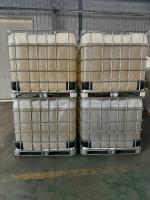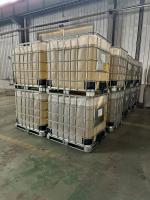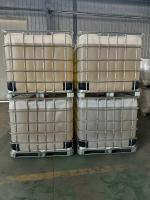


Our Products

coagulant / polyamine polymer for primary and secondary clarification
279_small.jpg "polyamine polymer for primary and secondary clarification")
Polyamine polymer is a highly effective cationic coagulant widely applied in both primary and secondary clarification stages of water and wastewater treatment systems. Its strong charge neutralization capability, rapid reaction kinetics, and broad applicability across diverse industrial effluents make it a key chemical in modern clarification processes. In primary clarification, polyamine is primarily used to destabilize suspended solids and colloidal matter, while in secondary clarification it enhances the removal of residual fine particles, biological flocs, and dissolved organic contaminants that escape upstream treatment units.
In water treatment engineering, clarification is a fundamental unit operation designed to remove suspended and colloidal impurities through sedimentation or flotation. Primary clarification typically targets raw influent wastewater or process water with high solids loading. Secondary clarification, on the other hand, is associated with biologically treated effluent from activated sludge systems or other biological treatment processes, where the goal is to separate biological flocs and improve effluent clarity. Polyamine plays a critical role in both stages by improving particle aggregation and separation efficiency.
The molecular structure of polyamine consists of a polymer backbone rich in protonated amine functional groups, which impart strong positive charge density. This high cationic charge is the basis of its coagulation performance. In aqueous systems, most suspended solids and colloids carry a negative surface charge due to ionization of functional groups or adsorption of anionic species. These negatively charged particles are stabilized by electrostatic repulsion, preventing natural aggregation and settling. Polyamine neutralizes this charge, reducing zeta potential and destabilizing the system.
In primary clarification, wastewater typically contains a high concentration of inorganic and organic suspended solids, including silt, clay, fibers, organic debris, and industrial residues. These particles are often fine and colloidal in nature, making gravity settling inefficient without chemical assistance. When polyamine is introduced, it rapidly adsorbs onto particle surfaces through electrostatic attraction. This adsorption compresses the electrical double layer and eliminates repulsive forces, allowing particles to collide and form microflocs. These microflocs then aggregate into larger flocs that can be efficiently removed by sedimentation or flotation.
One of the key advantages of polyamine in primary clarification is its rapid reaction speed. Unlike high-molecular-weight flocculants that require bridging and slow floc growth, polyamine acts almost instantaneously through charge neutralization. This makes it particularly suitable for high-flow systems where retention time is limited. Additionally, its effectiveness at relatively low dosages reduces chemical consumption and operational cost.
In industrial applications such as textile wastewater, mining effluents, and paper mill white water, primary clarification using polyamine significantly reduces turbidity and suspended solids load before downstream treatment. This not only improves overall treatment efficiency but also protects biological systems from shock loading and toxicity.
In secondary clarification, the role of polyamine becomes more specialized. After biological treatment processes such as activated sludge, wastewater contains biological flocs composed of microorganisms, extracellular polymeric substances (EPS), and residual organic matter. Although these flocs are larger than primary particles, they may still exhibit poor settling characteristics due to low density, filamentous bulking, or shear-induced fragmentation.
Polyamine enhances secondary clarification by improving floc structure and settling velocity. It neutralizes negatively charged EPS and microbial cell surfaces, promoting aggregation of fine biological particles into denser, more settleable flocs. This results in improved sludge volume index (SVI), reduced effluent turbidity, and enhanced solid–liquid separation efficiency in secondary clarifiers.
In systems experiencing bulking sludge or poor settleability, polyamine can act as a corrective chemical to restore clarifier performance. By reducing electrostatic repulsion among filamentous organisms and dispersed biomass, it promotes compact floc formation and improves sludge compaction. This is particularly important in municipal wastewater treatment plants and industrial biological treatment systems.
Polyamine is also effective in polishing secondary effluent. Even after biological treatment, fine suspended solids and residual colloidal organic matter may remain in the water. These particles are difficult to remove through gravity settling alone. Polyamine facilitates their aggregation, enabling further clarification before discharge or advanced treatment processes such as filtration or membrane separation.
Another important benefit of polyamine in both primary and secondary clarification is its ability to reduce sludge volume compared with inorganic coagulants. Because it operates through charge neutralization rather than precipitation, it does not generate large quantities of metal hydroxide sludge. The resulting flocs are more compact and easier to dewater, reducing sludge handling and disposal costs.
Polyamine is typically applied in liquid form with moderate viscosity and active content ranging from 10% to 50%. It is easily dosed using standard chemical injection systems and can be introduced at multiple points depending on process design. In primary clarification, dosing is often performed upstream of sedimentation tanks or flotation units. In secondary clarification, it may be injected into return activated sludge (RAS) lines, clarifier feed channels, or tertiary polishing stages.
Dosage varies depending on wastewater characteristics and treatment objectives. In primary clarification, typical dosages range from 10 to 100 mg/L, while in secondary clarification lower dosages are often sufficient due to reduced solids concentration. Optimization through jar testing and plant trials is essential to achieve maximum efficiency without overdosing, which can lead to charge reversal and deterioration of settling performance.
Polyamine also offers advantages in terms of operational stability. It performs effectively over a wide pH range, typically from pH 4 to 10, and is relatively insensitive to temperature fluctuations. This makes it suitable for diverse industrial environments, including those with variable influent conditions. Its compatibility with other treatment chemicals, such as anionic polyacrylamide flocculants, enhances its versatility in multi-stage treatment systems.
In integrated treatment systems, polyamine is often used in combination with flocculants to optimize both coagulation and flocculation stages. In such systems, polyamine provides rapid destabilization of particles, while flocculants promote bridging and formation of large, strong flocs. This synergistic approach improves clarification efficiency in both primary and secondary stages.
Environmental considerations also support the use of polyamine. Its low dosage requirement and reduced sludge generation contribute to more sustainable wastewater treatment practices. Additionally, its organic nature minimizes the introduction of metal ions into the system, reducing environmental impact.
In conclusion, polyamine polymer is a highly effective and versatile coagulant for both primary and secondary clarification processes. Its strong charge neutralization capability enables rapid destabilization of suspended solids and biological flocs, improving sedimentation and effluent quality. Through optimized application, polyamine enhances treatment efficiency, reduces sludge production, and supports stable and sustainable operation of modern water and wastewater treatment systems.