Our Products
coagulant / polyamine flocculant for solid liquid separation
116_small.jpg "polyamine flocculant for solid liquid separation")


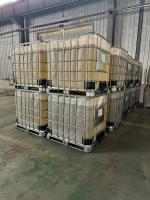
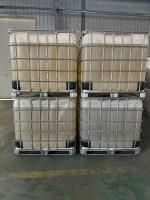
Polyamine is a highly effective cationic organic flocculant widely used in solid-liquid separation processes across municipal and industrial wastewater treatment systems. Solid-liquid separation is a fundamental operation in water treatment, responsible for removing suspended solids, colloids, and fine particles from water or process streams. Polyamine plays a critical role in enhancing coagulation, accelerating floc formation, and improving the efficiency of sedimentation, flotation, and filtration processes.
Polyamine is typically synthesized from amine-based monomers such as dimethylamine and epichlorohydrin, producing a water-soluble polymer with high cationic charge density and relatively low to medium molecular weight.
Key characteristics include:
These properties make polyamine particularly suitable for rapid and efficient solid-liquid separation processes.
Polyamine enhances solid-liquid separation through several key mechanisms:
(1) Charge neutralization
Most suspended solids and colloidal particles in wastewater carry negative charges. Polyamine neutralizes these charges, reducing electrostatic repulsion and allowing particles to come together.
(2) Floc formation
After destabilization, fine particles aggregate into microflocs. These microflocs then grow into larger, more settleable flocs.
(3) Adsorption and bridging
Polyamine molecules adsorb onto particle surfaces and help bind multiple particles together, forming compact and dense flocs.
(4) Enmeshment of fine particles
During floc growth, small particles and colloids become trapped within the floc structure, improving removal efficiency.
Polyamine is used in various solid-liquid separation units, including:
In sedimentation systems, polyamine accelerates the settling of suspended solids by forming dense flocs that settle quickly under gravity.
Benefits:
In flotation systems, polyamine destabilizes fine particles and emulsified oils, allowing them to attach to air bubbles and rise to the surface.
Benefits:
Polyamine improves filter performance by forming larger particles that are easier to capture, reducing clogging and increasing filtration rate.
Benefits:
Polyamine is used as a conditioning agent to improve sludge structure before mechanical dewatering.
Benefits:
Polyamine is widely used for solid-liquid separation in various industries:
(1) Municipal wastewater treatment
Used in primary clarification, secondary sludge settling, and tertiary polishing.
(2) Paper and pulp industry
Removes fibers, fillers, and colloidal organic matter, improving white water recovery.
(3) Textile industry
Assists in removing suspended dyes, fibers, and finishing agents.
(4) Food and beverage industry
Removes fats, oils, proteins, and organic solids.
(5) Mining industry
Used for tailings clarification and mineral recovery processes.
(6) Oil and gas industry
Helps separate oil, solids, and water in produced water treatment.
(1) High efficiency at low dosage
Strong charge density allows effective separation with minimal chemical use.
(2) Rapid floc formation
Fast reaction improves process efficiency and reduces retention time.
(3) Improved effluent quality
Reduces turbidity, suspended solids, and COD in treated water.
(4) Reduced sludge volume
Produces compact flocs that result in lower sludge handling costs.
(5) Wide applicability
Effective across a wide range of wastewater types and operating conditions.
The optimal dosage depends on wastewater characteristics and separation objectives.
Typical dosage ranges:
Key factors influencing dosage:
Jar testing is essential for determining optimal dosage and process conditions.
Polyamine is often used in combination with other treatment chemicals:
Cationic polyacrylamide (CPAM):
Enhances floc size and strength through polymer bridging.
Inorganic coagulants (PAC, ferric chloride):
Improve cost efficiency and coagulation performance.
Flotation aids:
Enhance bubble-particle attachment in DAF systems.
This synergistic approach improves overall separation efficiency.
(1) Overdosing risk
Excess polyamine can cause charge reversal and destabilize flocs.
(2) Process variability
Different wastewater types require customized dosing strategies.
(3) Cost considerations
More expensive than inorganic coagulants, though often more efficient.
(4) Sensitivity to operating conditions
Performance depends on mixing, temperature, and water chemistry.
To achieve optimal solid-liquid separation:
The use of polyamine in solid-liquid separation is expected to increase due to:
Future products are likely to be more targeted, efficient, and environmentally friendly.
834_small.jpg "polyamine(40-50% solid content)manufacturer|polyamine (1000-3000 viscosity)suppliers")