Our Products
coagulant / polyamine chemical dosage for wastewater treatment



Polyamine is a highly effective cationic organic coagulant widely used in municipal and industrial wastewater treatment. One of the most important operational factors in its application is dosage control. The correct dosage directly determines treatment efficiency, sludge production, operating cost, and effluent quality. Because wastewater characteristics vary widely across industries and seasons, polyamine dosage is not fixed and must be optimized through testing and operational experience.
In coagulation and flocculation processes, polyamine works mainly through charge neutralization and particle destabilization. If the dosage is too low, particles remain stable and do not aggregate effectively. If the dosage is too high, particles may become positively charged again (charge reversal), leading to restabilization and poor floc formation.
Therefore, proper dosage ensures:
The typical dosage of polyamine depends on the type of wastewater and treatment objective. Common ranges include:
These values are general guidelines and must be optimized case by case.
In municipal plants, polyamine is mainly used in primary clarification and sometimes in tertiary polishing.
Typical dosage:
Functions:
Lower dosages are usually sufficient due to moderate pollutant concentration.
Industrial wastewater is more complex and often requires higher dosages.
Typical dosage:
Applications include:
The dosage depends heavily on pollutant load and chemical composition.
Produced water contains emulsified oil and high salinity, requiring stronger chemical action.
Typical dosage:
Factors influencing dosage:
Polyamine is used as a conditioning agent before mechanical dewatering.
Typical dosage:
It is often combined with cationic polyacrylamide (CPAM) to improve cake dryness and filtration speed.
For potable water, dosage is strictly controlled.
Typical dosage:
The goal is turbidity and organic matter removal while maintaining strict safety standards.
Several key factors influence the optimal dosage:
High pollutant loads require higher dosages.
Polyamine performs best in a broad pH range (4–10), but:
Proper mixing is essential:
Substances such as:
can interfere with polyamine performance and affect dosage requirements.
Because wastewater conditions vary, optimization is essential. Common methods include:
The most widely used method in wastewater treatment plants:
Steps:
Used for industrial-scale verification:
Advanced plants may use sensors to monitor:
and adjust dosage automatically.
Proper balance is essential for optimal performance.
Polyamine is often used with other chemicals to improve efficiency and reduce dosage:
With cationic polyacrylamide (CPAM):
With inorganic coagulants (PAC, ferric salts):
This synergistic approach is widely used in modern treatment plants.
Although polyamine is more expensive per kilogram than inorganic coagulants, its low dosage requirement often makes it cost-effective.
Cost efficiency depends on:
Overdosing significantly increases operational cost, so control is essential.
To ensure optimal performance:
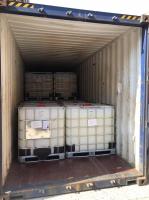
183_small.jpg "polyamine flocculant for turbidity and suspended solids removal")