

Our Products

coagulant / customized polyamine formulation for specific wastewater treatment
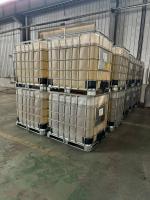
Customized polyamine formulations are engineered cationic polymer systems designed to address specific wastewater treatment challenges across different industrial sectors. Unlike standard coagulant grades, customized polyamines are tailored in terms of molecular weight distribution, charge density, viscosity, solid content, and functional modification to match the chemical and physical characteristics of targeted wastewater streams. This customization significantly improves treatment efficiency, reduces chemical consumption, and enhances process stability in complex industrial effluents.
Industrial wastewater varies widely in composition depending on the source. It may contain suspended solids, colloidal particles, emulsified oils, dyes, heavy metals, surfactants, dissolved organic matter, and inorganic salts. Each wastewater type exhibits distinct charge characteristics, particle size distribution, and stability mechanisms. Therefore, a “one-size-fits-all” coagulant approach is often inefficient. Customized polyamine formulations are developed to optimize interaction with specific contaminants and operating conditions.
The fundamental mechanism of polyamine remains charge neutralization. However, customization allows precise tuning of cationic charge density to match the anionic demand of a particular wastewater. Charge density is one of the most critical parameters because it determines the strength and speed of electrostatic interaction between polymer chains and negatively charged particles. High-charge-density polyamines are typically used for strongly anionic systems such as textile dyeing wastewater, paper mill effluents, and mining tailings. Medium or lower charge-density formulations are preferred for systems requiring controlled floc formation to avoid over-rapid aggregation or restabilization.
Molecular weight is another key variable in customized formulations. Low molecular weight polyamines provide rapid diffusion and fast charge neutralization, making them suitable for highly turbid or fast-flow systems such as oilfield produced water or coal washing wastewater. Medium molecular weight versions provide a balance between charge neutralization and limited bridging, improving floc strength. In some cases, hybrid structures combining low and high molecular weight fractions are designed to achieve both rapid destabilization and improved floc integrity.
Viscosity adjustment is also an important aspect of customization. In high-throughput industrial systems, low-viscosity polyamine solutions are preferred for ease of pumping, mixing, and dispersion. In contrast, higher viscosity formulations may be used where slower release or extended contact time is beneficial. Solid content optimization ensures compatibility with storage, transport, and dosing systems while maintaining stability under varying temperature conditions.
One major application of customized polyamine formulations is in textile dyeing and printing wastewater treatment. These effluents contain complex mixtures of reactive dyes, azo compounds, surfactants, and sizing agents. Customized high-charge-density polyamines are designed to rapidly neutralize dye molecules and destabilize chromophoric structures, achieving high decolorization efficiency. In some cases, functional modification is introduced to enhance affinity toward specific dye classes, improving removal performance at lower dosages.
In oilfield produced water treatment, customized polyamine formulations are engineered to break stable oil–water emulsions. These systems often contain asphaltenes, resins, and surfactant-stabilized droplets. Polyamines with tailored hydrophilic–hydrophobic balance can improve interaction with oil droplets, accelerating coalescence and separation in flotation or gravity systems. In high-salinity environments, salt-tolerant formulations are developed to maintain charge efficiency under elevated ionic strength conditions.
Mining and mineral processing wastewater also benefits significantly from customized polyamine systems. These effluents contain fine clay particles, silicates, metal oxides, and flotation reagents. Customized formulations with enhanced charge density and optimized molecular architecture improve aggregation of ultra-fine particles and reduce interference from dispersants. This leads to improved thickening performance, higher underflow density, and better water recycling efficiency.
In paper mill white water and retention systems, customized polyamine formulations are designed to control anionic trash and improve wet-end chemistry stability. By precisely adjusting charge density, these polymers can neutralize dissolved and colloidal substances without over-cationizing the system. This improves the performance of retention aids, enhances filler retention, and stabilizes drainage behavior. In high-speed paper machines, low-residual, fast-acting formulations are often preferred.
Sugar industry juice clarification is another area where customized polyamines are widely applied. Cane and beet juice contain proteins, pectins, waxes, and color precursors. Customized formulations are designed to operate under hot, alkaline conditions and effectively remove colloidal impurities without affecting sugar quality. Adjustments in thermal stability and charge distribution are critical for maintaining performance during high-temperature processing.
Customization also extends to compatibility with other treatment chemicals. In many industrial systems, polyamine is used in combination with anionic polyacrylamide, inorganic coagulants, or oxidation agents. Formulations can be designed to enhance synergistic effects, ensuring optimal floc formation and separation efficiency. For example, pre-neutralization with polyamine followed by polymer bridging results in stronger and faster-settling flocs.
Another important aspect of customized polyamine development is environmental performance. Low-toxicity, low-residual monomer formulations are increasingly required for applications involving discharge or reuse. Biodegradability, residual amine content, and byproduct formation are carefully controlled during synthesis. This ensures compliance with environmental regulations and reduces ecological impact.
In addition, temperature and pH stability are critical customization parameters. Industrial wastewater may vary significantly in temperature, especially in steel, petrochemical, and power plant applications. Customized polyamines are engineered to maintain charge efficiency and structural integrity under these conditions. Similarly, formulations can be optimized for acidic, neutral, or alkaline environments depending on process requirements.
From an operational standpoint, customized polyamine formulations improve process efficiency by reducing chemical dosage requirements, minimizing sludge production, and enhancing separation speed. This leads to lower operating costs and improved equipment performance. Precise tailoring also reduces the risk of overdosing, which can cause charge reversal or secondary pollution issues.
In conclusion, customized polyamine formulations represent an advanced approach in industrial wastewater treatment, enabling targeted optimization for specific effluent characteristics. By adjusting charge density, molecular weight, viscosity, stability, and functional properties, these engineered polymers provide superior performance across diverse applications including textile, oilfield, mining, papermaking, and food processing industries. Their adaptability, efficiency, and environmental compatibility make them a critical component in modern water treatment technologies and sustainable industrial operations.
799_small.jpg "polyamine cationic polymer|polyamine used for water treatment and mining")
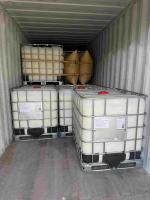
525_small.jpg "polyamine solution for high COD wastewater treatment")