Our Products
coagulant / polyamine application in paper mill wastewater treatment
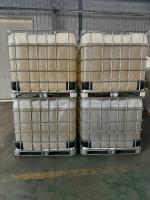


Polyamine is a highly effective cationic organic coagulant widely applied in paper mill wastewater treatment. The pulp and paper industry generates large volumes of wastewater containing suspended solids, dissolved organic matter, lignin derivatives, fines, fillers, and various additives such as sizing agents, dyes, and retention chemicals. Treating this complex wastewater efficiently is essential to meet environmental discharge standards and to enable water reuse. Polyamine plays a key role in improving clarification, reducing pollutant load, and enhancing overall treatment performance.
Wastewater from paper mills varies depending on the production process (mechanical pulping, chemical pulping, or recycled paper processing), but it typically contains:
Most of these contaminants carry negative surface charges, making them difficult to remove without chemical coagulation. This is where polyamine becomes highly effective.
Polyamine is synthesized from amine-based monomers, producing a water-soluble polymer with high cationic charge density and moderate molecular weight.
Key properties include:
These properties make polyamine particularly suitable for the diverse and variable conditions found in paper mill wastewater.
Polyamine functions through several mechanisms in paper mill wastewater treatment:
(1) Charge neutralization
Negatively charged fibers, fines, and colloidal substances are destabilized by the positive charges of polyamine, reducing repulsive forces and allowing aggregation.
(2) Coagulation of colloids
Polyamine effectively coagulates dissolved and colloidal organic matter such as lignin and resins, which are otherwise difficult to remove.
(3) Adsorption and aggregation
Polyamine adsorbs onto particle surfaces and promotes the formation of microflocs, which can further grow into larger flocs when combined with flocculants.
(4) Pitch and stickies control
Polyamine can neutralize and fix pitch and sticky substances, preventing their deposition on equipment and improving system cleanliness.
Polyamine is widely used in primary sedimentation tanks to remove suspended solids, fibers, and fillers. It improves settling efficiency and reduces turbidity.
Benefits include:
In DAF systems, polyamine is used to coagulate fine particles and colloids, allowing them to attach to air bubbles and float to the surface.
Applications:
Polyamine can be used as a coagulant aid in biological treatment systems to improve sludge settling and reduce suspended solids in secondary clarifiers.
For advanced treatment, polyamine helps remove residual turbidity, color, and organic matter, making water suitable for reuse in the production process.
(1) High efficiency at low dosage
Polyamine’s high charge density allows effective treatment with relatively small quantities.
(2) Improved fiber recovery
It helps recover valuable fibers from wastewater, reducing raw material loss.
(3) Reduced sludge production
Compared to inorganic coagulants, polyamine generates less sludge, lowering disposal costs.
(4) Enhanced process stability
Polyamine helps control pitch and stickies, improving operational stability and reducing downtime.
(5) Wide applicability
Suitable for various types of paper mills, including recycled paper and virgin pulp operations.
The dosage of polyamine depends on wastewater characteristics and treatment objectives.
Typical dosage ranges:
Application steps:
Proper mixing and dosing control are essential for achieving optimal results.
Polyamine is often used in combination with:
Cationic polyacrylamide (CPAM):
Polyamine provides charge neutralization, while CPAM enhances floc growth and strength.
Inorganic coagulants (e.g., PAC, alum):
Used to improve cost efficiency and performance in certain conditions.
Retention and drainage aids:
In some cases, polyamine also contributes to retention systems within the paper machine.
(1) Overdosing risk
Excess polyamine can lead to charge reversal and reduced treatment efficiency.
(2) Variability of wastewater
Changes in raw materials and production processes can affect performance, requiring dosage adjustments.
(3) Cost considerations
Although effective, polyamine may be more expensive than traditional coagulants.
(4) Sludge management
Generated sludge must still be handled and disposed of properly.
The use of polyamine in paper mill wastewater treatment results in:
These benefits contribute to both economic savings and environmental compliance.
As environmental regulations become stricter and water conservation becomes more important, the use of polyamine in paper mill wastewater treatment is expected to grow. Future developments include: