


Our Products

coagulant / high charge density polyamine coagulant manufacturer
1. Introduction to High Charge Density Polyamine Coagulants
A high charge density polyamine coagulant is an effective water treatment chemical used to remove suspended solids, colloidal particles, organic matter, and other impurities from water and wastewater. As industries seek more efficient and economical water treatment solutions, high charge density polyamine coagulants have become an important option for industrial wastewater treatment, municipal sewage treatment, sludge conditioning, and process water clarification.
A reliable high charge density polyamine coagulant manufacturer should provide consistent product quality, technical support, customized formulations, and solutions for different wastewater characteristics. Selecting the right polyamine coagulant can improve treatment performance, reduce chemical consumption, and help wastewater treatment plants achieve their discharge or reuse requirements.
Polyamine coagulants are generally water-soluble cationic polymers. Their positively charged functional groups interact with negatively charged suspended particles and colloids, reducing electrostatic repulsion and promoting aggregation. Depending on the formulation and treatment conditions, polyamine can also improve the performance of other coagulants, including polyaluminum chloride (PAC) and aluminum sulfate.
2. What Is a High Charge Density Polyamine Coagulant?
High charge density polyamine coagulant is a cationic polymer designed to neutralize negatively charged contaminants in water. Its charge density describes the concentration of ionic charges along the polymer structure relative to its mass or other specified basis.
In wastewater treatment, many suspended particles remain dispersed because they carry similar electrical charges and repel one another. High charge density polyamine helps destabilize these particles, allowing them to aggregate into larger flocs that can be removed by sedimentation, flotation, filtration, or subsequent treatment processes.
The main functions of polyamine coagulants include:
-
Neutralizing negatively charged colloidal particles.
-
Improving turbidity and suspended solids removal.
-
Enhancing coagulation and floc formation.
-
Reducing the burden on downstream filtration and clarification.
-
Supporting sludge conditioning in selected applications.
-
Improving the performance of integrated chemical treatment systems.
However, a higher charge density does not automatically guarantee better performance. The optimal product depends on wastewater chemistry, contaminant concentration, pH, temperature, and the treatment process.
3. Applications of High Charge Density Polyamine Coagulants
Industrial Wastewater Treatment
Industrial wastewater may contain suspended solids, oils, dyes, organic compounds, and colloidal impurities. High charge density polyamine coagulants can help destabilize these contaminants and improve solid-liquid separation.
Industries such as chemicals, food processing, textiles, paper manufacturing, and general manufacturing may evaluate polyamine as part of their wastewater treatment programs. Product selection should be based on laboratory jar testing and the characteristics of the actual wastewater.
Municipal Sewage Treatment
Municipal sewage contains organic particles, suspended solids, and colloidal matter. Polyamine coagulants can support primary clarification and other suitable treatment stages by improving particle destabilization.
When used with an appropriate treatment process, polyamine may improve clarification efficiency and reduce the suspended solids load entering downstream treatment units. The actual benefits depend on the sewage composition and the existing treatment system.
Sludge Conditioning and Dewatering
Sludge handling is a significant operating expense for wastewater treatment plants. Polyamine coagulants may be used to condition selected sludges by reducing particle repulsion and improving aggregation.
In some systems, polyamine is used alongside cationic polyacrylamide (CPAM) or other conditioning agents. Polyamine helps destabilize particles, while a suitable flocculant may build larger flocs for mechanical separation.
The best chemical combination depends on the sludge source, equipment type, and target performance. Centrifuge and belt filter press trials can help establish whether polyamine improves solids capture, cake dryness, or overall operating costs.
Paper Mill Wastewater Treatment
Paper mills generate wastewater containing fibers, fine particles, fillers, and organic substances. High charge density polyamine coagulants can assist in removing colloidal materials and suspended solids.
They may also be evaluated in process-water clarification and selected retention or drainage applications, provided the formulation is compatible with the paper machine chemistry.
Textile and Dyeing Wastewater
Textile wastewater often contains dyes, surfactants, sizing agents, and other difficult-to-treat substances. Polyamine coagulants can help destabilize certain colloidal contaminants and support color and turbidity reduction.
Performance varies considerably with dye chemistry, salinity, pH, and the presence of other chemicals. For highly colored wastewater, polyamine may need to be combined with other treatment technologies, such as oxidation, adsorption, or additional coagulation and flocculation stages.
4. How to Select a Reliable Polyamine Coagulant Manufacturer
Choosing a reliable high charge density polyamine coagulant manufacturer is important for maintaining stable treatment performance and controlling operating costs.
Consistent product quality: The manufacturer should maintain consistent active solids content, viscosity, charge characteristics, and other agreed specifications across batches.
Technical documentation: Request a technical data sheet (TDS), safety data sheet (SDS), product specification, and application guidance. Confirm whether the product is suitable for the intended wastewater and regulatory requirements.
Application testing: A qualified supplier should help customers identify appropriate products through jar tests, dosage optimization, and process trials where available.
Customized solutions: Different industries require different polymer characteristics. A capable manufacturer should be able to discuss suitable formulations based on the customer's water quality and treatment objectives.
Supply reliability: Stable production capacity, packaging options, quality control, and dependable delivery are important for continuous industrial operations.
Technical support: Experienced application specialists can help optimize dosing, mixing, compatibility, and chemical consumption.
5. Important Technical Parameters
When comparing high charge density polyamine coagulants, buyers should consider more than the product name.
Important parameters include:
-
Active solids content: Indicates the concentration of active polymer in the supplied product.
-
Charge density: Helps describe the polymer's cationic characteristics.
-
Viscosity: Provides information about product handling and solution properties under specified test conditions.
-
pH: Helps assess product characteristics and compatibility with the treatment process.
-
Appearance: Commonly a liquid product, although specifications vary by formulation.
-
Solubility and dilution requirements: Affect preparation, pumping, and dosing.
-
Recommended dosage: Must be established for the actual application.
-
Compatibility: Determines whether the product can be combined with PAC, aluminum sulfate, or other treatment chemicals.
Exact specifications should always be confirmed with the supplier. Charge density, molecular weight, and dosage should not be assumed from the generic term "high charge density."
6. Dosage and Application Optimization
The correct dosage of high charge density polyamine coagulant depends on the wastewater type, turbidity, suspended solids concentration, organic load, and treatment conditions.
A practical optimization procedure begins with laboratory jar tests. Test several dosages while controlling mixing conditions and, where appropriate, pH. Evaluate turbidity removal, floc formation, settling speed, filtrate clarity, and sludge characteristics.
The selected product should then be validated in a pilot or full-scale trial. Excessive dosing can increase costs and may cause charge reversal, restabilization of particles, or other treatment problems.
When combining polyamine with PAC or polyacrylamide, operators should optimize the chemical sequence, dosing points, and mixing intensity rather than assuming that adding more chemicals will improve performance.
7. Conclusion
A high charge density polyamine coagulant can be a valuable solution for industrial wastewater treatment, municipal sewage clarification, paper mill wastewater, textile wastewater, and selected sludge conditioning applications.
For buyers searching for a high charge density polyamine coagulant manufacturer, the most important considerations are consistent product quality, verified technical specifications, application expertise, reliable supply, and demonstrated performance in actual wastewater.
The best polyamine coagulant is not necessarily the product with the highest charge density. It is the product that achieves the required treatment performance at an economical dosage while remaining compatible with the existing treatment process. Through laboratory testing, technical cooperation, and continuous optimization, water treatment operators can improve separation efficiency and manage chemical costs more effectively.
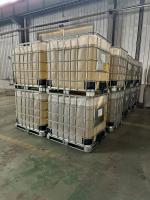
426_small.jpg "Polyamine resin|Epichlorohydrin-dimethylamine polymer|Poly(epichlorohydrin-dimethylamine)")
571_small.jpg "polyamine manufacturers(top three in China)|polyamine plants")