Application of Polyamine FLOQUAT FL 2350 and FLOQUAT FL 2949
1. Product Overview
cThese products are based on epichlorohydrin–dimethylamine (EPI-DMA) chemistry and are designed to act as primary coagulants or coagulant aids in a wide range of water and wastewater treatment processes.
Both products exhibit high cationic charge density, relatively low to medium molecular weight, and fast reaction kinetics. Their main function is charge neutralization of negatively charged colloids, enabling rapid aggregation and improved solid–liquid separation.
While FLOQUAT FL 2350 and FL 2949 share similar chemical functionality, they are typically differentiated by charge density, viscosity, and performance strength, allowing selection based on raw water characteristics and treatment objectives.
2. Mechanism of Action
The primary coagulation mechanism of FLOQUAT FL 2350 and FL 2949 is electrostatic charge neutralization. Suspended solids, organic matter, clay particles, emulsified oils, and microorganisms in water systems generally carry negative surface charges, which keep them stable and dispersed.
When FLOQUAT polyamine is added:
-
The positively charged amine groups neutralize particle surface charges
-
Repulsive forces are reduced
-
Particles collide and form micro-flocs
-
These micro-flocs can be removed by sedimentation, flotation, filtration, or further flocculation using high-molecular-weight polymers
Because of their rapid action, FLOQUAT FL 2350 and FL 2949 are often used upstream of flocculants to improve overall clarification efficiency and reduce flocculant consumption.
https://youtu.be/Dupi1l4w7GQ
3. Municipal Drinking Water Treatment
One of the key applications of FLOQUAT FL 2350 and FL 2949 is municipal drinking water treatment. They are used to remove:
These polyamines can be applied:
-
As primary coagulants, replacing or reducing alum or iron salts
-
As coagulant aids, improving performance of inorganic coagulants
Compared with traditional metal salts, FLOQUAT polyamines:
-
Produce less chemical sludge
-
Work effectively over a wide pH range
-
Reduce residual aluminum or iron
-
Improve filter run times and backwash efficiency
Their liquid, ready-to-use form ensures easy dosing and consistent performance in potable water plants.
4. Municipal and Industrial Wastewater Treatment
FLOQUAT FL 2350 and FL 2949 are widely used in municipal and industrial wastewater clarification. Typical applications include:
-
Primary clarification
-
Secondary effluent polishing
-
Removal of suspended solids (TSS)
-
Reduction of COD and turbidity
In industrial wastewater, these products are particularly effective for:
-
Textile and dyeing effluents
-
Chemical manufacturing wastewater
-
Food and beverage processing wastewater
-
Pulp and paper mill effluents
Their strong charge neutralization ability allows them to destabilize complex colloidal systems, oils, and organic matter, making downstream separation more efficient.
5. Sludge Conditioning and Dewatering
Another important application of FLOQUAT FL 2350 and FL 2949 is sludge conditioning prior to dewatering. In sludge systems, fine particles and organic matter are highly charged and retain water strongly.
When used as a pre-coagulant:
These products are commonly applied ahead of cationic or anionic polyacrylamide flocculants, resulting in:
They are compatible with centrifuges, belt filter presses, and filter presses.
6. Papermaking and Pulp Processing
In the papermaking industry, FLOQUAT FL 2350 and FL 2949 function as fixatives and coagulants. Their main roles include:
-
Fixation of anionic trash
-
Control of pitch and stickies
-
Retention of fines and fillers
-
Clarification of white water systems
By neutralizing negatively charged dissolved and colloidal substances (DCS), these polyamines improve:
They are particularly valuable in recycled fiber systems, where anionic contaminants are more prevalent.
7. Mining and Mineral Processing
In mining operations, FLOQUAT FL 2350 and FL 2949 are used for:
Fine mineral particles often remain suspended due to high surface charge. Polyamine coagulation improves aggregation, accelerates settling, and enhances water recovery. These products are effective in alumina refining, coal preparation, and metal ore processing circuits.
8. Oilfield and Energy Applications
In oil and gas production, these polyamines are applied in:
They help destabilize oil-water emulsions and fine solids, improving separation efficiency in flotation units, separators, and settling tanks.
9. Advantages of FLOQUAT FL 2350 and FL 2949
Key advantages include:
-
Fast coagulation kinetics
-
High charge density and efficiency
-
Low dosage requirements
-
Reduced sludge generation
-
Wide pH operating range
-
Compatibility with inorganic coagulants and polymer flocculants
-
Easy handling due to liquid formulation

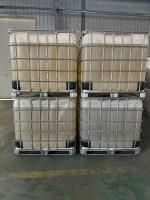



202_small.jpg "polyamine used in paper retention and drainage systems")
212_small.jpg "polyamine used for Drinking water clarification|polyamine 50%")