

Our Products

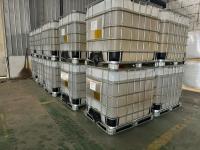
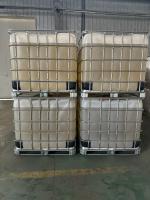
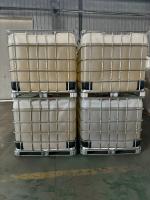
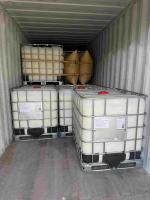
coagulant / polyamine for sludge dewatering centrifuge
Polyamine for sludge dewatering centrifuge is increasingly used as an effective chemical conditioning solution for wastewater and sewage sludge dewatering. In centrifuge dewatering systems, sludge particles are often extremely fine, highly hydrated, and negatively charged. Without proper conditioning, these particles can remain dispersed and retain large amounts of bound and free water, making mechanical separation difficult. A properly selected polyamine for sludge dewatering can neutralize particle charges, promote aggregation, improve solids capture, and help the centrifuge produce a drier sludge cake.
The main purpose of polyamine for centrifuge sludge dewatering is to condition sludge before it enters the centrifuge. Polyamine is a cationic organic polymer that can interact rapidly with negatively charged suspended solids and colloidal particles. By reducing electrostatic repulsion, polyamine for sludge dewatering centrifuge applications can transform fine particles into larger aggregates that are easier to separate by centrifugal force.
How Polyamine Works in Centrifuge Sludge Dewatering
The mechanism of polyamine for sludge dewatering is primarily based on charge neutralization, adsorption, and particle aggregation.
Wastewater sludge generally contains negatively charged organic and inorganic particles. These particles repel each other and remain dispersed in water. When a cationic polyamine coagulant for sludge dewatering is added, the positively charged polymer attaches to the negatively charged particles.
This process reduces the surface charge and destabilizes the sludge suspension. Once the particles are destabilized, they can collide and form larger aggregates.
During centrifuge operation, these aggregates respond more effectively to centrifugal force. Water can separate from the solid phase more readily, resulting in improved clarification and sludge cake formation.
Therefore, the overall process can be summarized as:
Sludge → Polyamine dosing → Charge neutralization → Particle aggregation → Centrifugal separation → Clarified centrate + dewatered sludge cake
Polyamine for Centrifuge Sludge Dewatering
A major application is polyamine for centrifuge sludge dewatering in municipal wastewater treatment plants. Municipal sludge can contain activated sludge, primary sludge, biological solids, and inorganic particles.
These materials often have different surface characteristics, so polymer selection is important.
When the correct polyamine for centrifuge is used, several improvements may be possible:
- Better sludge flocculation
- Improved solids capture
- Reduced suspended solids in centrate
- Improved centrifuge throughput
- Faster water release
- Improved sludge cake formation
- Potential reduction in chemical consumption
- More stable centrifuge operation
The actual performance depends strongly on sludge characteristics, centrifuge design, shear conditions, and polymer dosage.
Polyamine for Municipal Sludge Dewatering
Polyamine for municipal sludge dewatering is particularly useful where sludge contains a high proportion of fine biological solids.
Waste activated sludge can be difficult to dewater because biological flocs are small and highly hydrated. A suitable polyamine sludge dewatering chemical can destabilize these particles and improve their aggregation.
In a typical municipal wastewater plant, the treatment process may be:
Wastewater treatment → sludge thickening → polymer conditioning → centrifuge → sludge cake disposal
The polyamine for sludge dewatering centrifuge is generally injected upstream of the centrifuge, allowing sufficient mixing and conditioning before the sludge reaches the separation zone.
Polyamine for Activated Sludge Dewatering
Polyamine for activated sludge dewatering is another important application. Activated sludge contains microorganisms, extracellular polymeric substances, colloidal particles, and organic solids. These components can retain substantial quantities of water.
A properly selected cationic polyamine can destabilize the sludge structure and promote the formation of larger particles.
However, the strongest charge product is not necessarily the best product. Excessive charge neutralization can sometimes produce weak aggregates or negatively affect solids capture. Therefore, selecting the correct polyamine for sludge dewatering requires laboratory testing.
Polyamine Dosage for Centrifuge
The optimum polyamine dosage for centrifuge sludge dewatering depends on the type and concentration of sludge, solids content, particle size, organic content, pH, alkalinity, and centrifuge operating conditions.
There is no universal dosage that works for every sludge.
A practical approach is to perform laboratory jar tests or sludge dewatering tests using several polyamine concentrations. The test should evaluate:
- Floc formation
- Floc strength
- Filtrate or centrate clarity
- Water release
- Sludge cake dryness
- Solids capture
- Polymer consumption
The selected polyamine dosage for sludge dewatering should provide the best overall balance between dewatering performance and chemical cost.
Overdosing polyamine for centrifuge sludge dewatering can be counterproductive. Excess polymer may restabilize particles, increase the viscosity of the sludge, produce sticky flocs, or increase operating costs.
Polyamine vs. Cationic Polyacrylamide for Centrifuge
Both polyamine and cationic polyacrylamide (CPAM) are used for sludge dewatering, but they do not work in exactly the same way.
Polyamine for sludge dewatering is generally a relatively low-to-medium molecular weight cationic polymer that provides strong charge neutralization. Cationic polyacrylamide typically has a higher molecular weight and can provide stronger bridging between particles.
For some sludges, polyamine alone can provide excellent conditioning. For other sludges, CPAM may provide better floc size and mechanical strength.
A combined treatment approach can also be evaluated:
Polyamine → charge neutralization → CPAM → floc growth → centrifuge separation
This approach can be particularly useful when the sludge contains a high concentration of colloidal material.
Polyamine for Centrifuge Performance Improvement
The objective of polyamine for centrifuge dewatering is not simply to produce visible flocs. The flocs must also survive the high shear conditions created during pumping, mixing, and centrifuge feeding.
A good polyamine for centrifuge should therefore provide rapid conditioning and sufficiently strong aggregates.
Improved conditioning may allow the centrifuge to achieve better:
- Solids capture
- Centrate clarity
- Cake dryness
- Hydraulic throughput
- Separation efficiency
- Overall process stability
The optimum chemical program depends on the particular centrifuge and sludge.
Polyamine for Industrial Sludge Dewatering
In addition to municipal sludge, polyamine for sludge dewatering centrifuge applications can be found in industrial wastewater treatment.
Potential applications include:
- Food-processing sludge
- Paper mill sludge
- Textile wastewater sludge
- Chemical industry sludge
- Petrochemical sludge
- Oil-containing wastewater sludge
- Pharmaceutical wastewater sludge
- Industrial biological sludge
Industrial sludge can contain very different levels of oil, organic matter, inorganic solids, and colloids. Consequently, polyamine for industrial sludge dewatering should be selected according to the specific wastewater chemistry.
Polyamine and Centrate Quality
An important consideration when using polyamine for centrifuge sludge dewatering is the quality of the centrate.
Poor chemical conditioning can result in fine particles passing into the centrate, increasing turbidity and suspended solids. Good conditioning promotes the capture of fine particles in the sludge cake.
Therefore, when evaluating polyamine for sludge dewatering centrifuge, operators should not look only at cake dryness. They should also monitor:
- Centrate turbidity
- Total suspended solids
- Solids capture
- Cake solids concentration
- Polymer dosage
- Centrifuge torque
- Feed rate
A product that produces a slightly drier cake but causes excessive centrate solids may not be the best overall solution.
How to Select Polyamine for Sludge Dewatering Centrifuge
Important product parameters include:
- Cationic charge density
- Molecular weight
- Viscosity
- Active solids concentration
- Solution preparation characteristics
- Sludge compatibility
- Floc strength
- Shear resistance
The best polyamine for sludge dewatering centrifuge is determined by actual sludge testing rather than product specifications alone.
For suppliers and wastewater treatment operators, useful SEO search terms include polyamine for sludge dewatering, polyamine for centrifuge sludge dewatering, polyamine sludge dewatering chemical, polyamine for municipal sludge, polyamine for activated sludge dewatering, polyamine coagulant for sludge dewatering, and polyamine for industrial sludge dewatering.
Conclusion
Polyamine for sludge dewatering centrifuge is an effective chemical conditioning option for improving the separation of water and solids in centrifuge systems. Its principal function is charge neutralization and particle destabilization, which helps convert fine, stable sludge particles into larger aggregates that can be separated more efficiently by centrifugal force.
The most important applications include polyamine for municipal sludge dewatering, polyamine for activated sludge dewatering, polyamine for industrial sludge dewatering, and polyamine for centrifuge sludge dewatering.
The optimum product and dosage depend on the sludge characteristics and centrifuge operating conditions. Jar testing and pilot testing are therefore recommended before full-scale implementation. In some systems, polyamine for sludge dewatering can be used alone, while in others it can be combined with cationic polyacrylamide or inorganic coagulants to achieve better overall dewatering performance.
For centrifuge operators seeking higher solids capture, better centrate quality, improved cake formation, and controlled polymer consumption, a properly selected polyamine for sludge dewatering centrifuge can be an important part of the sludge-conditioning program.