

Our Products

coagulant / 1000000mts of polyamine production capacity manufacturer from China
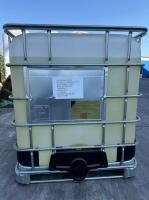
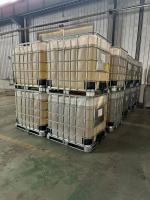
Polyamine is a cationic organic polymer coagulant widely used in water treatment, wastewater treatment, sludge conditioning, color removal, clarification, flotation, and industrial process-water treatment. Commercial polyamines are generally designed to provide strong positive charge, allowing them to neutralize negatively charged colloids, suspended solids, organic matter, dyes, and other contaminants. Polyamine is commonly classified alongside PolyDADMAC as an organic coagulant, but polyamine and PolyDADMAC are chemically different product families.
The major advantage of polyamine is that it can destabilize colloidal particles at relatively low dosage. Because polyamine products are generally low- to medium-molecular-weight cationic polymers, they can disperse rapidly through wastewater and neutralize particle charges efficiently. SNF describes polyamine and PolyDADMAC as high-cationic-charge organic coagulants used in water purification.
1. Polyamine for Municipal Wastewater Treatment
One of the most important applications of polyamine is municipal wastewater treatment.
Municipal sewage contains suspended solids, colloidal particles, organic matter, phosphate, color bodies, microorganisms, and other negatively charged materials. Polyamine can be added during primary or physicochemical treatment to destabilize these particles and improve solid-liquid separation.
Typical applications include:
- Primary clarification
- Coagulation-flocculation
- Dissolved air flotation (DAF)
- Suspended-solids removal
- Phosphorus-related treatment programs
- Tertiary clarification
- Sludge thickening
- Sludge conditioning
Polyamine can be used alone or together with inorganic coagulants such as PAC, alum, ferric chloride, or ferric sulfate. The optimum combination depends strongly on wastewater characteristics and treatment objectives.
SNF identifies organic coagulants including polyamine and PolyDADMAC as part of wastewater-treatment programs covering pretreatment, biological-stage load reduction, sedimentation, sludge thickening, and sludge dewatering.
2. Polyamine for Industrial Wastewater
Industrial wastewater is another major application for polyamine.
Industrial effluents can contain highly variable concentrations of suspended solids, oils, emulsified materials, dyes, organic compounds, colloids, and metals. Polyamine can rapidly neutralize negatively charged particles and promote the formation of larger aggregates that can subsequently be removed by sedimentation or flotation.
Polyamine is commonly considered for wastewater from:
- Petrochemical plants
- Refineries
- Food-processing plants
- Textile factories
- Tanneries
- Chemical plants
- Paper mills
- Mining operations
- Metal-processing plants
- Pharmaceutical manufacturing
- Agricultural-processing facilities
The advantage of polyamine is particularly important where conventional inorganic coagulants produce excessive sludge or require relatively strict pH control. Organic coagulants can reduce the amount of metal-hydroxide sludge generated compared with metal salts because the organic polymer itself does not create the same inorganic precipitate.
3. Polyamine for Turbidity Removal and Water Clarification
Polyamine is highly effective for turbidity removal.
Fine suspended particles in natural water often have negative surface charges and therefore remain dispersed instead of settling naturally. When polyamine is introduced, its positively charged sites adsorb onto the particles and neutralize their electrical charge.
The destabilized particles then collide and form larger aggregates.
The treatment sequence can be summarized as:
Polyamine addition → charge neutralization → particle destabilization → micro-floc formation → settling/flotation → clarified water
This makes polyamine useful for raw-water clarification, industrial process-water clarification, and wastewater clarification.
For drinking-water applications, however, the specific polyamine product must have the appropriate regulatory approval/certification for the intended use. Not every commercial polyamine should automatically be used in potable-water treatment.
4. Polyamine for Drinking Water Treatment
Polyamine can also be used in drinking-water treatment, particularly where surface water contains substantial amounts of natural organic matter, humic substances, color, algae, and fine colloidal particles.
SNF technical literature identifies polyamine and PolyDADMAC as highly cationic organic coagulants for drinking-water treatment. Applications include clarification by settling, flotation clarification, and direct filtration.
Polyamine may be used:
- As a primary organic coagulant
- As a partial replacement for alum or ferric salts
- As a coagulant aid
- Before sedimentation
- Before dissolved air flotation
- Before filtration
Potential benefits include reduced inorganic-coagulant consumption, improved clarification, and reduced sludge production in appropriate treatment systems.
5. Polyamine for Color Removal and Decolorization
Color removal is one of the particularly important applications of polyamine.
Many industrial wastewaters contain negatively charged dissolved or colloidal color compounds. Textile wastewater, dye wastewater, paper wastewater, and some food-processing effluents can therefore respond well to strongly cationic polymers.
Polyamine can adsorb and neutralize anionic color molecules, allowing them to become incorporated into flocs.
It is particularly useful for:
- Textile dye wastewater
- Printing wastewater
- Paper and pulp wastewater
- Tannery wastewater
- Food-processing wastewater
- Chemical wastewater
For severe color problems, polyamine may be combined with PAC, ferric salts, activated carbon, or another polymer. Jar testing is normally required because color chemistry varies considerably between wastewater sources.
6. Polyamine in Textile Wastewater Treatment
Textile wastewater frequently contains dyes, surfactants, sizing chemicals, suspended fibers, organic compounds, and high color.
Polyamine can be used during physicochemical pretreatment to reduce color and suspended solids before biological treatment.
A typical treatment sequence can be:
Equalization → pH adjustment → polyamine coagulation → PAC/ferric treatment if required → flocculation → DAF or sedimentation → biological treatment
Polyamine is particularly attractive when rapid color reduction is required.
7. Polyamine for Paper and Pulp Industry
Polyamine also has important applications in the pulp and paper industry.
Paper-process water contains fibers, fines, fillers, dissolved organic matter, pitch, and other colloidal materials. Polyamine can help neutralize unwanted charges and improve retention and drainage.
SNF specifically notes that filler-retention programs can be associated with a coagulant such as polyamine or PolyDADMAC.
Applications include:
- Filler retention
- Fiber retention
- White-water clarification
- Pitch control
- Process-water clarification
- Wastewater treatment
- Charge control
The exact polyamine chemistry must be selected according to the paper grade, furnish, pH, conductivity, filler type, and machine conditions.
8. Polyamine for Sludge Conditioning
Polyamine can also contribute to sludge conditioning, although the best polymer depends on the type of sludge.
Its positive charge can destabilize negatively charged sludge particles and assist aggregation. This can improve subsequent separation by sedimentation, flotation, filtration, or mechanical dewatering.
Polyamine can be considered for:
- Primary sludge
- Industrial sludge
- DAF sludge
- Mixed wastewater sludge
- Some biological sludge systems
- Sludge thickening
However, for many biological sludge-dewatering applications, a cationic polyacrylamide (CPAM) may be more appropriate than polyamine because CPAM can provide both charge neutralization and high-molecular-weight bridging.
9. Polyamine for DAF Treatment
Polyamine is frequently useful in dissolved air flotation (DAF) systems.
DAF is particularly useful for wastewater containing low-density particles, oils, fats, grease, fibers, and biological solids.
Polyamine destabilizes the colloidal material, after which air bubbles attach to the resulting flocs and transport them to the water surface.
This makes polyamine useful for:
- Food-processing DAF
- Dairy wastewater
- Petrochemical wastewater
- Refinery wastewater
- Textile wastewater
- Paper wastewater
- Municipal wastewater
Solenis identifies organic coagulants as important tools for solids removal, clarification, flotation, sludge thickening, and solids dewatering.
10. Polyamine for Oil and Petrochemical Wastewater
Polyamine can be useful in wastewater containing oil, emulsified oil, suspended solids, and colloidal hydrocarbons.
The polymer can destabilize emulsions and suspended material, improving downstream flotation or clarification.
Typical applications include:
- Refinery wastewater
- Oilfield produced-water treatment
- Petrochemical wastewater
- Tank-bottom wastewater
- Oily industrial wastewater
- Process-water recycling
In these systems, polyamine may be combined with inorganic coagulants and flocculants to achieve better oil-water separation.
11. Polyamine for Sand and Aggregate Washing Water
Polyamine can also be used in selected sand-washing and aggregate-washing wastewater systems.
The washing process generates water containing fine clay, silt, and suspended mineral particles. Polyamine can destabilize some of the fine particles, while an anionic or nonionic PAM may subsequently provide polymer bridging and produce larger settling flocs.
However, for highly mineralized wastewater, anionic PAM is often the primary flocculant. Polyamine is more commonly considered as a coagulant or pretreatment chemical where charge neutralization is needed.
12. Polyamine Combined with PAC, Alum, or Ferric Salts
One of the most useful characteristics of polyamine is its compatibility with conventional coagulation programs.
For example:
Polyamine + PAC + anionic PAM
can provide:
- Polyamine — charge neutralization
- PAC — inorganic coagulation and precipitation
- Anionic PAM — polymer bridging and large-floc formation
Another possibility is:
PAC + polyamine
when stronger charge neutralization and lower inorganic-coagulant consumption are desired.
SNF notes that organic coagulants can be used directly or in combination with metal salts.
13. Polyamine vs. PolyDADMAC
Polyamine and PolyDADMAC are both cationic organic coagulants, but they should not be treated as identical products.
PolyDADMAC is based on diallyldimethylammonium chloride chemistry and contains permanent quaternary ammonium charge. Polyamine products are a broader family of cationic amine-based polymers.
The performance difference depends on:
- Charge density
- Molecular weight
- Polymer structure
- Solids concentration
- Wastewater pH
- Conductivity
- Organic matter
- Particle characteristics
Therefore, a polyamine should be selected by jar testing rather than simply replacing one PolyDADMAC grade with another product on a 1:1 dosage basis.
14. Polyamine Dosage and Product Selection
There is no universal polyamine dosage.
The optimum dosage can range from relatively low concentrations for clean water clarification to substantially higher concentrations for heavily contaminated industrial wastewater.
Important selection parameters include:
- Cationic charge density
- Molecular weight
- Active solids
- Viscosity
- pH
- Wastewater temperature
- Conductivity
- Suspended-solids concentration
- Organic content
- Required color removal
- Required turbidity reduction
Jar testing should determine the optimum dosage, mixing conditions, and whether polyamine should be combined with PAC, alum, ferric chloride, or PAM.
834_small.jpg "polyamine(40-50% solid content)manufacturer|polyamine (1000-3000 viscosity)suppliers")