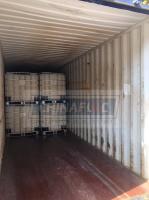
Polyamine is a cationic, low- to medium-molecular-weight polymer widely utilized as a primary coagulant and charge neutralization agent in water treatment, papermaking, oilfield operations, and various industrial separation processes. Its structure typically consists of repeating amine functional groups that become protonated in aqueous solution, imparting a strong positive charge density. This high cationic charge enables effective destabilization of negatively charged colloidal particles, making polyamine a critical chemical in solid–liquid separation systems. The following sections provide a structured and technically detailed overview of the principal applications of polyamine across industrial sectors.
https://youtube.com/shorts/fMlLfTIgk6M
1. Municipal and Industrial Water Treatment
Polyamine is extensively applied in drinking water purification and wastewater treatment plants as a primary coagulant or coagulant aid. Its mechanism is primarily based on electrostatic charge neutralization, adsorption bridging, and colloidal destabilization. In raw water treatment, polyamine effectively removes turbidity, natural organic matter (NOM), algae, and suspended solids. Compared to conventional inorganic coagulants such as aluminum sulfate or ferric chloride, polyamine offers lower sludge production and reduced sensitivity to pH variations.
In industrial wastewater treatment, polyamine is particularly effective for high chemical oxygen demand (COD) and color removal. Industries such as textile dyeing, printing, leather tanning, and chemical manufacturing generate effluents rich in anionic dyes and soluble organic compounds. Polyamine interacts with these negatively charged species to form insoluble complexes, facilitating rapid floc formation and sedimentation. It is often used in combination with anionic polyacrylamide (PAM) flocculants to enhance floc size and settling velocity, improving clarification efficiency.
2. Sludge Dewatering and Thickening
Polyamine plays a significant role in sludge conditioning prior to mechanical dewatering processes such as belt filter presses, centrifuges, and screw presses. In activated sludge systems, the biomass particles typically carry a negative surface charge, leading to poor dewaterability. Polyamine neutralizes these charges and promotes aggregation into larger, more compact flocs.
The resulting flocs exhibit improved permeability and reduced bound water content, which enhances filtration rates and cake solids concentration. Compared to high-molecular-weight cationic polyacrylamides, polyamine acts more rapidly due to its lower molecular weight and higher charge density, making it suitable for initial conditioning stages or as a coagulant prior to polymer addition.
3. Paper and Pulp Industry
In the pulp and paper sector, polyamine is widely used as a retention and drainage aid, as well as a fixative for anionic contaminants. During papermaking, negatively charged fines, fillers, and dissolved organic substances (often referred to as “anionic trash”) can interfere with process stability and product quality. Polyamine neutralizes these charges, improving retention of fines and fillers within the paper sheet.
Additionally, polyamine enhances drainage performance on the wire section of paper machines by promoting faster water release, thereby increasing machine speed and production efficiency. It also improves paper strength properties by facilitating better fiber–fiber bonding through charge neutralization and flocculation mechanisms.
4. Oil and Gas Industry
Polyamine is applied in oilfield operations, particularly in drilling fluid systems and produced water treatment. In drilling fluids, polyamine derivatives may function as shale inhibitors by stabilizing clay formations and preventing swelling or dispersion. The cationic nature of polyamine allows it to adsorb onto negatively charged clay surfaces, forming a protective layer that enhances wellbore stability.
In produced water treatment, polyamine is used to remove dispersed oil droplets, suspended solids, and residual polymers. Its strong charge neutralization capability promotes coalescence of oil droplets and aggregation of fine particles, enabling efficient separation through flotation or sedimentation processes.
5. Mining and Mineral Processing
In mining operations, polyamine is employed in solid–liquid separation processes such as tailings thickening, clarification, and water recycling. Mineral suspensions often contain fine particles with high surface charge, leading to slow settling rates. Polyamine destabilizes these suspensions, facilitating rapid flocculation and improved settling kinetics.
It is particularly useful in the treatment of red mud from alumina production, coal washery effluents, and metal ore beneficiation processes. By improving water recovery and reducing turbidity, polyamine contributes to more efficient resource utilization and environmental compliance.
6. Textile and Dyeing Industry
The textile industry generates large volumes of colored wastewater containing reactive, direct, and acid dyes, which are typically anionic and resistant to biodegradation. Polyamine is highly effective in decolorization processes due to its strong cationic charge, which enables it to bind with dye molecules and form insoluble complexes.
This application significantly reduces color, COD, and total organic carbon (TOC) levels, making the effluent more amenable to downstream biological treatment or discharge. Polyamine is often preferred over inorganic coagulants in textile applications due to its lower dosage requirements and reduced sludge generation.
7. Sugar and Food Processing
In sugar refining, polyamine is used as a clarification agent to remove impurities such as proteins, colloids, and color bodies from raw juice. Its application improves juice clarity, reduces turbidity, and enhances the efficiency of downstream filtration and crystallization processes.
Similarly, in other food processing industries, polyamine may be used for clarification of process water and removal of suspended solids, provided that it meets relevant regulatory standards for food-grade chemicals.
8. Cooling Water and Circulating Systems
Polyamine is also utilized in industrial cooling water systems as a dispersant and coagulant for suspended solids and organic contaminants. It helps maintain system cleanliness by preventing deposition and fouling in heat exchangers and pipelines. In combination with other treatment chemicals, polyamine contributes to improved heat transfer efficiency and reduced maintenance costs.