

Our Products

coagulant / polydadmac top ten manufacturers in China|Polyamine suppliers
1. Introduction to PolyDADMAC
PolyDADMAC, also known as poly(diallyldimethylammonium chloride), is a cationic water-soluble polymer widely used as a coagulant in water treatment, wastewater treatment, paper manufacturing, and various industrial processes. Because PolyDADMAC carries a strong positive charge, it can neutralize negatively charged suspended particles, colloids, and certain organic impurities in water.
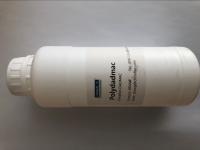
PolyDADMAC is commonly supplied as a liquid solution with different active solids contents and molecular weights. Its performance depends on the product grade, water quality, dosage, and operating conditions.
Unlike polyacrylamide (PAM), which is often used to bridge particles into larger flocs, PolyDADMAC primarily promotes coagulation through charge neutralization. It can be used independently or in combination with polyaluminum chloride (PAC), aluminum sulfate, and suitable polymeric flocculants.
2. PolyDADMAC for Drinking Water Treatment
One important application of PolyDADMAC is raw water treatment for drinking water production. Surface water from rivers, lakes, and reservoirs often contains suspended solids, clay particles, colloidal matter, and natural organic substances.
PolyDADMAC helps destabilize these impurities, allowing them to aggregate and be removed through sedimentation and filtration.
Potential benefits include:
-
Improved turbidity removal.
-
More efficient removal of suspended particles.
-
Improved performance during fluctuations in raw water quality.
-
Support for downstream filtration.
-
Potential reduction in the demand for certain inorganic coagulants.
The appropriate PolyDADMAC grade must be approved for the intended drinking-water application and comply with relevant local regulations. Dosage should be determined through jar testing, and residual monomers and other product-quality requirements must be considered.
3. PolyDADMAC for Municipal Wastewater Treatment
Municipal wastewater contains suspended solids, colloidal particles, organic matter, and other pollutants from residential and commercial sources. PolyDADMAC can be used as a primary coagulant to improve solid-liquid separation in selected wastewater treatment processes.
By neutralizing the negative surface charge of particles, PolyDADMAC reduces electrostatic repulsion and promotes aggregation. The resulting particles can be removed through sedimentation, flotation, or filtration.
Common applications include primary wastewater clarification, suspended solids removal, tertiary treatment, and pretreatment before filtration.
PolyDADMAC may also be combined with inorganic coagulants or polyacrylamide to improve treatment performance. However, it does not replace biological treatment for dissolved biodegradable pollutants or disinfection for pathogen control.
4. PolyDADMAC for Industrial Wastewater Treatment
Industrial wastewater varies significantly according to the production process. Textile, paper, food processing, chemical manufacturing, and other industries may generate wastewater containing dyes, colloids, fine solids, and organic impurities.
PolyDADMAC can be evaluated for industrial wastewater clarification because its cationic charge helps destabilize negatively charged contaminants.
In textile wastewater treatment, it may assist in removing selected suspended particles and some charged dye-related substances. In food-processing wastewater, it can support the removal of suspended organic matter. In chemical manufacturing, it may help clarify process water containing colloidal impurities.
Its effectiveness depends on the chemical structure of the contaminants. PolyDADMAC does not remove every dissolved organic compound, salt, or dye, so additional treatment may be necessary.
5. PolyDADMAC for Mining and Mineral Processing
Mining operations generate process water containing fine mineral particles, clay, and suspended solids. These impurities can interfere with water reuse and increase the load on downstream clarification systems.
PolyDADMAC can be tested as a coagulant for selected mining wastewater streams and mineral-processing water circuits.
Its main potential applications include:
-
Mineral-processing wastewater clarification: Destabilizing fine suspended particles before sedimentation or filtration.
-
Tailings-water treatment: Improving the separation of suspended solids from selected tailings supernatants.
-
Ore-washing wastewater: Supporting the removal of fine particles from water used in ore washing.
-
Coal-washing wastewater: Helping destabilize fine suspended matter in suitable coal preparation streams.
-
Process-water recycling: Improving water clarity before reuse in selected processing operations.
For thickener applications, PolyDADMAC may be used as a primary coagulant, followed by a suitable anionic polyacrylamide flocculant. The coagulant destabilizes particles, while the flocculant promotes the formation of larger aggregates.
PolyDADMAC is not a universal substitute for mining flocculants. Mineralogy, particle size, pH, salinity, and residual flotation reagents can significantly affect performance.
6. PolyDADMAC for Sludge Conditioning and Dewatering
Wastewater treatment plants generate sludge containing water, organic matter, and suspended solids. Before disposal or further processing, sludge often requires thickening and mechanical dewatering.
PolyDADMAC may be used in selected sludge-conditioning applications to neutralize particle charges and improve aggregation. Depending on the sludge composition, this may support subsequent separation using centrifuges, belt filter presses, or other dewatering equipment.
However, PolyDADMAC is not necessarily the most effective standalone dewatering polymer. Cationic polyacrylamide is often evaluated for its ability to produce larger flocs and improve water release.
Comparative testing should assess filtrate quality, cake solids, settling performance, polymer consumption, and total operating cost.
7. PolyDADMAC in the Paper and Pulp Industry
The paper industry uses PolyDADMAC in several wet-end and process-water applications. Paper stock contains cellulose fibers, fillers, fines, and dissolved or colloidal substances that influence production efficiency.
PolyDADMAC can function as a cationic charge-control agent, helping neutralize anionic contaminants and improve the performance of retention and drainage systems.
Potential benefits include improved retention of fine materials, better control of dissolved and colloidal substances, and more stable paper-machine operation.
The dosage and addition point depend on the furnish composition, other chemical additives, and the paper machine's operating conditions.
8. PolyDADMAC for Swimming Pool Water Clarification
PolyDADMAC can also be used in certain swimming pool clarification products to help remove fine suspended particles responsible for cloudy water.
By destabilizing negatively charged particles, an appropriate PolyDADMAC-based product may improve their removal by the pool's filtration system.
Pool owners should use only products specifically labeled for swimming pool treatment and follow the manufacturer's dosage instructions. Industrial PolyDADMAC should not automatically be assumed suitable for pools, particularly where swimmer exposure and compatibility with disinfectants are concerned.
9. PolyDADMAC Dosage and Product Selection
The optimum PolyDADMAC dosage depends on the application, turbidity, suspended solids concentration, particle charge, pH, and product concentration.
For effective application, users should:
-
Identify the treatment objective and characterize the water.
-
Select a PolyDADMAC grade with suitable active solids content and molecular weight.
-
Conduct jar tests at several dosages.
-
Evaluate turbidity reduction, floc formation, settling, and residual water quality.
-
Confirm compatibility with PAC, aluminum sulfate, or polyacrylamide if combined treatment is planned.
Excessive dosing may increase costs and can impair treatment performance. Product selection should also consider storage stability, handling requirements, regulatory approval, and residual-polymer limits where applicable.
10. Conclusion
PolyDADMAC is a versatile cationic coagulant with applications in drinking water treatment, municipal wastewater treatment, industrial wastewater clarification, mining, sludge conditioning, paper manufacturing, and selected swimming pool clarification products.
Its primary function is to neutralize negatively charged particles and promote their removal from water. In mining and industrial applications, PolyDADMAC may be combined with polyacrylamide to improve floc formation, settling, and water recovery.
For the best results, users should select the correct PolyDADMAC grade, confirm product specifications, and conduct application-specific testing. Proper dosage and compatibility assessment can improve treatment efficiency, reduce chemical consumption, and support more effective water recycling.
848_small.jpg "TOP three of polydadmac manufacturer in China|polydadmac for water treatment")