

Our Products

coagulant / PolyDADMAC for municipal sludge conditioning|suspended solids removal
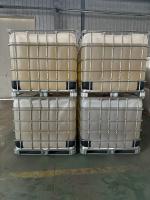
PolyDADMAC for municipal sludge conditioning and suspended solids removal is an important application of cationic polymer technology in wastewater treatment plants. PolyDADMAC, or polydiallyldimethylammonium chloride, is a water-soluble cationic polymer with a high density of permanent positive charges. It can interact strongly with negatively charged sludge particles, colloids, microorganisms, and fine suspended solids, promoting aggregation and improving solid-liquid separation.
Municipal wastewater contains a complex mixture of organic solids, inorganic particles, microorganisms, colloids, extracellular polymeric substances, and other suspended materials. After biological treatment, these materials form sludge that can contain a very high proportion of water. Effective conditioning is therefore necessary before thickening, dewatering, transportation, digestion, or final disposal. At the same time, PolyDADMAC can be used upstream for suspended-solids removal and clarification.
1. Principle of PolyDADMAC for Municipal Sludge Conditioning
The main mechanism of PolyDADMAC for municipal sludge conditioning is charge neutralization.
Most sludge particles and biological solids carry a negative surface charge. This creates electrostatic repulsion between particles and prevents them from naturally forming large, dense aggregates.
When PolyDADMAC is added, its positively charged polymer chains are attracted to the negatively charged sludge particles. The polymer adsorbs onto the particle surfaces and reduces electrostatic repulsion.
Once destabilized, the particles can collide and aggregate into larger flocs.
The basic mechanism can be summarized as:
Negatively charged sludge particles → PolyDADMAC adsorption → charge neutralization → aggregation → stronger sludge flocs → improved water separation
The resulting flocs can be separated more efficiently through gravity thickening, dissolved air flotation, centrifugation, belt-filter pressing, screw pressing, or other dewatering technologies.
2. Municipal Sludge Characteristics
Municipal sludge is highly variable depending on the treatment process.
Typical sludge streams include:
- Primary sludge
- Waste activated sludge
- Return activated sludge
- Secondary sludge
- Mixed primary and biological sludge
- Tertiary-treatment sludge
Primary sludge generally contains relatively large organic and inorganic particles. Waste activated sludge contains large quantities of microorganisms and extracellular polymeric substances.
Waste activated sludge can be particularly difficult to dewater because biological particles retain significant quantities of water.
PolyDADMAC for municipal sludge conditioning can help destabilize these particles and create larger flocs that release water more readily during mechanical dewatering.
3. Suspended Solids Removal
PolyDADMAC is also useful for removing suspended solids from municipal wastewater before sludge conditioning.
Fine suspended solids and colloids can remain dispersed because of their surface charge. These particles may pass through conventional settling systems and increase the suspended-solids concentration of treated effluent.
PolyDADMAC destabilizes these particles and promotes aggregation.
The resulting flocs settle more rapidly, allowing more suspended solids to be captured in primary or secondary clarification.
This can provide:
- Lower effluent suspended solids
- Improved clarifier performance
- Reduced solids carryover
- Better supernatant clarity
- Reduced loading on tertiary filters
- Improved overall treatment stability
4. Primary Clarification
In primary treatment, PolyDADMAC can be applied as a coagulant or coagulation aid.
Municipal sewage contains suspended organic solids, fine mineral particles, colloids, and other materials that may settle slowly. Adding PolyDADMAC can improve particle aggregation and increase capture in the primary clarifier.
Higher suspended-solids removal at the primary stage can reduce the particulate organic load entering the biological treatment process.
However, the optimum dosage should be established through jar testing because excessive polymer addition can increase sludge production and operating costs.
5. Secondary Clarification
Secondary clarifiers separate biological solids from treated wastewater.
Under favorable operating conditions, activated sludge forms settleable flocs. However, poor settling, dispersed growth, or other process disturbances can result in suspended solids escaping with the final effluent.
PolyDADMAC for suspended solids removal can help aggregate fine biological solids and improve solid-liquid separation.
It should not, however, be regarded as a substitute for correcting biological problems such as sludge bulking, filamentous growth, inadequate dissolved oxygen, or inappropriate sludge age.
Chemical conditioning can improve separation, but long-term biological process control remains essential.
6. Sludge Thickening
Sludge thickening reduces the volume of water associated with sludge before digestion or dewatering.
PolyDADMAC can promote the aggregation of fine sludge particles into larger flocs. These flocs settle more efficiently and can form a denser sludge layer.
Improved thickening can reduce the volume of sludge requiring downstream processing.
This may lower:
- Pumping requirements
- Tank volume requirements
- Digester loading
- Heating requirements
- Transportation costs
- Dewatering chemical requirements in some systems
7. Sludge Dewatering
One of the most important applications of PolyDADMAC for municipal sludge conditioning is mechanical sludge dewatering.
Municipal sludge contains large quantities of water. A significant portion of this water can be associated with fine particles or trapped within sludge structures.
PolyDADMAC destabilizes the sludge matrix and creates larger flocs.
During dewatering, water can then separate from the solids more efficiently.
PolyDADMAC may be used with:
- Belt filter presses
- Screw presses
- Decanter centrifuges
- Filter presses
- Vacuum filtration systems
The optimum polymer depends heavily on the particular dewatering equipment.
8. Belt Filter Press Application
In belt-filter-press systems, conditioned sludge is introduced onto a moving porous belt.
Good polymer conditioning produces flocs that are large enough to retain solids while allowing free water to drain.
PolyDADMAC for municipal sludge conditioning can therefore improve filtrate quality and increase cake-solids concentration.
Poorly conditioned sludge may release fine particles through the belt, producing cloudy filtrate and lower solids capture.
Overdosed sludge can also become excessively slimy and difficult to handle.
9. Centrifuge Application
Centrifuges separate water and solids using centrifugal force.
PolyDADMAC can improve centrifuge performance by forming larger and stronger sludge flocs.
Effective conditioning can increase solids capture and improve the dryness of the discharged sludge cake.
However, centrifuge optimization requires balancing polymer dosage, feed rate, bowl speed, differential speed, and solids concentration.
Therefore, polymer selection should always be tested under actual operating conditions.
10. PolyDADMAC Charge Density
Charge density is one of the most important characteristics when selecting PolyDADMAC for municipal sludge conditioning.
Because sludge particles are generally negatively charged, a strongly cationic polymer can provide rapid charge neutralization.
High-charge PolyDADMAC can be particularly effective when the sludge contains highly negatively charged biological particles.
However, excessive charge or excessive dosage can result in charge reversal.
The optimum polymer is therefore not necessarily the product with the highest cationic charge. The correct product is the one that provides effective flocculation and dewatering at the lowest practical dosage.
11. Molecular Weight
Molecular weight also affects performance.
Lower- or medium-molecular-weight PolyDADMAC can provide strong charge neutralization. Higher molecular weight may contribute to larger polymer chains and stronger particle aggregation.
For sludge conditioning, the balance between charge density and molecular weight is important.
A polymer with excessive charge but unsuitable molecular weight may not produce the strongest or most easily dewatered flocs.
Laboratory testing is therefore more reliable than selecting a product solely from its molecular-weight specification.
12. PolyDADMAC Dosage
There is no universal dosage for PolyDADMAC for municipal sludge conditioning.
For wastewater clarification, initial screening may evaluate approximately 1–20 mg/L of commercial product, depending on wastewater characteristics.
For sludge dewatering, dosage is more appropriately expressed as kg of active polymer per tonne of dry solids (kg/t DS). The required dosage can vary significantly according to sludge type, solids concentration, organic content, equipment, and polymer characteristics.
Primary sludge, waste activated sludge, and mixed sludge can require substantially different treatment conditions.
13. Jar and Dewatering Tests
Product selection should involve practical laboratory testing.
For suspended-solids removal, jar tests can compare:
- Turbidity
- Suspended solids
- Floc size
- Settling velocity
- Supernatant clarity
For sludge conditioning, laboratory dewatering tests can evaluate:
- Filtrate clarity
- Solids capture
- Floc strength
- Capillary suction time
- Specific resistance to filtration
- Cake solids
- Polymer consumption
These tests help identify the optimum PolyDADMAC product and dosage.
14. Combination with PAC and Ferric Salts
PolyDADMAC can be combined with inorganic coagulants such as PAC, aluminum sulfate, or ferric chloride.
The inorganic coagulant can generate precipitates that capture contaminants, while PolyDADMAC rapidly neutralizes particle charges and improves aggregation.
This combination may be especially useful for wastewater clarification and suspended-solids removal.
For sludge dewatering, however, the optimum chemistry depends on the sludge source and dewatering equipment. In some systems, PolyDADMAC may be used independently, while in others it may complement inorganic conditioning chemicals.
15. Operational Benefits
The major benefits of PolyDADMAC for municipal sludge conditioning and suspended solids removal include:
- Rapid charge neutralization
- Efficient fine-particle aggregation
- Improved suspended-solids capture
- Better primary clarification
- Improved secondary solid-liquid separation
- Enhanced sludge thickening
- Improved mechanical dewatering
- Higher solids capture
- Potentially clearer filtrate
- Reduced solids loading on downstream treatment
Conclusion
PolyDADMAC for municipal sludge conditioning and suspended solids removal provides an effective chemical method for improving the aggregation and separation of negatively charged particles in municipal wastewater and sludge.
Its strong cationic charge allows it to destabilize fine suspended solids, colloids, microorganisms, and sludge particles. In wastewater clarification, this can improve suspended-solids removal and reduce solids carryover. In sludge treatment, PolyDADMAC can improve thickening, floc formation, water release, solids capture, and mechanical dewatering.
PolyDADMAC can be used with primary clarifiers, secondary clarifiers, dissolved-air flotation systems, belt filter presses, centrifuges, screw presses, and other separation equipment. It can also be combined with PAC, alum, or ferric salts where appropriate.
The most important factors are cationic charge density, molecular weight, dosage, sludge type, solids concentration, pH, mixing conditions, and dewatering equipment. Because municipal sludge varies significantly from plant to plant, jar testing and actual dewatering trials should be used to determine the optimum PolyDADMAC grade and dosage.
Properly selected and dosed, PolyDADMAC for municipal sludge conditioning can significantly improve solid-liquid separation while PolyDADMAC for suspended solids removal can help produce clearer treated water and more stable wastewater-treatment operation.