

Our Products

coagulant / PolyDADMAC polydadmac for tertiary wastewater treatment|sewage treatment plant
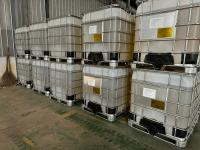
PolyDADMAC for tertiary wastewater treatment is an effective application of cationic polymer technology for improving the removal of fine suspended solids, colloids, residual organic particles, phosphorus-containing solids, color, and other particulate contaminants from treated sewage. PolyDADMAC, also known as polydiallyldimethylammonium chloride, is a water-soluble cationic polymer with a high density of permanent positive charges. It is widely used as a coagulant or coagulation aid because it can rapidly neutralize the negative charges present on many wastewater particles.
In a modern sewage treatment plant, tertiary treatment is normally installed after primary and biological secondary treatment. Although secondary biological treatment can remove a large proportion of organic matter and suspended solids, the secondary effluent may still contain fine colloids, residual biological solids, nutrients, and other contaminants. PolyDADMAC for tertiary wastewater treatment can improve the physical separation of these residual pollutants and help produce higher-quality effluent.
1. Role of PolyDADMAC in Tertiary Treatment
The main function of PolyDADMAC in tertiary wastewater treatment is particle destabilization and coagulation.
Fine particles in secondary-treated sewage frequently have negative surface charges. These particles repel one another and can remain suspended even after biological treatment and secondary clarification.
When PolyDADMAC is added, its positively charged polymer chains are attracted to negatively charged particles. The polymer adsorbs onto the particle surfaces and reduces electrostatic repulsion. The destabilized particles then collide and aggregate into larger flocs.
The basic process is:
Fine colloids → PolyDADMAC adsorption → charge neutralization → aggregation → larger flocs → clarification or filtration
These larger flocs can be removed through tertiary sedimentation, dissolved air flotation, cloth filtration, sand filtration, multimedia filtration, or other advanced solid-liquid separation processes.
2. Suspended Solids Removal
One of the most important applications of PolyDADMAC for tertiary wastewater treatment is the removal of residual suspended solids.
Even after secondary clarification, sewage effluent can contain fine biological particles and colloids. These particles may contribute to turbidity and can negatively affect downstream filtration or water-reuse systems.
PolyDADMAC can aggregate these fine particles into larger flocs, making them easier to separate.
Potential benefits include:
- Lower effluent suspended solids
- Lower turbidity
- Improved clarification
- Reduced filter loading
- Better filtration performance
- Reduced solids carryover
- Improved suitability for water reuse
For plants with stringent effluent-quality requirements, coagulation with PolyDADMAC can therefore provide an important polishing step.
3. Tertiary Clarification
PolyDADMAC can be dosed upstream of a tertiary clarifier.
A typical process may be:
Secondary effluent → PolyDADMAC dosing → rapid mixing → flocculation → tertiary clarification → filtration → disinfection
Rapid mixing allows PolyDADMAC to contact the fine particles uniformly. The water then passes through a flocculation stage where controlled agitation encourages the destabilized particles to form larger flocs.
The flocs are subsequently removed in a clarifier.
This process can be especially useful when the secondary effluent contains large quantities of fine colloidal material that settle poorly under gravity alone.
4. Dissolved Air Flotation
PolyDADMAC for sewage treatment plants can also be used with dissolved air flotation (DAF).
DAF separates particles by attaching them to microscopic air bubbles. Efficient coagulation is important because the particles need to form appropriate flocs before flotation.
PolyDADMAC can destabilize fine suspended particles and improve their aggregation. The resulting flocs can attach to air bubbles and rise to the surface, where they are removed as float sludge.
This application can be particularly attractive for tertiary treatment where the wastewater contains fine suspended solids, algae, fats, oils, or other difficult-to-settle materials.
5. Tertiary Filtration
PolyDADMAC can also be used before tertiary filters.
Common filtration technologies include:
- Sand filters
- Multimedia filters
- Cloth filters
- Disc filters
- Granular-media filters
- Other polishing filtration systems
Coagulation upstream of filtration converts small particles into larger flocs that are easier for the filter to capture.
As a result, PolyDADMAC for tertiary wastewater treatment can reduce the fine-particle loading entering the filter and potentially improve filter run time.
However, polymer overdosing should be avoided because excess polymer can cause filter fouling or other operational problems.
6. Phosphorus Removal
Phosphorus is an important target in many tertiary sewage-treatment systems because excessive phosphorus discharge can contribute to eutrophication.
PolyDADMAC itself is not normally considered a primary chemical precipitant for dissolved phosphate. Aluminum salts and ferric salts are commonly used when direct chemical precipitation of phosphate is required.
However, PolyDADMAC can act as a coagulation aid by improving the aggregation and separation of phosphorus-containing precipitates.
For example:
Ferric chloride/PAC → phosphate precipitation → PolyDADMAC-assisted flocculation → clarification
The inorganic coagulant provides the primary phosphate-removal chemistry, while PolyDADMAC can improve particle aggregation and settling.
7. COD and Organic-Matter Removal
Secondary-treated wastewater may still contain particulate and colloidal COD.
PolyDADMAC can help remove the fraction of COD associated with suspended or colloidal particles by incorporating these materials into larger flocs.
This can improve total COD removal when the residual COD is predominantly particulate or colloidal.
However, PolyDADMAC is not a universal treatment for dissolved organic compounds. Dissolved refractory COD may require activated carbon, advanced oxidation, membranes, or other specialized processes.
Therefore, PolyDADMAC for tertiary wastewater treatment is most effective when the target contaminants are associated with suspended or colloidal material.
8. Color and Turbidity Reduction
Treated sewage can retain color from dissolved and particulate organic matter.
Some color-causing colloids and organic particles carry negative charges and can therefore be destabilized by PolyDADMAC.
When combined with appropriate inorganic coagulants, PolyDADMAC may improve the removal of particulate color and turbidity.
For water-reuse applications, this can improve the visual quality of treated effluent and reduce the particle load entering membranes or disinfection systems.
9. PolyDADMAC Dosage
There is no universal dosage for PolyDADMAC for tertiary wastewater treatment.
A preliminary laboratory screening range may be approximately 0.5–10 mg/L of commercial PolyDADMAC, although the optimum dosage can vary substantially depending on wastewater characteristics and product concentration.
Factors affecting dosage include:
- Suspended-solids concentration
- Turbidity
- Particle charge
- COD
- Phosphorus concentration
- pH
- Organic matter
- Existing PAC or ferric dosage
- PolyDADMAC charge density
- Molecular weight
- Treatment equipment
The optimum dosage should be established through jar testing using actual secondary effluent.
10. Charge Density and Molecular Weight
Charge density is one of the most important properties of PolyDADMAC.
A highly cationic PolyDADMAC can rapidly neutralize negatively charged particles. This makes high-charge products attractive for tertiary clarification where the wastewater contains stable colloids.
Molecular weight also affects floc formation. Lower- or medium-molecular-weight products may be particularly effective for charge neutralization, while polymer-chain characteristics influence aggregation and floc strength.
The highest charge or molecular weight is not necessarily the best choice. Product selection should be based on actual wastewater performance.
11. Combination with PAC and Ferric Chloride
In many sewage treatment plants, PolyDADMAC is used together with inorganic coagulants.
PAC or ferric chloride can provide precipitation and sweep-floc mechanisms, while PolyDADMAC provides rapid charge neutralization and assists with floc formation.
A typical process can be:
Secondary effluent → PAC/ferric chloride + PolyDADMAC → rapid mixing → flocculation → clarification → filtration
The optimal chemical sequence depends on the wastewater and equipment. In some plants, PolyDADMAC is added before the inorganic coagulant; in others, it is used after primary coagulation as a flocculation aid.
Jar testing should determine the best sequence.
12. Water-Reuse Applications
High-quality tertiary treatment is increasingly important when treated sewage is intended for water reuse.
Applications can include industrial reuse, cooling-water makeup, process-water production, irrigation, or further advanced treatment.
PolyDADMAC for tertiary wastewater treatment can improve the removal of residual suspended particles before downstream membrane filtration.
Reducing the particulate load can help protect microfiltration, ultrafiltration, nanofiltration, or reverse-osmosis systems from excessive fouling.
However, PolyDADMAC should be carefully controlled when membranes are involved because residual polymer can itself contribute to fouling.
13. Importance of Jar Testing
Jar testing is essential for selecting the appropriate PolyDADMAC.
Tests should evaluate different dosages and, where possible, different polymer grades. Important measurements include:
- Turbidity
- Suspended solids
- Floc size
- Settling velocity
- Supernatant clarity
- COD
- Phosphorus
- Filterability
- Zeta potential
The objective is to identify the lowest practical dosage that produces stable and effective clarification.
Conclusion
PolyDADMAC for tertiary wastewater treatment in a sewage treatment plant is a versatile cationic coagulation technology for polishing secondary-treated wastewater. Its primary function is to neutralize negatively charged fine particles and colloids, allowing them to aggregate into larger flocs that can be removed by clarification, dissolved air flotation, or filtration.
Major applications include tertiary suspended-solids removal, turbidity reduction, clarification, phosphorus-containing solids separation, particulate COD removal, color reduction, DAF treatment, and pretreatment before advanced filtration or water reuse.
PolyDADMAC can be used independently or together with PAC, alum, ferric chloride, and other treatment chemicals. The correct charge density, molecular weight, dosage, mixing conditions, and chemical sequence depend on the specific sewage treatment plant.
For practical operation, PolyDADMAC for tertiary wastewater treatment should be selected through jar testing with actual secondary effluent. Properly optimized, PolyDADMAC can improve tertiary clarification, reduce residual suspended solids, protect downstream filters and membranes, and help sewage treatment plants consistently achieve higher-quality treated effluent.
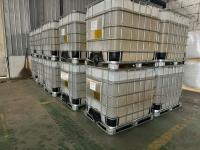
412_small.jpg "PolyDADMAC(NSF certificate) for drinking water turbidity removal")
438_small.jpg "cationic polydadmac polymer for turbidity removal")