

Our Products

coagulant / polyamine used in paper retention and drainage systems
202_small.jpg "polyamine used in paper retention and drainage systems")
Polyamine is a cationic polymer extensively utilized in paper retention and drainage systems due to its high charge density, rapid charge neutralization capability, and strong interaction with negatively charged furnish components. In modern papermaking operations, particularly those involving recycled fibers and high filler loading, the control of retention, drainage, and colloidal stability is critical for achieving optimal machine performance, product quality, and cost efficiency. Polyamine functions as a key component in wet-end chemistry programs, primarily as a coagulant and charge control agent that enhances the performance of retention and drainage aids.
The papermaking furnish is a complex colloidal system composed of cellulose fibers, mineral fillers such as calcium carbonate and kaolin clay, fines, and a wide range of dissolved and colloidal substances (DCS), including hemicellulose, lignin fragments, fatty acids, resin acids, and various additives. Most of these components carry a net negative charge under typical process conditions (pH 6–8), resulting in electrostatic repulsion that hinders aggregation and retention. This leads to poor fines and filler retention, high solids loss in white water, reduced sheet uniformity, and impaired drainage.
Polyamine polymers are synthesized through condensation reactions of amines with epichlorohydrin or similar reagents, resulting in a structure rich in protonated amine groups. These functional groups provide a high cationic charge density, which is the primary mechanism for their performance in retention and drainage systems. Unlike high-molecular-weight flocculants such as cationic polyacrylamide, which rely on bridging mechanisms, polyamine operates predominantly through charge neutralization and colloidal destabilization.
When added to the papermaking furnish, polyamine rapidly adsorbs onto negatively charged fibers, fillers, and colloidal particles. This adsorption reduces the zeta potential and neutralizes the surface charge, allowing particles to come closer together and form microflocs. In addition, polyamine effectively neutralizes anionic trash (DCS), which otherwise interferes with the performance of retention aids and sizing agents. By reducing the cationic demand of the system, polyamine creates a more favorable environment for the action of high-molecular-weight flocculants.
In dual-component retention systems, polyamine is typically used as a primary coagulant, followed by the addition of a secondary flocculant such as cationic or anionic polyacrylamide. The polyamine first destabilizes the colloidal system and forms microflocs, while the flocculant promotes bridging between these microflocs to form larger, more robust flocs. This synergistic interaction significantly enhances fines and filler retention, improves sheet formation, and increases first-pass retention (FPR).
One of the key benefits of polyamine in retention systems is its ability to improve filler retention efficiency. In high-filler papermaking processes, maintaining filler retention is essential for controlling product properties such as opacity, brightness, and printability. Polyamine ensures that fine filler particles are effectively incorporated into the fiber matrix, reducing loss to the white water system and improving material utilization.
Polyamine also contributes to improved drainage performance. By promoting the formation of well-structured flocs, it enhances the permeability of the fiber mat on the wire section of the paper machine. This facilitates the removal of water during sheet गठन, leading to faster drainage rates and higher machine speeds. Improved drainage reduces the load on the press and drying sections, resulting in lower energy consumption and increased production efficiency.
Another important function of polyamine is the control of pitch and stickies, particularly in mills using recycled fibers. These hydrophobic contaminants, derived from adhesives, inks, and wood extractives, can cause deposition problems, machine downtime, and product defects. Polyamine, due to its strong cationic nature, can adsorb onto these substances and neutralize their charge, reducing their tendency to agglomerate and deposit on machine surfaces. This contributes to improved runnability and reduced maintenance requirements.
Polyamine is typically dosed at low concentrations, generally in the range of 0.1 to 1.0 kg per ton of dry pulp, depending on furnish composition, system closure, and performance targets. Optimal dosing is determined through laboratory testing and on-machine trials, as excessive dosage can lead to over-cationization, charge reversal, and deterioration of formation. Precise control of addition points and mixing conditions is essential to ensure effective distribution and interaction with furnish components.
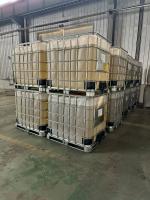
From an operational perspective, polyamine is supplied as a liquid product with moderate viscosity and active content typically between 10% and 50%. It is easy to handle and can be integrated into existing chemical dosing systems. Proper dilution and injection at appropriate locations, such as the machine chest or fan pump, are critical for achieving uniform dispersion and maximizing performance.
Compared with inorganic coagulants such as alum, polyamine offers several advantages in retention and drainage systems. It does not introduce metal ions that can interfere with sizing or cause scaling, and it operates effectively over a broader pH range. This makes it particularly suitable for neutral and alkaline papermaking processes, where calcium carbonate is used as a filler. Additionally, polyamine generates less sludge and has a lower environmental impact.
Polyamine is also compatible with other wet-end additives, including sizing agents (e.g., AKD, ASA), strength resins, and optical brightening agents. By controlling the charge balance of the system, it enhances the performance and efficiency of these additives, contributing to improved paper quality and reduced chemical consumption.
In advanced retention systems, polyamine may be used in combination with microparticle technologies, such as bentonite or colloidal silica. In such systems, polyamine acts as a charge neutralizer and initial flocculant, while the microparticles promote the formation of a three-dimensional network structure that enhances retention and drainage. This approach is particularly effective in high-speed paper machines where both retention and formation must be optimized simultaneously.
Environmental and economic considerations further support the use of polyamine. Improved retention reduces fiber and filler losses, lowering raw material costs and minimizing the load on white water treatment systems. Enhanced drainage and machine efficiency lead to energy savings and increased production capacity. Moreover, the reduction of anionic trash and pitch-related issues contributes to cleaner operation and reduced environmental impact.
In conclusion, polyamine is a critical component in paper retention and drainage systems, providing effective charge neutralization, colloidal control, and process optimization. Its integration into wet-end chemistry programs enhances fines and filler retention, improves drainage performance, and supports stable machine operation. Through careful selection, dosing, and system integration, polyamine significantly contributes to the efficiency, quality, and sustainability of modern papermaking processes.
571_small.jpg "polyamine manufacturers(top three in China)|polyamine plants")