

Our Products

coagulant / polyamine polymer for mining wastewater clarification
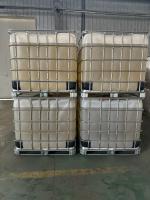
Polyamine polymer is a highly effective cationic coagulant extensively applied in mining wastewater clarification processes. Mining effluents are typically characterized by high turbidity, elevated concentrations of suspended solids (SS), fine mineral particles, residual flotation reagents, and dissolved organic and inorganic contaminants. Efficient clarification of these complex wastewater streams is essential for water recycling, environmental compliance, and recovery of valuable mineral fractions. Polyamine polymers provide a robust solution due to their strong charge neutralization capability, rapid reaction kinetics, and adaptability to diverse mineral processing conditions.
Mining wastewater originates from multiple unit operations, including crushing, grinding, flotation, leaching, and tailings handling. The resulting effluent often contains finely dispersed particles such as silica, aluminosilicates, metal oxides, and sulfide minerals, typically in the size range of 1–100 μm. These particles are usually negatively charged due to surface ionization and adsorption of anionic species, forming stable colloidal suspensions that resist natural sedimentation. Additionally, the presence of flotation reagents such as xanthates, dithiophosphates, frothers, and dispersants further stabilizes the system, increasing the difficulty of solid–liquid separation.
Polyamine polymers are synthesized through condensation reactions involving amines and epichlorohydrin or related intermediates, resulting in a branched or linear structure with a high density of protonated amine groups. These functional groups impart strong cationic charge across a broad pH range, typically from pH 4 to 10, which is advantageous for mining wastewater systems where pH conditions may vary depending on the process. The relatively low to medium molecular weight of polyamine polymers ensures rapid diffusion and adsorption onto particle surfaces, enabling fast coagulation.
The primary mechanism of polyamine in mining wastewater clarification is charge neutralization. Upon addition to the wastewater stream, the positively charged polymer chains adsorb onto negatively charged particle surfaces through electrostatic attraction. This adsorption reduces the zeta potential of the particles, compresses the electrical double layer, and eliminates repulsive forces that maintain colloidal stability. As a result, particles aggregate into microflocs. In many applications, a secondary high-molecular-weight flocculant, such as anionic polyacrylamide, is subsequently added to promote interparticle bridging and formation of larger, denser flocs suitable for sedimentation or filtration.
In thickening and clarification systems, polyamine is typically dosed into the feedwell or mixing zone of thickeners, clarifiers, or high-rate settlers. The dosage range generally falls between 5 and 100 mg/L, depending on the solids concentration, mineralogy, particle size distribution, and water chemistry. Jar testing is essential for determining the optimal dosage and selection of polymer grade. Overdosing can lead to charge reversal and restabilization of particles, while underdosing results in incomplete coagulation and poor clarity.
One of the primary advantages of polyamine polymer is its ability to significantly improve clarification efficiency. The rapid formation of microflocs reduces turbidity and enhances the performance of downstream flocculation processes. In high-throughput mining operations, this translates into increased settling rates, higher underflow densities, and improved overflow clarity. Clarified water can often be recycled back into the process, reducing freshwater consumption and supporting sustainable water management practices.
Polyamine is particularly effective in treating wastewater from flotation circuits, where residual reagents can interfere with solid–liquid separation. The cationic nature of polyamine helps neutralize anionic surfactants and collectors, destabilizing emulsions and dispersions. This improves the removal of both mineral particles and organic contaminants, leading to better overall water quality. In gold, copper, iron ore, and phosphate processing, polyamine has been successfully applied to enhance thickener performance and reduce water losses in tailings.
Another significant benefit is the reduction in sludge volume compared with inorganic coagulants such as ferric chloride or aluminum sulfate. Since polyamine operates primarily through charge neutralization rather than precipitation, it does not generate large quantities of metal hydroxide sludge. The resulting flocs are denser and more compact, which improves dewatering efficiency in filtration or centrifugation units. Lower sludge volume translates into reduced handling, transportation, and disposal costs, which are critical considerations in large-scale mining operations.
Polyamine polymers also exhibit good compatibility with a wide range of process conditions. They are effective over a broad temperature range and maintain performance in the presence of dissolved salts and hardness ions commonly found in mining water. This makes them suitable for use in both fresh water and saline or brackish water systems, including seawater-based mineral processing operations.
From an operational standpoint, polyamine is typically supplied as a liquid product with solid content ranging from 10% to 50%. It is easy to handle, pump, and dose using standard chemical dosing systems. Proper dilution and mixing are essential to ensure uniform distribution and effective contact with suspended particles. Rapid mixing immediately after dosing is followed by gentle agitation to allow floc growth without shear-induced breakage.
Environmental considerations are increasingly important in mining wastewater management. Polyamine polymers offer advantages in terms of reduced chemical load and lower environmental impact compared with traditional inorganic coagulants. However, careful control of residual polymer concentration is necessary, especially when treated water is discharged into natural water bodies or reused in sensitive processes. Selection of high-purity products with low residual monomer content is recommended to meet environmental and regulatory requirements.
In advanced treatment systems, polyamine is often integrated with other technologies such as dissolved air flotation (DAF), membrane filtration, and advanced oxidation processes. Pre-treatment with polyamine reduces fouling potential and improves the efficiency of these downstream processes. For example, in membrane systems, effective coagulation minimizes the deposition of fine particles and organic matter on membrane surfaces, extending membrane life and reducing operational costs.
In conclusion, polyamine polymer is a highly efficient and versatile coagulant for mining wastewater clarification. Its strong cationic charge, rapid reaction kinetics, and adaptability to varying process conditions make it an essential component in modern mineral processing water treatment systems. By enhancing solid–liquid separation, improving water reuse, and reducing sludge generation, polyamine contributes significantly to operational efficiency, cost reduction, and environmental sustainability in the mining industry.
713_small.jpg "polyamine FL2449 can be replaced by Chinafloc-polyamine")
970_small.jpg "polyamine for oilfield produced water treatment")