Our Products
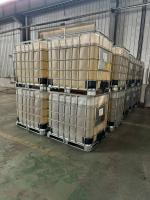
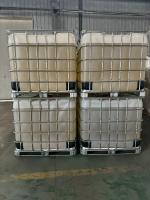
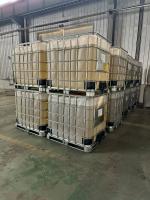
coagulant / polyamine flocculant for turbidity and suspended solids removal
183_small.jpg "polyamine flocculant for turbidity and suspended solids removal")



Polyamine flocculant is a highly efficient cationic polymer widely used for turbidity reduction and suspended solids removal in industrial and municipal water treatment systems. Its performance is based on strong charge neutralization capability, rapid adsorption onto negatively charged particles, and effective destabilization of colloidal suspensions. Turbidity and suspended solids are among the most common water quality parameters in wastewater streams, and their control is essential for meeting discharge standards, improving downstream process efficiency, and enabling water reuse.
Turbidity in water is primarily caused by finely dispersed particles such as clay, silt, organic matter, microorganisms, and industrial residues. These particles are typically in the colloidal size range (<1 μm to 100 μm) and remain stable in suspension due to electrostatic repulsion. Most suspended solids carry a negative surface charge originating from ionized functional groups or adsorbed anions. This charge stability prevents natural settling, making chemical coagulation and flocculation necessary for effective removal.
Polyamine is a cationic polymer characterized by a high density of protonated amine functional groups distributed along its molecular structure. These functional groups impart strong positive charge, enabling rapid interaction with negatively charged particles in water. When introduced into a turbid water system, polyamine adsorbs onto particle surfaces through electrostatic attraction. This adsorption neutralizes surface charge, reduces zeta potential, and compresses the electrical double layer surrounding the particles.
The primary mechanism of polyamine in turbidity and suspended solids removal is charge neutralization rather than polymer bridging. This distinction is important because it allows polyamine to act quickly, even at low dosages, making it particularly suitable for high-flow or high-turbidity systems. Once the electrostatic repulsion is eliminated, van der Waals forces dominate, leading to particle aggregation and formation of microflocs.
These microflocs consist of destabilized fine particles bound together by polyamine chains. However, in most practical applications, polyamine is used as a primary coagulant in combination with high-molecular-weight flocculants such as polyacrylamide. After initial destabilization by polyamine, flocculants promote interparticle bridging, forming larger and stronger flocs that can be easily separated through sedimentation, flotation, or filtration.
In water treatment systems, polyamine is applied across a wide range of industries including municipal wastewater treatment, drinking water purification, mining effluent treatment, textile wastewater, oilfield produced water, and paper mill effluent treatment. Each of these systems presents unique challenges in terms of particle size distribution, organic content, and ionic strength, but polyamine’s strong cationic nature allows it to perform effectively across these conditions.
In primary clarification systems, polyamine is used to remove raw suspended solids such as sand, silt, organic debris, and industrial particulates. By rapidly neutralizing particle charge, it enhances sedimentation efficiency and reduces turbidity in influent water. This improves the performance of downstream biological or physical treatment units by reducing solids loading and preventing clogging or abrasion.
In secondary or biological effluent treatment systems, polyamine is used to remove residual suspended solids and biological flocs. Even after biological treatment, fine particles and dispersed biomass may remain in the effluent, contributing to residual turbidity. Polyamine improves aggregation of these particles, enhancing clarifier performance and reducing effluent turbidity to meet discharge standards.
One of the major advantages of polyamine is its rapid reaction kinetics. Unlike conventional inorganic coagulants such as alum or ferric salts, which require hydrolysis and pH-dependent speciation, polyamine acts immediately upon contact with suspended particles. This makes it highly effective in systems with short retention times or variable flow conditions.
Polyamine is also effective over a wide pH range, typically from pH 4 to 10. This broad operational window is particularly important in industrial wastewater systems where pH may fluctuate due to process variations. Its performance is less sensitive to pH changes compared with inorganic coagulants, reducing the need for chemical pH adjustment and simplifying process control.
Dosage of polyamine for turbidity and suspended solids removal typically ranges from 5 to 150 mg/L, depending on influent quality and treatment objectives. Lower dosages are sufficient for lightly turbid water, while higher dosages are required for heavily loaded industrial effluents. Optimization through jar testing is essential to determine the most effective dosage and avoid overdosing, which can lead to charge reversal and reduced treatment efficiency.
Another important benefit of polyamine is the improvement of sludge characteristics. The flocs formed are typically denser and more compact compared with those produced by inorganic coagulants. This enhances sludge settling and dewatering performance, reducing sludge volume and associated disposal costs. In many cases, polyamine-treated sludge is easier to handle and process in filtration or centrifugation systems.
Polyamine also contributes to improved downstream process performance. In membrane filtration systems, for example, effective removal of suspended solids reduces fouling potential and extends membrane lifespan. In flotation systems such as dissolved air flotation (DAF), polyamine enhances bubble–particle attachment, improving separation efficiency and reducing chemical demand.
From an operational perspective, polyamine is supplied as a liquid formulation with moderate viscosity and active content typically between 10% and 50%. It is easy to store, pump, and dose using standard chemical feed systems. Proper mixing is essential to ensure uniform distribution and maximize contact between polymer and suspended particles. Rapid mixing is followed by gentle agitation to allow floc growth without shear-induced breakage.
Environmental considerations also support the use of polyamine in turbidity and suspended solids removal. Compared with inorganic coagulants, it generates lower sludge volumes and avoids introduction of metal ions into treated water. This is particularly important in applications involving water reuse or discharge into sensitive environments.
In advanced treatment systems, polyamine is often integrated with other technologies such as sand filtration, membrane filtration, and biological treatment. Pre-treatment with polyamine significantly reduces suspended solids loading, improving overall system efficiency and stability.
In conclusion, polyamine flocculant is a highly effective solution for turbidity and suspended solids removal in a wide range of water treatment applications. Its strong charge neutralization capability, rapid action, and broad operational adaptability make it a key component in modern clarification systems. Through optimized application and integration with complementary treatment processes, polyamine significantly enhances water quality, process efficiency, and environmental compliance.