Polyamine resin, commonly known as Poly(epichlorohydrin-dimethylamine), is a highly effective cationic polymer widely used in water treatment, mineral processing, papermaking, and various industrial applications. Due to its high charge density, fast reaction speed, and strong ability to neutralize negatively charged particles, it functions primarily as a coagulant rather than a traditional high-molecular-weight flocculant. The application of polyamine resin is essential in systems where rapid destabilization of colloids and fine particles is required.
One of the most important applications of polyamine resin (Poly(epichlorohydrin-dimethylamine)) is in municipal and industrial wastewater treatment. Wastewater typically contains negatively charged colloidal particles, organic matter, oils, and suspended solids that remain stable in dispersion. Polyamine resin neutralizes these charges quickly, destabilizing the particles and allowing them to aggregate into microflocs. These microflocs can then be removed through sedimentation, dissolved air flotation (DAF), or filtration. It is especially effective in treating wastewater from industries such as food processing, textiles, pulp and paper, and chemical manufacturing. Compared to inorganic coagulants, polyamine produces less sludge and works effectively over a wide pH range.
In drinking water treatment, polyamine resin is used as a primary coagulant or coagulant aid. It improves the removal of turbidity, color, and natural organic matter (NOM), which are precursors to disinfection by-products. Its rapid charge neutralization leads to faster floc formation and improved clarification efficiency. This helps reduce the load on downstream filtration systems and improves overall water quality.
Another key application is in mineral processing. In mining operations, large volumes of slurry containing fine, negatively charged particles are generated. Polyamine resin acts as a coagulant to destabilize these particles, promoting their aggregation. It is often used in combination with anionic polyacrylamide flocculants: the polyamine first neutralizes particle charges, and the flocculant then bridges the particles into larger, settleable flocs. This combined approach significantly improves thickening, clarification, and tailings treatment. It enhances water recovery and reduces environmental discharge.
In tailings management, polyamine resin accelerates the settling of ultrafine particles and improves the clarity of overflow water. This allows water to be recycled back into the processing circuit, reducing freshwater consumption. It also contributes to faster consolidation of tailings, improving storage efficiency and stability.
Polyamine resin is also widely used in the pulp and paper industry. It functions as a fixing agent and trash catcher, helping to control anionic contaminants such as dissolved organic matter, pitch, and stickies. By neutralizing these substances, it prevents their deposition on machinery and improves paper quality. It also enhances the retention of fine fibers and fillers, increasing production efficiency and reducing raw material loss.
In the textile industry, polyamine resin is used as a dye-fixing agent. After dyeing, some dye molecules remain unfixed and can be washed out, causing color loss and environmental pollution. Polyamine forms ionic bonds with dye molecules and fibers, improving color fastness and reducing dye discharge in wastewater. This leads to brighter, more durable fabrics and lower environmental impact.
Another important application is in oil and gas wastewater treatment. Polyamine resin is used to remove emulsified oils and suspended solids from produced water. It destabilizes oil-in-water emulsions and enhances separation processes such as flotation and sedimentation. This improves water quality for reuse or safe disposal.
In sludge conditioning and dewatering, polyamine resin improves the aggregation of fine sludge particles, making them easier to dewater. It enhances the performance of centrifuges, belt presses, and filter presses, resulting in higher solids content and reduced sludge volume.
Additionally, polyamine resin is used in industrial process water treatment, where it helps clarify cooling water, boiler water, and recycling streams by removing suspended solids and organic contaminants.
Overall, the application of polyamine resin (Poly(epichlorohydrin-dimethylamine)) is driven by its strong cationic nature, rapid charge neutralization capability, and versatility across different pH and process conditions. It provides benefits such as improved clarification, reduced sludge production, enhanced water reuse, and increased process efficiency. These advantages make it a key chemical in modern water treatment and industrial processing systems.

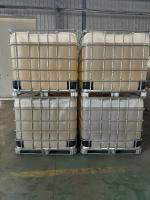
426_small.jpg "Polyamine resin|Epichlorohydrin-dimethylamine polymer|Poly(epichlorohydrin-dimethylamine)")



343_small.jpg "polyamine for color removal in textile wastewater")