

Our Products

coagulant / polyDADMAC flocculant for industrial effluent clarification
733_small.jpg "polyDADMAC flocculant for industrial effluent clarification")
PolyDADMAC (polydiallyldimethylammonium chloride) is a highly cationic water-soluble polymer widely used in industrial effluent clarification as a primary coagulant and, in some systems, as a coagulant–flocculant hybrid aid. Its performance is based on strong and permanent positive charge density, rapid adsorption onto negatively charged contaminants, and efficient destabilization of colloidal suspensions. In industrial wastewater treatment, where effluents contain complex mixtures of suspended solids, emulsified oils, dyes, organic matter, and inorganic particles, PolyDADMAC plays a critical role in improving clarification efficiency and ensuring stable operation of downstream separation units.
Industrial effluents are typically characterized by high turbidity, variable chemical oxygen demand (COD), and a broad particle size distribution ranging from fine colloids (<1 μm) to larger suspended solids (>100 μm). These particles are usually stabilized in water due to their negative surface charge, which creates electrostatic repulsion between particles and prevents aggregation. In addition, industrial wastewater often contains surfactants, dispersants, and organic polymers that further stabilize emulsions and colloidal systems. This makes natural sedimentation or simple physical separation ineffective without chemical assistance.
PolyDADMAC is a linear or slightly branched polymer containing quaternary ammonium groups along its backbone. These functional groups carry permanent positive charges, which remain active across a wide pH range (typically pH 4–10). This pH-independent behavior is a key advantage in industrial wastewater treatment, where pH fluctuations are common due to varying production processes. Unlike inorganic coagulants such as aluminum sulfate or ferric chloride, PolyDADMAC does not rely on hydrolysis reactions and therefore provides more predictable and stable performance.
The primary mechanism of PolyDADMAC in industrial effluent clarification is charge neutralization. When added to wastewater, the polymer rapidly adsorbs onto negatively charged particle surfaces through electrostatic attraction. This adsorption reduces zeta potential, compresses the electrical double layer, and eliminates repulsive forces between particles. Once destabilized, particles begin to collide and aggregate due to van der Waals forces, forming microflocs that can grow into larger aggregates suitable for separation.
In many industrial systems, PolyDADMAC acts as the first stage in a multi-step clarification process. After initial destabilization, secondary flocculants such as polyacrylamide may be added to promote bridging between microflocs, forming larger and more shear-resistant flocs. This dual-polymer approach significantly improves settling velocity, flotation efficiency, and filtration performance.
One of the major application areas of PolyDADMAC is textile wastewater treatment. Textile effluents contain reactive dyes, dispersants, surfactants, and sizing agents, many of which are highly anionic and resistant to biodegradation. PolyDADMAC effectively neutralizes dye molecules, causing them to aggregate and precipitate. This results in significant color removal and turbidity reduction, improving effluent quality and enabling compliance with discharge standards.
In paper mill wastewater systems, PolyDADMAC is widely used to control anionic trash, improve retention of fines and fillers, and stabilize wet-end chemistry. Dissolved and colloidal substances such as lignin derivatives, hemicellulose fragments, and resin acids interfere with process efficiency. PolyDADMAC neutralizes these substances, improving fiber retention and enhancing clarification performance in white water and effluent streams.
In mining and mineral processing wastewater, fine particles such as clays, silicates, and metal oxides are difficult to remove due to their strong colloidal stability. PolyDADMAC rapidly destabilizes these particles, improving aggregation and enhancing sedimentation in thickeners and clarifiers. This increases water recovery efficiency and reduces freshwater consumption in mining operations.
In oilfield produced water treatment, PolyDADMAC is used to destabilize emulsified oil droplets and fine suspended solids. These emulsions are stabilized by natural surfactants, asphaltenes, and fine particles. PolyDADMAC disrupts these stabilizing layers through charge neutralization, promoting coalescence and separation in flotation or gravity-based systems.
In municipal and industrial secondary effluent polishing, PolyDADMAC is used to remove residual suspended solids and colloidal organic matter after biological treatment. Even after biological clarification, fine particles and microbial flocs may remain in suspension. PolyDADMAC improves aggregation of these residual particles, enhancing final effluent clarity.
One of the key advantages of PolyDADMAC is its low dosage requirement. Typical application rates range from 0.1 to 50 mg/L depending on wastewater characteristics. Its high efficiency reduces chemical consumption and minimizes sludge production compared with inorganic coagulants. The resulting sludge is generally denser, easier to dewater, and lower in volume.
PolyDADMAC also performs effectively over a wide range of operating conditions, including varying pH, temperature, and ionic strength. Its performance is not significantly affected by salinity, making it suitable for seawater-based or high-salinity industrial wastewater systems. This stability enhances its versatility across diverse industrial sectors.
From an operational standpoint, PolyDADMAC is supplied as a liquid polymer with controlled molecular weight and charge density. It is easy to handle, pump, and dose using standard chemical feed systems. Proper mixing is essential to ensure uniform dispersion and rapid interaction with suspended particles. Rapid mixing zones are typically used for initial dispersion, followed by gentle mixing to promote floc growth.
In dissolved air flotation (DAF) systems, PolyDADMAC enhances bubble–particle attachment by neutralizing surface charges and increasing hydrophobic interaction between particles and air bubbles. This improves flotation efficiency and reduces residual turbidity in treated effluent. In sedimentation systems, it increases particle aggregation and settling velocity, improving clarifier performance.
In membrane-based treatment systems such as ultrafiltration (UF) and reverse osmosis (RO), PolyDADMAC is used as a pre-treatment chemical to reduce fouling potential. By removing fine colloids and suspended solids before membrane filtration, it extends membrane lifespan and reduces cleaning frequency. This improves operational stability and reduces maintenance costs.
Environmental considerations are increasingly important in industrial wastewater management. PolyDADMAC reduces the need for inorganic coagulants, thereby minimizing the introduction of metal ions into treated water. It also reduces sludge volume, lowering disposal costs and environmental impact. However, in discharge or reuse applications, residual polymer levels must be controlled to ensure compliance with environmental regulations.
In conclusion, PolyDADMAC flocculant is a highly effective and versatile solution for industrial effluent clarification. Its strong and permanent cationic charge enables rapid charge neutralization of colloidal systems across a wide range of industrial wastewater types. Through efficient destabilization, low dosage requirements, and compatibility with multiple treatment technologies, PolyDADMAC significantly enhances clarification performance, process stability, and environmental compliance in modern industrial wastewater treatment systems.
163_small.jpg "the application of polydadmac application in drinking water purification")
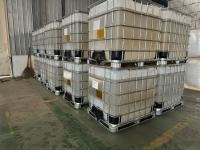
246_small.jpg "Magnafloc 1425(LT425) polydadmac can be replaced by Chinafloc FL4440")