

Our Products

coagulant / PolyDADMAC coagulant for surface water treatment|SNF polydadmac
821_small.jpg "PolyDADMAC coagulant for surface water treatment|SNF polydadmac")
PolyDADMAC Coagulant for Surface Water Treatment
PolyDADMAC coagulant for surface water treatment is a widely used cationic polymer technology for the clarification of rivers, lakes, reservoirs, and other surface-water sources. PolyDADMAC, short for polydiallyldimethylammonium chloride, is a water-soluble cationic polymer with a high density of positive charges. These positive charges interact strongly with negatively charged suspended particles and colloids, destabilizing them and promoting floc formation.
Surface water often contains clay, silt, algae, microorganisms, natural organic matter, color-causing substances, and fine colloidal particles. Many of these contaminants have negative surface charges, causing them to remain dispersed in water. Conventional sedimentation alone may therefore provide insufficient removal. PolyDADMAC coagulant for surface water treatment helps overcome this problem by neutralizing particle charges and improving subsequent separation.
1. Principle of PolyDADMAC Coagulation
The primary mechanism of PolyDADMAC coagulant for surface water treatment is electrostatic charge neutralization.
Clay and colloidal particles in surface water commonly carry negative electrical charges. Because particles with similar charges repel each other, they remain suspended and do not readily settle. When PolyDADMAC is introduced, its positively charged polymer chains are attracted to the negatively charged surfaces.
The polymer adsorbs onto the particles and reduces their electrostatic repulsion. Once the particles become destabilized, collisions between particles become more effective. Small destabilized particles combine into larger microflocs and eventually into settleable flocs.
These flocs can then be removed through:
- Sedimentation
- Clarification
- Dissolved air flotation
- Direct filtration
- Multimedia filtration
- Other physical separation processes
Therefore, PolyDADMAC coagulant for surface water treatment is primarily a particle-destabilization and clarification chemical rather than a disinfectant.
2. Surface-Water Applications
Surface water quality can change considerably with rainfall, seasonal temperature changes, algae growth, agricultural runoff, and upstream activities. This variability makes effective coagulation particularly important.
PolyDADMAC coagulant for surface water treatment can be applied to:
- River-water treatment
- Lake-water treatment
- Reservoir-water treatment
- Raw-water clarification
- Drinking-water pretreatment
- Industrial surface-water treatment
- Municipal water-treatment plants
- Emergency turbidity treatment
- Pretreatment before membrane filtration
- Pretreatment before activated-carbon systems
It is especially useful when the raw water contains large quantities of fine colloidal material that are difficult to remove through ordinary sedimentation.
3. Turbidity Removal
One of the most important applications of PolyDADMAC is turbidity reduction.
Surface-water turbidity can originate from clay, silt, fine sand, organic particles, algae, and microorganisms. Coarse particles can settle relatively easily, but extremely fine particles may remain suspended for long periods.
PolyDADMAC coagulant for surface water treatment destabilizes these fine particles and encourages them to form larger flocs.
Improved floc formation can increase the efficiency of sedimentation and reduce the particulate load entering downstream filters. This can help maintain lower finished-water turbidity and extend filter operating cycles.
4. PolyDADMAC and PAC Combination
PolyDADMAC is frequently used together with inorganic coagulants such as polyaluminum chloride (PAC).
PAC works through aluminum-based coagulation and the formation of aluminum hydroxide species and precipitates. PolyDADMAC provides strong cationic charge neutralization. The combination can therefore provide complementary coagulation mechanisms.
A typical treatment sequence may be:
Raw surface water → PolyDADMAC/PAC dosing → rapid mixing → flocculation → sedimentation → filtration → disinfection
The actual chemical sequence and dosage should be established experimentally.
In some applications, PolyDADMAC may be added before PAC to rapidly destabilize particles. In others, it may be used as a coagulant aid after the primary inorganic coagulant. The optimum arrangement depends on water chemistry and treatment objectives.
5. PolyDADMAC and Alum
Aluminum sulfate, or alum, is another common inorganic coagulant used in surface-water treatment.
When alum and PolyDADMAC are used together, PolyDADMAC can improve the destabilization of negatively charged colloids while alum contributes conventional aluminum coagulation and precipitate formation.
This combination can sometimes improve floc formation and settling compared with alum alone.
However, the optimum ratio between PolyDADMAC and alum cannot be determined from polymer concentration alone. Raw-water turbidity, alkalinity, pH, temperature, organic matter, and particle characteristics all influence performance.
6. PolyDADMAC Dosage
There is no universal dosage for PolyDADMAC coagulant for surface water treatment.
As a preliminary laboratory testing range, approximately 0.5–10 mg/L of commercial PolyDADMAC product may be evaluated. The actual optimum can be substantially lower or higher depending on raw-water quality and product characteristics.
Jar testing should normally be performed before selecting the operating dosage.
A typical jar-test program evaluates several polymer concentrations while monitoring:
- Final turbidity
- Floc formation
- Floc settling velocity
- Supernatant clarity
- pH
- Zeta potential
- Filterability
- Residual polymer considerations
The objective is not simply to maximize floc size. The objective is to achieve reliable turbidity removal with the lowest practical chemical dosage and stable downstream performance.
7. Importance of Charge Density
The charge density of PolyDADMAC is a major factor affecting coagulation performance.
Because PolyDADMAC is strongly cationic, its positive charge can rapidly neutralize negatively charged particles. Higher charge density may be beneficial when the raw water contains highly negatively charged colloids.
However, excessive cationic charge can also create charge reversal if the polymer is overdosed. Once particles become positively charged, they may again repel one another, resulting in poorer coagulation.
Therefore, PolyDADMAC coagulant for surface water treatment should be selected according to the actual charge characteristics of the raw water.
8. Molecular Weight
Molecular weight also influences PolyDADMAC performance.
Lower- or medium-molecular-weight PolyDADMAC grades with high cationic charge are commonly attractive for rapid charge neutralization. Higher molecular weight can provide longer polymer chains and potentially stronger particle interactions.
For many surface-water coagulation applications, charge density and molecular weight should be considered together rather than independently.
A product with very high molecular weight is not automatically better. The optimum polymer depends on particle concentration, particle charge, mixing conditions, and the type of downstream clarification equipment.
9. Mixing and Flocculation
Correct mixing is essential for PolyDADMAC coagulant for surface water treatment.
During rapid mixing, PolyDADMAC should be dispersed quickly and uniformly throughout the raw water. Insufficient mixing can result in localized overdosing and poor particle contact.
After rapid mixing, gentle flocculation allows destabilized particles to collide and grow into larger flocs.
Excessive agitation can break newly formed flocs. Consequently, the mixing intensity should gradually decrease from the rapid-mixing stage to the flocculation stage.
The optimal mixing conditions should be established during jar testing and subsequently confirmed during plant operation.
10. Effect of pH and Temperature
Surface-water coagulation is strongly influenced by pH.
PolyDADMAC is generally less dependent on pH than many inorganic coagulants because its cationic charge is associated with the polymer itself. Nevertheless, raw-water pH can affect particle surface chemistry, organic-matter characteristics, inorganic coagulant performance, and the overall coagulation system.
Temperature is also important. Cold water generally slows particle collisions and floc growth. In winter conditions, the treatment plant may need to adjust mixing, flocculation time, or chemical dosage.
11. Benefits for Filtration
Effective coagulation upstream can significantly improve filtration.
When PolyDADMAC coagulant for surface water treatment converts small colloids into larger, more easily removable flocs, the resulting water entering the filters can contain fewer fine particles.
This may reduce filter loading, delay turbidity breakthrough, and potentially increase filter run time.
However, excessive polymer addition can produce its own operational problems, including filter fouling or undesirable residual polymer. Correct dosage control is therefore critical.
12. Selection of Drinking-Water Grade
When surface water is intended for drinking-water production, the selected PolyDADMAC must be specifically suitable for potable-water treatment.
Commercial PolyDADMAC products are not automatically interchangeable. The treatment plant should verify applicable regulatory requirements, certification, residual monomer limits, product purity, and manufacturer's documentation.
The selected product should be evaluated using actual raw water rather than relying only on generic specifications.
Conclusion
PolyDADMAC coagulant for surface water treatment is an effective technology for destabilizing negatively charged suspended solids, colloids, organic particles, and other fine impurities present in rivers, lakes, and reservoirs.
Its major advantage is strong cationic charge neutralization, which can rapidly destabilize fine particles and improve floc formation. PolyDADMAC can be used as a primary coagulant or as a coagulant aid with PAC, alum, ferric chloride, and other inorganic coagulants.
For practical surface-water treatment, the most important factors are PolyDADMAC charge density, molecular weight, dosage, raw-water turbidity, pH, temperature, particle characteristics, mixing conditions, and downstream clarification technology.
The optimum dosage should always be established through jar testing using representative raw water. Properly selected and dosed, PolyDADMAC coagulant for surface water treatment can provide rapid clarification, lower turbidity, improved floc formation, better filtration performance, and more stable overall water-treatment operation.
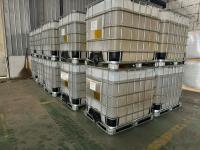
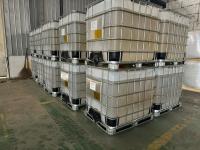
763_small.jpg "polydadmac 50% solid content used for mineral processing")