

Our Products

coagulant / olyamine chemical for sludge dewatering and thickening
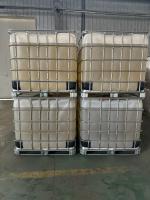
Polyamine chemical is a highly effective cationic coagulant widely applied in sludge dewatering and thickening processes across municipal and industrial wastewater treatment systems. Its primary function is to improve solid–liquid separation by destabilizing negatively charged sludge particles, enhancing floc formation, and improving the release of bound water. Compared with conventional inorganic coagulants, polyamine offers advantages such as lower dosage requirement, improved sludge dewaterability, reduced chemical sludge production, and stable performance across a wide range of sludge types.
Sludge generated from wastewater treatment processes typically consists of a complex mixture of organic matter, microbial biomass, inorganic particles, colloidal substances, and bound water. The water in sludge exists in different forms: free water, interstitial water, surface-adsorbed water, and chemically bound water. The removal of free and interstitial water is relatively easy, but bound water is difficult to release due to strong electrostatic and capillary forces. Efficient sludge thickening and dewatering therefore depend heavily on destabilizing the sludge structure and modifying its surface charge characteristics.
Polyamine is a cationic polymer characterized by a high density of protonated amine functional groups. These positively charged sites provide strong electrostatic attraction toward negatively charged sludge particles, including microbial cells, extracellular polymeric substances (EPS), and fine inorganic solids. The EPS matrix, which plays a key role in sludge structure stability, contains proteins, polysaccharides, and nucleic acids that contribute to strong negative surface charge and water retention capacity. Polyamine effectively interacts with these components, neutralizing charge and weakening the gel-like structure of sludge flocs.
The primary mechanism of polyamine in sludge thickening and dewatering is charge neutralization. When added to sludge, polyamine rapidly adsorbs onto particle surfaces and EPS structures. This adsorption reduces zeta potential, compresses the electrical double layer, and eliminates repulsive forces between particles. As a result, sludge particles aggregate into larger and denser flocs. This process significantly improves the release of trapped water and enhances the efficiency of mechanical dewatering equipment such as belt filter presses, centrifuges, and screw presses.
In sludge thickening applications, polyamine is used to increase solids concentration prior to dewatering. Thickening processes aim to reduce sludge volume by separating a portion of the free water, typically increasing solids content from 0.5–2% up to 3–6% or higher depending on system design. Polyamine enhances gravity thickening and flotation thickening by promoting rapid aggregation of fine particles and improving settling velocity. This results in clearer supernatant and more concentrated sludge underflow.
In dewatering applications, polyamine plays a critical role in improving cake formation and water release efficiency. By destabilizing sludge flocs and reducing EPS viscosity, it allows water to be expelled more easily under mechanical pressure or centrifugal force. The resulting sludge cake typically exhibits lower moisture content, improved structural integrity, and reduced stickiness, which facilitates handling, transportation, and disposal.
One of the key advantages of polyamine in sludge treatment is its effectiveness across different sludge types. Municipal wastewater sludge, industrial biological sludge, paper mill sludge, textile sludge, and oily sludge all respond positively to polyamine treatment. In activated sludge systems, it improves floc compactness and reduces sludge volume index (SVI). In industrial sludge systems, it enhances dewatering performance even in the presence of oils, dyes, or high organic loading.
Polyamine is particularly effective in reducing the impact of extracellular polymeric substances (EPS), which are the main contributors to sludge water retention. EPS forms a gel-like matrix that traps water within sludge flocs. Polyamine disrupts this structure by neutralizing negative charges and compressing polymer chains, leading to the collapse of the EPS network and improved water release.
Dosage of polyamine in sludge treatment typically ranges from 1 to 10 kg per ton of dry solids, depending on sludge characteristics, solids concentration, and dewatering equipment. Optimal dosage must be determined through laboratory jar tests and on-site trials, as overdosing can lead to charge reversal, increased viscosity, or deterioration of dewatering performance. Proper dosing ensures maximum floc strength and water separation efficiency.
Polyamine is often used in combination with high-molecular-weight flocculants such as anionic or cationic polyacrylamide. In such dual-polymer systems, polyamine acts as a primary coagulant that destabilizes sludge particles, while polyacrylamide provides bridging and structural reinforcement of flocs. This synergistic interaction results in larger, stronger, and more permeable flocs, significantly improving dewatering efficiency.
In mechanical dewatering systems, such as belt filter presses, polyamine improves cake formation by enhancing floc strength and reducing compressibility. In centrifuges, it increases solid recovery efficiency and reduces polymer consumption by improving feed sludge characteristics. In screw presses, it enhances filtration performance and reduces screen clogging.
Another important benefit of polyamine is the reduction of chemical sludge volume compared with inorganic coagulants such as ferric chloride or aluminum sulfate. Since polyamine operates through organic charge neutralization rather than precipitation, it does not generate large amounts of metal hydroxide sludge. This reduces total sludge volume and lowers disposal costs.
Polyamine also improves operational stability in sludge treatment systems. It performs effectively over a wide pH range, typically from pH 4 to 10, and is relatively insensitive to temperature variations. This makes it suitable for diverse industrial environments, including municipal plants, food processing industries, pulp and paper mills, and petrochemical facilities.
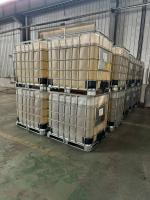
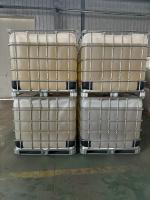
From an operational perspective, polyamine is supplied as a liquid product with moderate viscosity and active content typically between 10% and 50%. It is easy to handle, store, and dose using standard chemical feed systems. Proper mixing and conditioning of sludge prior to polymer addition are essential to ensure uniform distribution and effective floc formation.
Environmental considerations are also important. Polyamine contributes to more sustainable sludge management by reducing chemical usage, improving dewatering efficiency, and lowering transportation and disposal requirements. However, careful control of residual polymer levels is necessary to ensure compliance with environmental regulations and prevent potential downstream impacts.
In conclusion, polyamine chemical is a highly effective solution for sludge thickening and dewatering applications. Its strong cationic charge enables efficient destabilization of sludge particles and EPS structures, resulting in improved water release, enhanced floc formation, and reduced sludge volume. Through optimized application and integration with mechanical dewatering systems, polyamine significantly improves operational efficiency, reduces costs, and supports sustainable sludge management practices in modern wastewater treatment systems.
201_small.jpg "polyamine coagulant supplier|cationic polyamine flocculant")