Our Products
coagulant / liquid polydadmac polymer for industrial water treatment
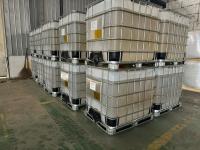


Liquid Polydadmac (poly diallyldimethylammonium chloride) is a highly efficient cationic polymer widely used in industrial water treatment systems. It is one of the most important organic coagulants in modern process water and wastewater treatment due to its strong positive charge density, rapid reaction kinetics, and excellent stability in a wide range of water conditions. Industrial facilities such as chemical plants, paper mills, textile factories, food processing plants, petrochemical refineries, and mining operations rely on liquid Polydadmac to improve clarification, reduce turbidity, remove suspended solids, and enhance overall water quality.
Liquid Polydadmac is a water-soluble quaternary ammonium polymer produced by the polymerization of diallyldimethylammonium chloride (DADMAC) monomers. It is typically supplied as a clear to slightly yellow viscous liquid.
Key characteristics include:
These properties make liquid Polydadmac highly effective in industrial water systems where fast and reliable treatment is required.
In industrial water treatment, liquid Polydadmac is mainly used as a primary coagulant or coagulant aid. Its main functions include:
It is particularly effective in systems where water quality fluctuates due to production variations.
Liquid Polydadmac works through several key mechanisms:
(1) Charge neutralization
Most industrial wastewater particles carry negative surface charges. Polydadmac neutralizes these charges, eliminating electrostatic repulsion and allowing particles to aggregate.
(2) Adsorption onto particle surfaces
The polymer adsorbs strongly onto suspended solids and colloids, modifying their surface properties and promoting aggregation.
(3) Patch flocculation mechanism
Localized positively charged regions created by Polydadmac attract negatively charged particles, forming microflocs.
(4) Bridging effect (in higher MW grades)
In some formulations, polymer chains bridge multiple particles together, forming larger and stronger flocs.
Used in industries such as manufacturing, power plants, and chemical processing to clarify process water by removing suspended solids and turbidity.
Benefits:
In industrial wastewater systems, liquid Polydadmac is used in primary and secondary treatment stages.
It helps remove:
Liquid Polydadmac is highly effective in flotation systems for:
It is widely used in food, petrochemical, and refinery wastewater treatment.
Used to improve:
It enhances both water recycling and product quality.
Helps remove:
It significantly reduces color intensity and turbidity.
Used for:
It improves sedimentation and reduces water loss.
(1) Fast reaction speed
Immediate charge neutralization allows rapid coagulation.
(2) Easy handling and dosing
Liquid form eliminates need for dissolution systems required by dry polymers.
(3) High efficiency at low dosage
Effective even at small concentrations, reducing chemical costs.
(4) Wide pH adaptability
Performs well across acidic, neutral, and alkaline conditions.
(5) Improved water clarity
Reduces turbidity, suspended solids, and color effectively.
(6) Stable performance in variable conditions
Suitable for fluctuating industrial wastewater streams.
Typical dosage ranges:
Key influencing factors include:
Jar testing is essential to determine optimal dosage for each application.
Liquid Polydadmac is often used with other treatment chemicals:
(1) Anionic polyacrylamide (APAM):
Improves floc size and settling speed.
(2) Cationic polyacrylamide (CPAM):
Enhances sludge dewatering performance.
(3) Inorganic coagulants (PAC, alum, ferric chloride):
Reduce cost and improve coagulation strength.
(4) pH adjusters (lime, acids):
Optimize conditions for coagulation and precipitation.
This combined approach improves overall system performance.
(1) Overdosing risk
Excess Polydadmac can reverse particle charge and reduce efficiency.
(2) Sensitivity to wastewater composition
Different industrial streams require tailored dosing.
(3) Cost considerations
More expensive than inorganic coagulants but often more efficient.
(4) Mixing requirements
Poor mixing reduces effectiveness and increases chemical consumption.
To achieve optimal performance:
The use of liquid Polydadmac in industrial water treatment is expected to increase due to:
Future developments will focus on higher efficiency, lower dosage, and improved environmental compatibility.
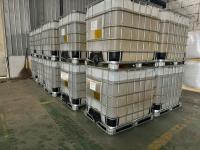
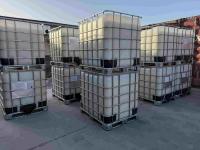
438_small.jpg "cationic polydadmac polymer for turbidity removal")