

Our Products

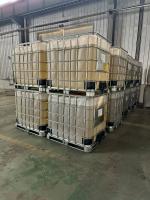
coagulant / liquid polyamine coagulant for water treatment|top three of polyamine suppliers in China
1. Introduction to Liquid Polyamine Coagulant
Liquid polyamine coagulant is a cationic organic polymer widely used in water treatment, industrial wastewater clarification, sludge conditioning, and solid-liquid separation. Because of its positively charged functional groups, liquid polyamine can neutralize negatively charged suspended particles and colloids, helping them aggregate and separate from water.
In many water treatment systems, fine suspended solids, colloidal impurities, emulsified organic substances, and color-causing compounds are difficult to remove through sedimentation alone. Liquid polyamine coagulant can improve particle destabilization, promote floc formation, and enhance the efficiency of downstream treatment processes.
Compared with some conventional inorganic coagulants, such as polyaluminum chloride (PAC) and ferric chloride, liquid polyamine offers a different coagulation mechanism based primarily on cationic charge neutralization. Depending on the water quality and treatment objectives, it can be used independently or combined with inorganic coagulants and polyacrylamide flocculants.
For municipal water treatment plants, industrial manufacturers, and wastewater treatment facilities, selecting the right liquid polyamine coagulant can help improve clarification performance, reduce suspended solids, and support efficient water recycling.
2. How Does Liquid Polyamine Coagulant Work?
Liquid polyamine coagulant mainly works through charge neutralization and adsorption. Many suspended particles in natural water and industrial wastewater carry negative surface charges. These charges cause particles to repel one another, preventing them from combining into larger aggregates.
When liquid polyamine is added to water, its positively charged groups interact with negatively charged particle surfaces. This reduces electrostatic repulsion and allows particles to come together. The destabilized particles can then form aggregates that are more easily removed through sedimentation, flotation, or filtration.
In some formulations, polymer adsorption can also contribute to particle aggregation. However, liquid polyamine is primarily used as a coagulant rather than as a long-chain bridging flocculant. High-molecular-weight polyacrylamide is often more effective when large, strong flocs are required.
The efficiency of liquid polyamine coagulant depends on several factors, including molecular weight, cationic charge density, dosage, pH, temperature, suspended solids concentration, and the chemical composition of the water.
3. Major Applications of Liquid Polyamine Coagulant
3.1 Industrial Wastewater Treatment
Industrial wastewater often contains suspended solids, colloidal particles, organic matter, and other impurities generated during manufacturing. Liquid polyamine coagulant can help destabilize fine particles and improve the efficiency of wastewater clarification.
Typical applications include chemical manufacturing, machinery processing, food production, paper manufacturing, and general industrial wastewater treatment.
When applied at the correct dosage, liquid polyamine may reduce turbidity, improve solids separation, and decrease the load on downstream filtration or biological treatment equipment. For wastewater with high concentrations of suspended solids, it can also be combined with PAC, ferric chloride, or polyacrylamide to improve overall treatment performance.
The optimum treatment program should be established through laboratory testing because industrial wastewater composition varies considerably.
3.2 Municipal Sewage Treatment
Municipal sewage contains suspended solids, colloidal organic matter, and microorganisms. Liquid polyamine coagulant may be used in primary clarification, tertiary treatment, and selected sludge-conditioning applications.
During primary clarification, polyamine can help destabilize fine suspended particles, supporting their removal through settling. In tertiary treatment, it may improve the removal of residual colloids before filtration or other polishing processes.
However, liquid polyamine is not a substitute for biological treatment when the objective is to remove biodegradable dissolved organic matter. Its main role is coagulation and the separation of particles that respond to cationic polymers.
3.3 Textile Dyeing and Printing Wastewater
Textile wastewater frequently contains dyes, sizing agents, surfactants, and fine fibers. Some dyes and colloidal materials carry negative charges, making liquid polyamine coagulant a potential treatment option.
The polymer can neutralize particle charges and promote the aggregation of dye-containing colloids. This may improve color reduction, turbidity removal, and the separation of suspended materials.
For wastewater containing reactive dyes or highly soluble color compounds, polyamine alone may not provide sufficient color removal. Combining it with PAC, ferric salts, or an appropriate flocculant may improve results. Jar tests should evaluate both color removal and residual turbidity before selecting a treatment process.
3.4 Paper and Pulp Industry
Paper mills generate wastewater containing cellulose fibers, fines, fillers, coating materials, and organic contaminants. Liquid polyamine coagulant can help remove fine suspended particles and improve the clarification of process water.
Better clarification can support water recycling, reduce the solids load on downstream treatment systems, and improve the stability of wastewater operations.
In applications involving fiber retention or the formation of larger flocs, polyacrylamide may be used alongside polyamine. The appropriate combination depends on the characteristics of the fibers, fillers, and dissolved substances in the process water.
3.5 Oilfield Produced Water and Oily Wastewater
Oilfield produced water and industrial oily wastewater may contain dispersed oil droplets, suspended solids, and emulsified contaminants. Liquid polyamine can be evaluated as part of a coagulation program for selected oily wastewater streams.
By destabilizing negatively charged droplets or suspended particles, a suitable polyamine formulation may support oil-water separation. Performance depends on emulsion stability, salinity, oil composition, and the presence of surfactants.
For stable oil-in-water emulsions, polyamine may need to be combined with a demulsifier, flotation system, or other specialized treatment chemicals. Laboratory compatibility testing is essential before field application.
3.6 Drinking Water and Raw Water Clarification
Liquid polyamine coagulants may be considered for selected raw-water clarification applications, but products must be specifically suitable and approved for the intended drinking-water use in the relevant jurisdiction.
In raw-water treatment, polyamine can help neutralize colloidal particles and improve clarification under suitable conditions. Its use may be combined with conventional inorganic coagulants or filtration processes.
Only products meeting the applicable drinking-water chemical requirements should be used. Operators must verify product approvals, impurity limits, maximum permitted dosages, and relevant regulatory requirements before application.
4. Advantages of Liquid Polyamine Coagulant
Liquid polyamine coagulant offers several potential advantages for water treatment.
Convenient handling: Liquid formulations can be pumped and metered directly into treatment systems, simplifying automated chemical dosing.
Rapid coagulation: Suitable products can destabilize negatively charged colloids quickly when properly mixed and dosed.
Flexible application: Liquid polyamine can be used in industrial wastewater clarification, selected municipal treatment stages, and other solid-liquid separation processes.
Compatibility with other chemicals: Depending on the formulation, it can be used with PAC, ferric chloride, or polyacrylamide to improve overall treatment efficiency.
Potential sludge benefits: Improved coagulation may facilitate solids separation and reduce the burden on downstream sludge-handling equipment.
Actual performance varies by product and wastewater characteristics. Therefore, chemical consumption, sludge production, residual water quality, and total treatment cost should be evaluated together.
5. How to Select the Right Liquid Polyamine Coagulant
Choosing a suitable liquid polyamine coagulant requires consideration of the following parameters:
-
Molecular weight: Different molecular weights influence adsorption behavior, viscosity, and aggregation performance.
-
Cationic charge density: The appropriate charge level depends on the surface charge and composition of the contaminants.
-
Solid content: Higher active-polymer concentration may reduce transportation and storage requirements, but can increase viscosity.
-
Viscosity: Viscosity affects pumping, dilution, mixing, and dosing accuracy.
-
pH compatibility: Water pH can influence coagulation performance and interactions between the polymer and contaminants.
-
Application requirements: Drinking-water treatment, industrial wastewater clarification, oily wastewater, and sludge conditioning may require different formulations.
-
Regulatory compliance: Verify product specifications and approvals for the intended application.
A supplier should provide a technical data sheet, safety data sheet, recommended preparation procedures, and application guidance.
6. Dosage and Application Method
The correct dosage of liquid polyamine coagulant depends on water quality, active-polymer concentration, and the treatment objective. There is no universal dosage suitable for all water treatment systems.
For preliminary screening, a laboratory jar test may evaluate active-polymer dosages such as 1, 5, 10, 20, and 30 mg/L, where appropriate for the water being treated. These values are illustrative test points rather than universal operating recommendations. Some applications require dosages outside this range.
Add the coagulant under rapid mixing to promote dispersion, followed by slower mixing where appropriate to allow aggregation. Observe floc formation, settling speed, supernatant clarity, and sludge characteristics.
For liquid products, dosage calculations should account for the actual active solids concentration. Once the optimum dosage is identified, conduct a plant trial and monitor treatment performance under normal operating conditions.
Avoid excessive dosing, which can increase costs and may cause particle restabilization or leave unwanted polymer residues.
7. Liquid Polyamine Coagulant vs. Polyacrylamide
Liquid polyamine coagulant and polyacrylamide serve complementary but different functions.
Liquid polyamine primarily neutralizes particle charges and destabilizes colloids. Polyacrylamide is available in cationic, anionic, and nonionic grades, with suitable high-molecular-weight products commonly used to bridge particles and form larger flocs.
For fine colloidal wastewater, liquid polyamine may be an effective primary coagulant. For sludge dewatering, tailings settling, and high-rate solid-liquid separation, an appropriate polyacrylamide flocculant may provide additional benefits. A combined polyamine and polyacrylamide treatment program can be effective when the two products are compatible and their dosages are optimized.
8. Conclusion
Liquid polyamine coagulant is a versatile water treatment chemical used to improve the removal of suspended solids, colloidal impurities, and selected color-causing contaminants. Its applications include industrial wastewater treatment, municipal sewage clarification, textile wastewater, paper mill effluent, oily wastewater, and selected raw-water treatment processes.
The best results depend on selecting the appropriate molecular weight, cationic charge density, solid content, and dosage. By conducting jar tests and evaluating compatibility with PAC, ferric salts, and polyacrylamide, water treatment operators can identify an effective and economical treatment program.
For industrial users seeking reliable liquid polyamine coagulant for water treatment, working with an experienced supplier and validating performance under actual operating conditions are essential steps toward improved clarification, efficient water recycling, and stable wastewater treatment.
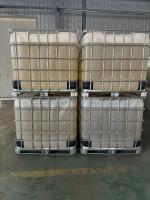
212_small.jpg "polyamine used for Drinking water clarification|polyamine 50%")