Our Products
coagulant / high viscosity polyamine for sludge conditioning
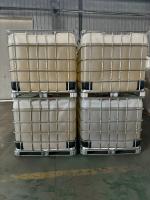
252_small.jpg "high viscosity polyamine for sludge conditioning")



High viscosity polyamine is a specialized cationic polymer widely used in sludge conditioning processes in municipal and industrial wastewater treatment plants. Compared with standard polyamine products, high viscosity grades exhibit higher molecular weight or modified structures that enhance their interaction with sludge particles. This results in improved floc formation, better water release, and more efficient downstream dewatering.
Polyamine is generally synthesized through the polymerization of amine-based monomers such as dimethylamine and epichlorohydrin. High viscosity polyamine is produced by adjusting polymerization conditions to increase molecular weight or chain interaction, leading to a thicker liquid product.
Key characteristics include:
These features make high viscosity polyamine particularly suitable for difficult-to-dewater sludge types.
Sludge conditioning is a critical step prior to mechanical dewatering. Raw sludge contains a large amount of bound water, colloidal particles, and extracellular polymeric substances (EPS), which hinder water removal. High viscosity polyamine improves sludge properties through several mechanisms:
(1) Charge neutralization
Sludge particles are typically negatively charged due to organic matter and microbial surfaces. High viscosity polyamine neutralizes these charges, reducing repulsion and promoting aggregation.
(2) Enhanced floc formation
Compared with low-viscosity polyamine, high viscosity products provide better bridging between particles, forming larger and stronger flocs.
(3) Release of bound water
By compressing the sludge structure and disrupting hydration layers, polyamine facilitates the release of bound water.
(4) EPS destabilization
High viscosity polyamine interacts with extracellular polymeric substances, reducing their ability to retain water and improving dewatering performance.
High viscosity polyamine is widely used in various sludge treatment and dewatering systems, including:
It is typically applied as a conditioning agent before the addition of high molecular weight flocculants such as cationic polyacrylamide (CPAM).
Typical application procedure:
This staged dosing ensures optimal sludge conditioning and floc development.
(1) Improved dewatering efficiency
High viscosity polyamine produces larger and stronger flocs, resulting in higher cake solids and lower moisture content.
(2) Reduced chemical consumption
It enhances the performance of flocculants, reducing the required dosage of more expensive polymers.
(3) Better filtration performance
Improved floc structure leads to faster filtration rates and increased equipment throughput.
(4) Enhanced sludge handling
Conditioned sludge is easier to transport, store, and dispose of due to reduced water content.
(5) Effective for difficult sludge
Particularly suitable for sludge with high organic content, high EPS, or poor dewaterability.
High viscosity polyamine is effective for a wide range of sludge types:
Its strong conditioning ability makes it especially valuable for sludge that is otherwise difficult to dewater.
The optimal dosage depends on sludge characteristics and process conditions.
Typical dosage ranges:
Key influencing factors include:
Jar testing and pilot trials are essential for determining the best dosage and dosing sequence.
High viscosity polyamine is commonly used in combination with:
Cationic polyacrylamide (CPAM):
Polyamine provides charge neutralization and initial floc formation, while CPAM enhances floc growth and strength through bridging.
Inorganic coagulants (e.g., ferric chloride, PAC):
In some cases, these are used alongside polyamine to improve performance and reduce costs.
This combination approach provides a balanced treatment strategy for optimal sludge conditioning.
| Parameter | Standard Polyamine | High Viscosity Polyamine |
|---|---|---|
| Viscosity | Low–moderate | High |
| Molecular weight | Low–medium | Medium–high |
| Bridging ability | Limited | Enhanced |
| Floc strength | Moderate | Strong |
| Dewatering efficiency | Good | Superior |
This comparison highlights the improved performance of high viscosity polyamine in demanding sludge conditioning applications.
(1) Overdosing risk
Excessive polyamine can cause charge reversal, leading to poor floc formation and reduced dewatering efficiency.
(2) Mixing requirements
Due to higher viscosity, proper dilution and mixing are essential to ensure uniform distribution.
(3) Cost considerations
High viscosity products may be more expensive, but improved performance often justifies the cost.
(4) Storage conditions
Should be stored in appropriate conditions to maintain stability and prevent degradation.
The use of high viscosity polyamine in sludge conditioning provides:
These benefits make it a valuable component in modern sludge treatment systems.
634_small.jpg "Top three of polyamine manufacturer in China|polyamine suppliers")
343_small.jpg "polyamine for color removal in textile wastewater")