

Our Products

coagulant / high molecular weight polyamine for wastewater treatment
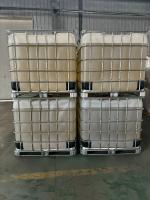
High molecular weight polyamine for wastewater treatment is an effective liquid organic polymer used to improve coagulation, flocculation, clarification, and sludge separation in a wide range of industrial wastewater treatment processes. Polyamine flocculants are particularly useful when wastewater contains suspended solids, colloidal particles, organic matter, dyes, oils, or other negatively charged contaminants that are difficult to remove through conventional sedimentation alone.
Compared with many traditional inorganic coagulants, high molecular weight polyamines can provide strong charge neutralization together with polymer bridging. This combination can produce larger and stronger flocs, improve settling performance, and reduce the amount of sludge generated in some treatment systems.
What Is a High Molecular Weight Polyamine?
A polyamine is a water-soluble cationic polymer containing positively charged amine groups. These cationic groups interact with negatively charged particles and colloids in wastewater.
The term high molecular weight polyamine describes a polyamine polymer with a relatively large polymer-chain size. Molecular weight is an important characteristic because it influences the polymer's ability to bridge particles after charge neutralization.
In wastewater treatment, a high molecular weight polyamine can perform two important functions:
- Charge neutralization – positively charged polymer molecules destabilize negatively charged suspended and colloidal particles.
- Polymer bridging – longer polymer chains can connect destabilized particles and form larger flocs.
The exact performance depends on molecular weight, charge density, viscosity, active content, wastewater chemistry, pH, temperature, and dosage.
How Does Polyamine Work in Wastewater Treatment?
Many industrial wastewater streams contain particles with negative surface charges. Because these particles repel one another, they can remain suspended for long periods and pass through conventional settling equipment.
When a polyamine flocculant is added, its cationic charges are attracted to negatively charged particles. The polymer reduces the electrostatic repulsion between particles and promotes aggregation.
After destabilization, polymer chains can connect several particles together. This creates larger flocs that are easier to separate by sedimentation, flotation, filtration, or sludge dewatering equipment.
The basic treatment mechanism can therefore be summarized as:
Negative particles → charge neutralization → particle aggregation → polymer bridging → larger flocs → easier separation
High molecular weight polyamines can be especially useful when strong floc formation is required after the initial destabilization of colloidal material.
Applications of High Molecular Weight Polyamine
High molecular weight polyamine for wastewater treatment can be used in many industrial applications.
1. Industrial Wastewater Treatment
Industrial wastewater may contain suspended solids, colloids, oils, organic compounds, and process chemicals. Polyamine can be used as a primary or secondary treatment chemical to improve clarification.
Industries that commonly investigate polyamine flocculants include chemical manufacturing, food processing, metal finishing, paper production, textiles, mining, and general manufacturing.
2. Sludge Dewatering
One of the important applications of polyamine is sludge dewatering.
Wastewater treatment plants generate sludge containing large amounts of water. Before disposal or further processing, the sludge must normally be concentrated and dewatered.
Polyamine can destabilize fine particles and improve the formation of compact sludge flocs. These flocs can release water more effectively during centrifugation, belt filter pressing, filter pressing, or other mechanical dewatering processes.
The correct polymer can improve:
- Sludge cake dryness
- Filtration rate
- Centrifuge performance
- Solid-liquid separation
- Supernatant clarity
- Dewatering efficiency
However, polymer selection should always be confirmed through laboratory jar testing or sludge dewatering tests.
3. Textile Wastewater
Textile wastewater often contains dyes, pigments, surfactants, suspended solids, and organic contaminants. Some dye molecules and colloidal particles are negatively charged and can be difficult to remove using sedimentation alone.
A cationic polyamine can help destabilize these materials and improve floc formation. Depending on the wastewater composition, polyamine may be used alone or together with inorganic coagulants and other treatment chemicals.
4. Oil and Gas Wastewater
Produced water and other oilfield wastewater can contain oil droplets, suspended solids, emulsified contaminants, and organic materials.
A properly selected polyamine can help destabilize emulsified and suspended contaminants, improving oil-water separation and clarification.
For oilfield applications, chemical compatibility and salinity resistance are particularly important. High concentrations of dissolved salts can affect polymer performance, so actual produced-water testing is recommended before selecting a commercial grade.
5. Mining Wastewater
Mining and mineral-processing wastewater can contain fine mineral particles, clay, metal hydroxides, and colloidal solids.
Polyamine may be used as part of a coagulation-flocculation system to improve clarification and solid-liquid separation.
In many mineral-processing applications, polyamine is combined with anionic or nonionic polymers depending on the surface chemistry of the solids. Therefore, the best treatment program is usually determined through laboratory testing rather than polymer charge alone.
High Molecular Weight Polyamine vs. Low Molecular Weight Polyamine
The selection between high and low molecular weight polyamine depends on the treatment objective.
Low molecular weight polyamines generally provide strong charge neutralization and can be useful for destabilizing highly charged colloids.
High molecular weight polyamines provide longer polymer chains and can offer stronger particle bridging and floc formation.
In practical wastewater treatment, the distinction is not simply “high molecular weight is better.” A high molecular weight product may perform very well in one wastewater but poorly in another.
The optimum product depends on:
- Wastewater composition
- Particle concentration
- Particle charge
- pH
- Conductivity
- Organic content
- Suspended solids concentration
- Existing coagulants
- Treatment equipment
- Required floc size
- Target sludge dryness
Therefore, molecular weight and charge density should be evaluated together.
How to Select a High Molecular Weight Polyamine
When selecting a high molecular weight polyamine for wastewater treatment, buyers should request a technical data sheet from the manufacturer.
Important parameters include:
Appearance: Most commercial polyamines are supplied as liquid products.
Active content: Higher active content can reduce the amount of commercial product required, although actual dosage depends on treatment performance.
Viscosity: Viscosity provides useful information about polymer characteristics and handling requirements.
Charge density: Cationic charge influences the ability of polyamine to neutralize negatively charged particles.
Molecular weight: Higher molecular weight can contribute to polymer bridging and floc formation.
pH: The polymer should be compatible with the wastewater's operating conditions.
Storage stability: Liquid polyamine should be stored according to the manufacturer's recommendations.
A product's laboratory performance is ultimately more important than any single specification on the technical data sheet.
Polyamine Dosage for Wastewater Treatment
There is no universal polyamine dosage for wastewater treatment.
The optimum dosage can vary from only a few ppm to substantially higher concentrations depending on the wastewater characteristics and treatment objective.
A jar test is one of the simplest ways to determine the appropriate dosage.
A typical procedure involves preparing several diluted polyamine solutions and adding different dosages to wastewater samples. After rapid mixing, the samples are slowly mixed to promote floc formation and then allowed to settle.
The operator can compare:
- Floc size
- Floc strength
- Settling speed
- Water clarity
- Sludge volume
- Supernatant turbidity
The optimum dosage is normally the lowest dosage that provides the required separation performance.
Overdosing can sometimes cause restabilization, excessive polymer consumption, sticky sludge, or poor filtration. Consequently, simply increasing the polyamine dosage does not necessarily improve wastewater treatment.
Can Polyamine Be Used With Other Coagulants?
Yes. High molecular weight polyamine can be used together with inorganic coagulants such as polyaluminum chloride (PAC), aluminum sulfate, or ferric salts.
A common treatment strategy is to use an inorganic coagulant to destabilize colloidal particles, followed by a polymer flocculant to enlarge and strengthen the resulting flocs.
In other systems, polyamine can act as the primary coagulant.
The optimum sequence depends on wastewater chemistry. Possible configurations include:
PAC → polyamine → clarification
or
ferric salt → polyamine → sedimentation
or
polyamine → anionic PAM → sludge dewatering
These combinations should be tested experimentally because incompatible polymer combinations or excessive dosage can reduce treatment efficiency.
Advantages of High Molecular Weight Polyamine
High molecular weight polyamine offers several potential advantages for wastewater treatment:
- Strong cationic charge
- Excellent charge neutralization
- Polymer bridging capability
- Rapid floc formation
- Improved clarification
- Potentially improved sludge dewatering
- Easy liquid handling
- Compatibility with continuous dosing systems
- Suitable for many industrial wastewater applications
It can also be easier to prepare and dose than powdered polymers because commercial liquid polyamines can often be metered directly from storage tanks.
Conclusion
High molecular weight polyamine for wastewater treatment is an important class of cationic organic polymer used for coagulation, flocculation, clarification, and sludge dewatering. Its combination of cationic charge and relatively long polymer chains allows it to neutralize negatively charged particles while promoting particle bridging and larger floc formation.
Applications include industrial wastewater, textile wastewater, mining wastewater, oilfield produced water, sludge dewatering, paper wastewater, and other difficult solid-liquid separation processes.
However, there is no single polyamine grade that is optimal for every wastewater. Molecular weight, charge density, active content, viscosity, wastewater pH, conductivity, suspended solids, and treatment equipment all influence performance.
For this reason, the best approach is to compare several polyamine grades through jar testing and application trials. A properly selected high molecular weight polyamine can significantly improve floc formation, clarification, and sludge separation while helping wastewater treatment plants achieve more stable operating performance.
343_small.jpg "polyamine for color removal in textile wastewater")