Our Products
coagulant / Polyamine(25-45 viscosity)can be replaced by Chinafloc-polyamine FL4540
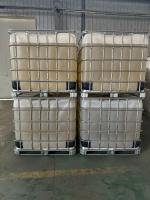


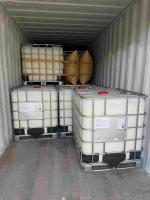
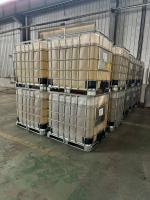
Polyamine (25–45 viscosity) is a medium-viscosity cationic polymer widely used as a coagulant and charge neutralization agent in water treatment, sludge conditioning, papermaking, and industrial separation processes. This viscosity range typically represents a medium molecular weight liquid polyamine with balanced reactivity, making it suitable for both clarification and flocculation assistance. It is highly effective in destabilizing negatively charged colloids and suspended solids, allowing efficient aggregation and removal.
Below is a detailed explanation of its main applications and functions.
One of the most important applications of polyamine (25–45 viscosity) is municipal wastewater treatment, where it acts as a primary coagulant or coagulant aid.
Municipal wastewater contains suspended solids, organic matter, and colloidal particles that must be removed before biological treatment. Polyamine neutralizes the negative surface charges of these particles, causing destabilization and aggregation into larger flocs.
Benefits include:
Improved suspended solids removal
Reduced turbidity
Improved sedimentation efficiency
Enhanced clarifier performance
This improves the efficiency of downstream biological treatment processes.
Polyamine is used to improve sludge thickening by promoting floc formation and increasing settling rates.
Advantages include:
Increased sludge solids concentration
Reduced sludge volume
Improved thickener performance
Reduced sludge handling costs
This makes sludge processing more efficient.
Polyamine (25–45 viscosity) is widely used in potable water treatment plants as a primary coagulant or coagulant aid.
Raw water sources such as rivers and reservoirs contain clay, silt, organic matter, and fine particles. Polyamine destabilizes these particles and promotes rapid floc formation.
Benefits:
Improved water clarity
Reduced turbidity
Improved filtration efficiency
Better drinking water quality
Polyamine helps remove natural organic matter (NOM), which can cause color, taste, and odor problems.
Advantages:
Improved water quality
Reduced disinfection by-product formation
Improved filtration performance
Polyamine (25–45 viscosity) is widely used in industrial wastewater treatment across many industries.
Textile wastewater contains dyes, pigments, and suspended solids. Polyamine removes these contaminants by charge neutralization and flocculation.
Benefits include:
Effective color removal
Reduced COD and suspended solids
Improved water clarity
Paper mills produce wastewater containing fibers, fillers, and organic materials. Polyamine effectively removes these contaminants.
Advantages:
Improved solid removal
Reduced turbidity
Improved water reuse capability
Polyamine removes oil, suspended solids, and organic contaminants from chemical wastewater.
Benefits:
Improved separation efficiency
Reduced environmental impact
Improved discharge compliance
Polyamine is widely used as a sludge conditioning agent to improve sludge dewatering performance.
Polyamine improves sludge floc formation and enhances water release.
Advantages:
Improved cake dryness
Reduced sludge volume
Reduced disposal costs
Polyamine improves centrifuge efficiency by forming dense flocs that separate easily from water.
Benefits include:
Improved separation efficiency
Reduced polymer consumption
Improved operational performance
Polyamine (25–45 viscosity) is widely used in paper mills as a process chemical.
Polyamine neutralizes negatively charged fibers and fillers, improving retention and drainage.
Benefits include:
Improved filler retention
Reduced chemical loss
Improved paper quality
Improved machine efficiency
Polyamine helps control pitch and sticky contaminants that affect paper production.
Advantages:
Improved machine cleanliness
Reduced downtime
Improved production efficiency
Polyamine is used in oilfield wastewater treatment and produced water clarification.
Produced water contains oil, suspended solids, and contaminants. Polyamine helps remove these impurities.
Benefits include:
Improved oil-water separation
Reduced suspended solids
Improved water reuse
Polyamine (25–45 viscosity) is used in mining operations for clarification and solid-liquid separation.
Applications include:
Tailings thickening
Process water clarification
Slurry settling improvement
Benefits include:
Improved settling rates
Improved water recovery
Reduced water consumption
Polyamine is commonly used as a pretreatment chemical before ultrafiltration (UF) and reverse osmosis (RO).
Benefits include:
Reduced membrane fouling
Improved membrane performance
Extended membrane life
The medium viscosity range provides balanced performance and operational flexibility.
Key advantages include:
Strong charge neutralization ability
Fast coagulation and flocculation
Wide pH operating range
Effective at low dosage
Easy handling and dosing
Compatible with inorganic coagulants
Improved sludge dewatering
Reduced treatment cost
Polyamine works primarily through charge neutralization and particle destabilization.
Negatively charged particles repel each other and remain stable in suspension. Polyamine, being positively charged, neutralizes these charges, allowing particles to aggregate into flocs.
This results in:
Faster settling
Improved separation
Clearer water
500_small.jpg "polyamine(HS:3402410000)manufacturer|polyamine suppliers in China")