Our Products
coagulant / polydadmac flocculant for industrial effluent treatment
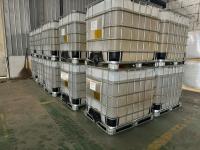



Polydadmac (poly diallyldimethylammonium chloride) is a highly effective cationic flocculant widely used in industrial effluent treatment systems. Industrial wastewater from sectors such as textile, paper and pulp, mining, oil and gas, food processing, chemical manufacturing, and metal finishing often contains high levels of suspended solids, colloids, emulsified oils, and dissolved organic matter. These pollutants are typically stable in water due to negative surface charges and fine particle size, making them difficult to remove by gravity alone. Polydadmac flocculant plays a key role in destabilizing these systems and improving solid-liquid separation efficiency.
Industrial effluent composition varies depending on the production process, but commonly includes:
These components are often stable in dispersion due to electrostatic repulsion, requiring chemical coagulation and flocculation for effective removal.
Polydadmac is a water-soluble quaternary ammonium polymer synthesized from diallyldimethylammonium chloride (DADMAC). It is widely used in flocculation systems due to its strong cationic properties.
Key properties include:
These characteristics make Polydadmac highly effective in destabilizing industrial effluents and promoting floc growth.
Polydadmac improves industrial effluent treatment through several mechanisms:
(1) Charge neutralization
Most suspended particles in industrial wastewater carry negative charges. Polydadmac neutralizes these charges, eliminating electrostatic repulsion and allowing aggregation.
(2) Patch flocculation
The polymer creates positively charged patches on particle surfaces, which attract negatively charged colloids and form microflocs.
(3) Adsorption and destabilization
Polydadmac adsorbs onto fine particles and emulsified droplets, destabilizing their colloidal structure.
(4) Floc growth and aggregation
Once destabilized, microflocs collide and form larger aggregates that can be easily separated by sedimentation or flotation.
(5) Enmeshment of impurities
Fine suspended solids, dyes, and organic matter become trapped within floc structures, improving removal efficiency.
Polydadmac is added during primary treatment to remove:
It improves settling speed and reduces load on biological treatment systems.
In flotation systems, Polydadmac enhances:
It is widely used in food processing, petrochemical, and refinery wastewater.
After biological treatment, Polydadmac is used to remove residual turbidity and fine solids, improving effluent clarity.
Polydadmac improves sludge conditioning by:
In textile and chemical wastewater, it helps reduce:
Removes dyes, fibers, and surfactants, significantly reducing color intensity.
Improves fiber retention and white water clarification.
Enhances settling of fine mineral particles and tailings.
Destabilizes emulsified oil droplets and improves separation.
Removes fats, proteins, and organic solids.
(1) High flocculation efficiency
Rapidly aggregates fine particles and colloids.
(2) Fast reaction speed
Immediate performance reduces treatment time.
(3) Wide pH adaptability
Effective under acidic, neutral, and alkaline conditions.
(4) Reduced sludge volume
Produces dense, compact flocs with low water content.
(5) Improved effluent quality
Reduces turbidity, COD, and color.
(6) Operational flexibility
Works in combination with multiple treatment systems.
Typical dosage ranges:
Key influencing factors include:
Jar testing is essential for determining optimal dosage.
Polydadmac is often used in combination with:
(1) Anionic polyacrylamide (APAM):
Enhances floc size and settling speed.
(2) Polyaluminum chloride (PAC):
Improves coagulation strength and reduces chemical cost.
(3) Ferric salts:
Aid in phosphorus removal and precipitation of heavy metals.
(4) pH adjusters:
Optimize conditions for floc formation.
This combined system improves overall treatment efficiency.
(1) Overdosing risk
Excess polymer may cause charge reversal and poor floc formation.
(2) Sensitivity to wastewater variability
Different effluents require tailored dosing strategies.
(3) Limited bridging capability
Compared to high molecular weight polymers, it mainly acts as a charge neutralizer.
(4) Cost considerations
More expensive than inorganic coagulants but more efficient at low dosage.
To achieve optimal performance:
The use of Polydadmac flocculant in industrial effluent treatment is expected to grow due to:
Future products will focus on higher efficiency, lower dosage, and improved performance in complex wastewater streams.