

Our Products

coagulant / PolyDADMAC for lake water treatment|high charge PolyDADMAC for drinking water
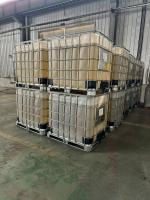
PolyDADMAC for lake water treatment is an effective application of cationic polymer technology for removing turbidity, suspended solids, colloidal particles, algae-associated solids, natural organic matter, and other particulate impurities from lake water. PolyDADMAC, or polydiallyldimethylammonium chloride, is a strongly cationic, water-soluble polymer that functions primarily through charge neutralization. Because many particles in lake water carry negative surface charges, PolyDADMAC can destabilize these particles and promote the formation of larger flocs that can be separated through sedimentation, dissolved air flotation, or filtration.
Lake water can be more difficult to treat than some other surface-water sources because its quality may change considerably with seasons. Algae blooms, suspended clay, organic matter, decaying vegetation, temperature changes, and biological activity can all influence coagulation. Therefore, PolyDADMAC for lake water treatment can be an important component of a flexible water-treatment program.
1. Principle of PolyDADMAC in Lake Water Treatment
The primary mechanism of PolyDADMAC for lake water treatment is electrostatic charge neutralization.
Fine suspended particles and colloids in lake water commonly have negative surface charges. These particles repel one another and remain dispersed rather than settling rapidly. PolyDADMAC contains positively charged quaternary ammonium groups that strongly interact with these negatively charged surfaces.
After PolyDADMAC is introduced into lake water, polymer molecules adsorb onto particle surfaces. This reduces the electrostatic repulsion between particles and allows them to approach one another.
Once destabilized, particles collide and form aggregates. These aggregates grow into larger flocs that are easier to remove.
The basic coagulation mechanism can therefore be summarized as:
Negatively charged particles → PolyDADMAC adsorption → charge neutralization → particle aggregation → floc formation → physical separation
This makes PolyDADMAC particularly useful for fine particles that would otherwise remain suspended.
2. Main Lake-Water Contaminants
Lake water can contain many types of impurities, depending on the surrounding watershed and seasonal conditions.
Typical particulate contaminants include:
- Clay
- Silt
- Fine suspended solids
- Colloidal particles
- Algae
- Organic particles
- Microorganism-associated solids
- Natural organic matter
- Soil particles
- Color-causing particulate matter
- Decaying vegetation
- Agricultural runoff particles
PolyDADMAC for lake water treatment is primarily designed to remove suspended and colloidal material. It does not replace disinfection or specialized treatment processes for dissolved contaminants.
3. Turbidity Removal
Turbidity reduction is one of the most important applications of PolyDADMAC for lake water treatment.
Lake water can become turbid because of wind-induced sediment resuspension, storm runoff, soil erosion, algae, organic debris, and inflowing streams.
Fine clay and colloidal particles may remain suspended for long periods. PolyDADMAC destabilizes these particles and promotes aggregation into larger flocs.
The resulting flocs can settle more rapidly in a clarification basin or be captured through dissolved air flotation.
Improved turbidity removal can also reduce the particle load reaching downstream filters.
4. Algae-Related Treatment
Algae are a major concern in many lakes, particularly during warm seasons.
Algal cells and associated organic particles can contribute to turbidity, color, taste-and-odor problems, and filter loading. Many algae and organic particles have surface characteristics that allow cationic polymers to interact with them.
PolyDADMAC for lake water treatment can therefore assist in removing algae-associated particulate material during coagulation and clarification.
However, PolyDADMAC should not be considered an algaecide. It does not necessarily destroy algae or eliminate dissolved algal metabolites. When cyanobacterial blooms or taste-and-odor compounds are present, additional treatment technologies may be required.
5. Application Process
A typical lake-water treatment process may follow this sequence:
Lake intake → screening → PolyDADMAC dosing → rapid mixing → flocculation → sedimentation/DAF → filtration → disinfection
Screening first removes large debris. PolyDADMAC is then introduced into the raw water.
Rapid mixing ensures that the polymer is distributed throughout the water and contacts the suspended particles. The water then enters a flocculation stage, where gentle agitation promotes collisions between destabilized particles.
The resulting flocs are separated using sedimentation, clarification, or dissolved air flotation. Filtration then removes remaining fine particles.
6. PolyDADMAC Dosage
There is no universal dosage for PolyDADMAC for lake water treatment because lake-water quality varies significantly.
As an initial laboratory screening range, approximately 0.5–10 mg/L of commercial PolyDADMAC product may be evaluated. The actual optimum dosage can be significantly lower or higher depending on water quality and polymer characteristics.
Dosage should be optimized through jar testing.
Important factors include:
- Turbidity
- Suspended-solids concentration
- Algae concentration
- Particle charge
- Natural organic matter
- pH
- Temperature
- Alkalinity
- Polymer charge density
- Polymer molecular weight
- Existing inorganic coagulant dosage
The objective is to achieve efficient clarification without overdosing.
7. Jar Testing
Jar testing is essential when selecting PolyDADMAC for lake water treatment.
A representative lake-water sample can be treated with different PolyDADMAC concentrations. Operators can compare floc formation, settling rate, supernatant turbidity, and other water-quality parameters.
For example, several dosages can be evaluated across a suitable range rather than selecting a single dosage immediately.
Jar testing should ideally be conducted under different seasonal conditions because lake water may change substantially between summer, winter, rainy periods, and algae-bloom conditions.
8. Charge Density
PolyDADMAC charge density strongly influences its coagulation performance.
A high cationic charge enables the polymer to interact strongly with negatively charged colloids, algae-associated particles, clay, and organic matter.
However, excessive dosing can produce charge reversal. Once particles become positively charged, they can become restabilized, reducing clarification efficiency.
Consequently, PolyDADMAC for lake water treatment should be optimized according to the actual particle characteristics of the lake rather than simply selecting the highest-charge product.
9. Molecular Weight
Molecular weight is another important consideration.
Lower- or medium-molecular-weight PolyDADMAC grades can be particularly effective when rapid charge neutralization is the primary mechanism required. Higher molecular weight can provide longer polymer chains and may contribute to particle aggregation and floc structure.
The optimum molecular weight depends on the lake-water chemistry and treatment process. Charge density and molecular weight should therefore be considered together.
10. Combination with PAC
PolyDADMAC can be combined with polyaluminum chloride (PAC) in lake-water clarification.
PAC provides aluminum-based coagulation, while PolyDADMAC provides strong cationic charge neutralization. Their complementary mechanisms can improve the destabilization and aggregation of fine particles.
This approach may be particularly useful when lake water has high turbidity, colloidal stability, or variable organic content.
The correct dosing sequence and dosage ratio should be determined experimentally. PolyDADMAC may be applied before PAC, together with PAC, or as a coagulant aid depending on the treatment system.
11. Combination with Alum
Aluminum sulfate, or alum, is another possible partner for PolyDADMAC.
Alum forms aluminum-based coagulation products that capture suspended particles. PolyDADMAC can accelerate destabilization and aggregation of negatively charged particles.
The combined treatment can potentially improve floc formation and settling while reducing the required quantity of inorganic coagulant in some systems.
However, treatment optimization must consider pH and alkalinity because alum performance is strongly influenced by water chemistry.
12. Seasonal Effects
Lake water often changes substantially during the year.
During summer, warmer temperatures may encourage algae growth. During storms, surface runoff can increase turbidity. During periods of strong wind, bottom sediments may become resuspended in shallow lakes.
Temperature also affects coagulation and flocculation kinetics.
Therefore, PolyDADMAC for lake water treatment should not necessarily be operated at one fixed dosage throughout the year.
Online turbidity monitoring, regular jar testing, and adjustment of chemical dosing can help maintain stable clarification.
13. Filtration Benefits
Good coagulation upstream can significantly improve filtration performance.
When PolyDADMAC converts fine colloids and suspended particles into larger flocs that are removed during clarification, fewer particles enter the filtration stage.
This can reduce filter loading and help delay turbidity breakthrough.
However, polymer overdosing can cause filter fouling or other operational problems. Correct dosing is therefore critical.
14. Drinking-Water Applications
When lake water is used as a drinking-water source, the selected PolyDADMAC must be specifically approved or certified for potable-water treatment in the applicable jurisdiction.
The treatment plant should verify product purity, residual monomer specifications, applicable standards, certification, and manufacturer documentation.
Industrial-grade PolyDADMAC should not automatically be used for potable-water production without verifying its suitability.
15. Advantages of PolyDADMAC
The major advantages of PolyDADMAC for lake water treatment include:
- Strong cationic charge
- Rapid particle destabilization
- Effective colloid neutralization
- Improved floc formation
- Potential turbidity reduction
- Compatibility with PAC and alum
- Reduced particulate loading on filters
- Flexible application as a primary coagulant or coagulant aid
- Effective performance at relatively low dosage when properly selected
Conclusion
PolyDADMAC for lake water treatment is a powerful cationic coagulation technology for treating suspended and colloidal impurities in lakes and reservoirs. Its primary mechanism is charge neutralization, allowing negatively charged particles to aggregate into larger flocs that can be removed by sedimentation, flotation, and filtration.
PolyDADMAC can be particularly useful for turbidity control, fine colloid removal, and algae-associated particulate removal. It can be used independently or together with PAC, alum, ferric salts, and other coagulants.
The most important factors affecting performance are charge density, molecular weight, dosage, lake-water turbidity, algae concentration, organic matter, pH, temperature, mixing conditions, and clarification equipment.
Because lake-water quality changes seasonally, jar testing with actual lake water is strongly recommended. Properly selected and dosed, PolyDADMAC for lake water treatment can improve clarification efficiency, reduce turbidity, enhance downstream filtration, and provide more stable overall surface-water treatment performance.
889_small.jpg "The replacement of Hyperfloc CP 614 PWG 615 PWG 618 PWG polydadmac")