

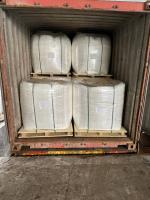
FO 4990 SH is a high–molecular weight cationic polyacrylamide (CPAM) widely applied in solid–liquid separation processes. As a cationic polyacrylamide, FO 4990 SH contains positively charged functional groups distributed along a long polyacrylamide chain, enabling strong charge neutralization and polymer bridging. The application of cationic polyacrylamide FO 4990 SH focuses primarily on sludge dewatering, wastewater clarification, industrial effluent treatment, and mineral processing where efficient floc formation is required.
One of the most important applications of cationic polyacrylamide FO 4990 SH is municipal wastewater sludge dewatering. In activated sludge systems, waste activated sludge (WAS) carries a strong negative surface charge and contains fine biological particles that resist settling. Cationic polyacrylamide FO 4990 SH neutralizes these charges and links small particles together to form large, compact flocs. When used ahead of centrifuges, belt filter presses, or screw presses, cationic polyacrylamide FO 4990 SH improves cake dryness, reduces filtrate suspended solids, and enhances machine throughput. Because of its high molecular weight and optimized charge density, cationic polyacrylamide FO 4990 SH forms shear-resistant flocs suitable for high-speed centrifugation.
Another key application of cationic polyacrylamide FO 4990 SH is in industrial wastewater treatment. Industries such as food processing, beverage production, slaughterhouses, textile mills, and chemical plants generate wastewater rich in organic solids and colloidal particles. Cationic polyacrylamide FO 4990 SH is typically dosed after a primary coagulant to enhance flocculation. In sedimentation tanks or dissolved air flotation (DAF) units, cationic polyacrylamide FO 4990 SH accelerates particle aggregation and improves solids capture. The result is lower turbidity, reduced chemical oxygen demand (COD), and improved discharge compliance.
In the pulp and paper industry, cationic polyacrylamide FO 4990 SH is frequently used for sludge thickening and fiber recovery. Paper mill effluent contains short fibers, fillers, and organic residues that are difficult to settle. The strong bridging ability of cationic polyacrylamide FO 4990 SH aggregates these fine particles into larger flocs, allowing rapid clarification. In sludge thickening systems, cationic polyacrylamide FO 4990 SH increases underflow solids concentration and reduces the volume sent to dewatering equipment, lowering disposal and transportation costs.
Cationic polyacrylamide FO 4990 SH also finds application in mining and mineral processing. Tailings streams from coal preparation, metal ore beneficiation, and sand washing operations contain ultrafine mineral particles that remain suspended for long periods. By introducing cationic polyacrylamide FO 4990 SH into thickeners or clarifiers, operators can significantly accelerate sedimentation rates. The polymer bridges negatively charged mineral surfaces, forming dense flocs that enhance water recovery and increase underflow density. Efficient water recycling supported by cationic polyacrylamide FO 4990 SH contributes to sustainable mining practices.
In the oil and gas sector, cationic polyacrylamide FO 4990 SH is applied to treat produced water and oily sludge. Produced water often contains dispersed oil droplets and fine suspended solids. When used together with inorganic coagulants, cationic polyacrylamide FO 4990 SH improves oil-water separation efficiency. The polymer enhances floc size and flotation performance, resulting in cleaner water suitable for discharge or reinjection. Because cationic polyacrylamide FO 4990 SH functions effectively over a broad pH range, it adapts well to varying field conditions.
Another application of cationic polyacrylamide FO 4990 SH is biological sludge thickening prior to anaerobic or aerobic digestion. In gravity thickeners, cationic polyacrylamide FO 4990 SH forms large, fast-settling flocs that increase solids concentration and reduce hydraulic load. Improved thickening performance enhances digester stability and lowers overall operational costs.
From a performance perspective, cationic polyacrylamide FO 4990 SH works through dual mechanisms: charge neutralization and polymer bridging. Its cationic groups neutralize negatively charged colloids, while its long molecular chains physically link particles together. Optimal application of cationic polyacrylamide FO 4990 SH requires correct solution preparation, typically at low concentration with adequate aging time to ensure full polymer activation. Proper dosing control is essential to prevent overdosing, which may restabilize particles or increase operational expenses.
In summary, the application of cationic polyacrylamide FO 4990 SH includes municipal sludge dewatering, industrial wastewater clarification, pulp and paper sludge treatment, mining tailings sedimentation, oilfield produced water treatment, and biological sludge thickening. Through effective floc formation and enhanced solid–liquid separation, cationic polyacrylamide FO 4990 SH improves operational efficiency, reduces sludge disposal costs, and supports environmental compliance across multiple industries.