

Our Products

coagulant / polydadmac for low temperature water treatment performance
Polydadmac (poly diallyldimethylammonium chloride) is a highly effective cationic polymer widely used in water and wastewater treatment. One of its important advantages is its stable and efficient performance under low-temperature conditions. In many regions, surface water, groundwater, and industrial effluents experience significant temperature drops during winter. Low temperature water treatment is challenging because coagulation, flocculation, and sedimentation processes become slower and less efficient. Polydadmac is particularly valued in these conditions due to its strong charge neutralization ability, fast reaction kinetics, and low dependence on temperature-driven diffusion.
1. Challenges of low temperature water treatment
Low temperature water (typically below 10°C, and sometimes near 0–5°C in winter conditions) presents several operational difficulties:
- Reduced particle collision frequency
- Increased water viscosity
- Slower floc growth and aggregation
- Poor sedimentation efficiency
- Reduced biological activity in secondary treatment
- Higher residual turbidity in effluent
- Poor performance of conventional inorganic coagulants
In such conditions, conventional coagulants like aluminum sulfate or ferric salts often require higher dosages and longer reaction times, yet still produce weak flocs.
2. Properties of Polydadmac relevant to low temperature performance
Polydadmac is a water-soluble quaternary ammonium polymer derived from diallyldimethylammonium chloride (DADMAC). Its structure provides unique advantages in cold water systems:
- High cationic charge density: Strong electrostatic attraction to negatively charged particles
- Fast adsorption rate: Rapid interaction even under low kinetic energy conditions
- Excellent water solubility: Uniform dispersion in cold water without precipitation
- Low sensitivity to temperature changes: Performance remains stable from 0°C to 40°C
- Efficient charge neutralization mechanism: Less dependent on particle collision frequency compared to bridging flocculants
These properties make Polydadmac highly suitable for winter water treatment operations.
3. Mechanism of action in low temperature conditions
Polydadmac improves water treatment efficiency in cold environments through several key mechanisms:
(1) Rapid charge neutralization
At low temperatures, particle movement slows down, reducing natural aggregation. Polydadmac quickly neutralizes the negative charges on colloids and suspended solids, eliminating electrostatic repulsion and allowing aggregation even under reduced collision rates.
(2) Strong adsorption performance
Despite lower molecular motion, Polydadmac can still adsorb efficiently onto particle surfaces due to its high charge density and strong electrostatic attraction.
(3) Patch flocculation effect
The polymer creates localized positively charged regions on particle surfaces. These “patches” attract negatively charged particles, forming microflocs even when particle movement is limited.
(4) Reduced dependence on bridging mechanism
Unlike high molecular weight polyacrylamide, which relies heavily on polymer chain bridging, Polydadmac mainly uses charge neutralization. This makes it more effective in low-temperature environments where polymer chain movement is restricted.
(5) Formation of dense microflocs
Although floc growth may be slower, the resulting flocs are compact and stable, improving sedimentation performance.
4. Application in different low temperature water systems
(1) Drinking water treatment
In cold surface water sources such as rivers and reservoirs:
- Removes turbidity caused by clay and silt
- Reduces natural organic matter (NOM)
- Improves filtration performance
- Enhances clarification efficiency in sedimentation tanks
Polydadmac ensures stable drinking water quality during winter operation.
(2) Municipal wastewater treatment
In cold climates, municipal wastewater treatment plants experience reduced settling efficiency. Polydadmac helps by:
- Improving primary clarification
- Enhancing sludge settling in secondary clarifiers
- Reducing suspended solids in effluent
- Supporting sludge thickening processes
(3) Industrial wastewater treatment
Industries such as mining, paper mills, and food processing benefit from Polydadmac in winter conditions due to:
- Stable floc formation in cold process water
- Improved solid-liquid separation efficiency
- Reduced chemical consumption compared to inorganic coagulants
(4) Surface water treatment
In lakes, rivers, and reservoirs during winter:
- Controls turbidity spikes caused by seasonal runoff
- Improves water clarity for downstream treatment systems
5. Advantages of Polydadmac in low temperature systems
(1) High efficiency at low temperatures
Maintains strong coagulation performance even below 5°C.
(2) Fast reaction speed
Quick charge neutralization compensates for reduced particle motion.
(3) Reduced dosage requirement
Often more efficient than inorganic coagulants in cold water.
(4) Stable floc formation
Produces compact flocs that settle reliably even in viscous water.
(5) Improved filtration performance
Enhances filter run time and reduces clogging during winter operations.
(6) Operational stability
Reduces sensitivity of treatment systems to seasonal temperature changes.
6. Dosage and influencing factors
Typical dosage ranges in low temperature conditions:
- 0.5–10 mg/L for drinking water treatment
- 5–30 mg/L for municipal wastewater
- 20–100 mg/L for high turbidity or industrial wastewater
Key factors influencing performance include:
- Water temperature (0–10°C range critical)
- Turbidity and particle type
- Organic matter content
- Mixing intensity and contact time
- pH and ionic strength
Because low temperature reduces reaction speed, proper rapid mixing is especially important to ensure dispersion.
7. Combination with other treatment chemicals
Polydadmac is often used in combination systems to improve cold water performance:
(1) Polyaluminum chloride (PAC):
Provides strong coagulation nuclei, while Polydadmac enhances charge neutralization.
(2) Ferric salts:
Improve removal of phosphorus and fine suspended solids.
(3) Anionic polyacrylamide (APAM):
Enhances floc size and settling speed through bridging effects.
(4) Activated silica or bentonite:
Improves floc structure stability in cold water systems.
These combinations are widely used in winter water treatment optimization programs.
8. Limitations and considerations
(1) Slower floc growth compared to warm water conditions
Even though Polydadmac works well, overall kinetics are still reduced.
(2) Need for optimized mixing
Insufficient mixing can reduce effectiveness in cold water.
(3) Overdosing risk
Excess polymer may cause charge reversal and poor settling.
(4) System variability
Different raw water sources require specific dosage adjustments.
9. Operational best practices
To achieve optimal performance in low temperature water treatment:
- Conduct jar testing at actual operating temperature
- Optimize rapid mixing intensity to ensure dispersion
- Adjust dosage based on turbidity fluctuations
- Combine with inorganic coagulants when necessary
- Avoid overdosing to prevent restabilization
- Monitor effluent turbidity regularly during winter operation
10. Future trends
The use of Polydadmac in low temperature water treatment is expected to increase due to:
- Climate variability and seasonal water quality fluctuations
- Increased demand for stable drinking water supply in cold regions
- Expansion of water reuse systems in temperate climates
- Development of hybrid polymer-based coagulation systems
- Need for energy-efficient water treatment solutions
Future formulations will focus on enhanced cold-water reactivity, lower dosage requirements, and improved synergy with inorganic coagulants and flocculants.
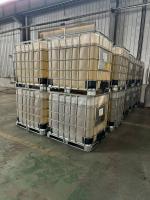
821_small.jpg "PolyDADMAC coagulant for surface water treatment|SNF polydadmac")