

Our Products

coagulant / polyamine water treatment chemical supplier|polyamine coagulant
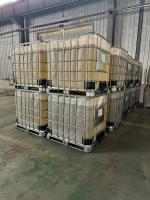
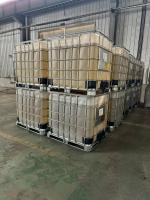
A polyamine water treatment chemical is a highly effective organic coagulant widely used for removing suspended solids, colloidal particles, color, oils, and other contaminants from water and wastewater. Polyamines are water-soluble polymers containing positively charged amino groups. Their strong cationic charge allows them to neutralize negatively charged contaminants and promote rapid aggregation into larger flocs that can be separated by sedimentation, flotation, filtration, or other solid-liquid separation processes.
Compared with some conventional inorganic coagulants, a polyamine water treatment chemical can provide effective coagulation at relatively low dosage and can be used across a broad range of industrial and municipal applications. Depending on molecular structure, charge density, molecular weight, and solids concentration, different polyamine grades can be selected for specific treatment processes.
1. Municipal Wastewater Treatment
One of the major applications of polyamine is municipal wastewater treatment. Raw sewage typically contains suspended solids, colloidal matter, organic substances, oils, microorganisms, and other contaminants. These particles can remain stable in water because of their surface charge, making conventional settling inefficient.
Polyamine works primarily through charge neutralization and polymer bridging. The positively charged polymer interacts with negatively charged particles, destabilizing them and encouraging the formation of larger flocs.
A polyamine water treatment chemical can therefore be applied in primary clarification, chemically enhanced primary treatment, tertiary treatment, and sludge conditioning.
Typical benefits include:
- Improved suspended solids removal
- Faster floc formation
- Better clarification
- Reduced turbidity
- Improved sludge settling
- Reduced inorganic coagulant consumption in some processes
The appropriate dosage depends on wastewater characteristics, turbidity, suspended solids concentration, pH, and the selected polyamine grade.
2. Industrial Wastewater Treatment
Industrial wastewater is another important market for polyamine products. Different manufacturing industries generate wastewater containing suspended solids, emulsified oils, organic compounds, dyes, pigments, and other difficult-to-remove substances.
Industries commonly using polyamine include:
- Textile and dyeing
- Paper and pulp
- Food processing
- Petrochemical
- Oil and gas
- Mining and mineral processing
- Steel and metal processing
- Chemical manufacturing
- Pharmaceutical manufacturing
In these applications, polyamine can be used as a primary coagulant or as part of a coagulation-flocculation system. It can destabilize fine particles before an anionic or nonionic polyacrylamide is added to build stronger and larger flocs.
This combination can be particularly useful when wastewater contains high concentrations of colloidal suspended solids.
3. Color Removal from Wastewater
Color removal is one of the important applications of high-charge polyamine products. Textile wastewater, dyeing wastewater, paper mill effluent, and some chemical wastewaters can contain highly soluble or colloidal color compounds.
Because polyamine contains positively charged functional groups, it can interact with negatively charged color-producing substances. Depending on the chemical structure of the contaminants, polyamine may reduce color through charge neutralization, adsorption, precipitation, and flocculation mechanisms.
For textile wastewater treatment, polyamine can be combined with other treatment chemicals to improve the removal of dyes and suspended solids.
A high-charge polyamine water treatment chemical is often considered when rapid color reduction and coagulation are required.
4. Sludge Conditioning and Dewatering
Polyamine is also used in sludge treatment. Municipal and industrial sludge normally contains a large quantity of water, and mechanical dewatering becomes difficult when fine particles and colloids retain water strongly.
Polyamine can destabilize sludge particles and improve aggregation. This can facilitate subsequent mechanical dewatering using:
- Belt filter presses
- Decanter centrifuges
- Screw presses
- Filter presses
In some applications, polyamine is used alone; in others, it is combined with cationic polyacrylamide or other polymers.
The selection between polyamine and cationic PAM depends on sludge composition, organic content, particle size, charge demand, and the type of dewatering equipment.
5. Oil and Emulsion Treatment
Oil-containing wastewater can be difficult to treat because oil droplets may form stable emulsions. Small oil droplets can remain suspended for long periods and pass through conventional gravity separation.
Polyamine can assist in destabilizing emulsified oil droplets. Once the electrical stability of the emulsion is reduced, oil droplets can collide and aggregate into larger particles that are easier to remove.
A polyamine water treatment chemical may therefore be used in:
- Refinery wastewater
- Petrochemical wastewater
- Produced water
- Metalworking wastewater
- Machinery wastewater
- Industrial oily wastewater
Depending on the wastewater chemistry, polyamine may be combined with inorganic coagulants, flotation systems, or polymeric flocculants.
6. Paper and Pulp Industry
The paper industry uses various polymeric chemicals for retention, drainage, wastewater clarification, and contaminant removal. Polyamine can be applied to wastewater generated during paper and pulp manufacturing.
Its cationic charge helps capture negatively charged suspended materials, colloids, and organic substances. It can improve clarification and reduce the load entering downstream biological or filtration processes.
Polyamine may also be used in conjunction with polyacrylamide and inorganic coagulants when a multi-stage treatment system is required.
7. Mining and Mineral Processing
Mining wastewater and mineral-processing water often contain large amounts of fine suspended particles, clay, colloids, and mineral slimes.
Polyamine can be used as a coagulant to destabilize fine particles before sedimentation or filtration. In some systems, it is combined with anionic polyacrylamide to produce larger and stronger flocs.
For example, in mineral-processing wastewater, polyamine may first neutralize the surface charge of fine particles, while anionic PAM subsequently promotes polymer bridging.
This treatment strategy can improve settling rates and help recover clearer process water for reuse.
8. Tertiary Wastewater Treatment
Polyamine can also be incorporated into advanced or tertiary wastewater treatment systems. After biological treatment, wastewater may still contain fine suspended solids, colloids, phosphorus-associated particles, and residual color.
A polyamine water treatment chemical can assist with the removal of these residual contaminants before:
- Sand filtration
- Multimedia filtration
- Membrane treatment
- Discharge
- Water reuse
Chemical coagulation before filtration can reduce turbidity and suspended solids and potentially protect downstream treatment equipment.
9. Drinking Water and Surface Water Treatment
Polyamine products may also be used in certain water clarification applications involving surface water, river water, lake water, or raw water. Their function is primarily to destabilize colloidal and suspended particles.
However, when a polyamine product is intended for drinking-water applications, regulatory approval and product-specific certification must be checked for the target country and application.
The dosage should always be determined through jar testing because raw-water characteristics can vary considerably with season, temperature, turbidity, organic matter, and alkalinity.
10. How to Select the Right Polyamine
Not every polyamine product provides the same performance. Important selection parameters include:
- Cationic charge density
- Molecular weight
- Active solids content
- Viscosity
- Chemical structure
- pH compatibility
- Wastewater characteristics
High-charge polyamine is often useful when the wastewater has a high negative charge demand. Lower or medium molecular weight products may be preferred when rapid charge neutralization is more important than extensive polymer bridging.
For difficult wastewater, laboratory jar testing and pilot testing are strongly recommended before full-scale application.
Conclusion
The polyamine water treatment chemical is a versatile organic coagulant with applications across municipal wastewater, industrial wastewater, sludge dewatering, color removal, oily wastewater, paper and pulp, mining, tertiary treatment, and selected water clarification processes.
Its main advantages come from its strong cationic charge, water solubility, rapid interaction with negatively charged contaminants, and ability to work at relatively low dosage. In many treatment systems, polyamine can also be combined with PAC, aluminum sulfate, ferric salts, or polyacrylamide to achieve better overall coagulation and flocculation performance.
For commercial water-treatment applications, choosing the correct polyamine grade is more important than simply selecting the highest charge or molecular weight. The best product should be determined according to wastewater composition, charge demand, treatment equipment, target removal performance, and total treatment cost. Jar testing remains one of the most reliable methods for identifying the optimum polyamine water treatment chemical, dosage, and treatment sequence.
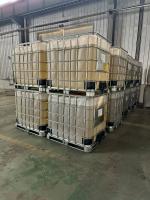
306_small.jpg "The replacement of polyamine(FL2250 FL2449)|equiavlent of polyamine")