Polyamine is an important class of cationic organic coagulants extensively applied in the juice clarification process within the sugar industry. It plays a critical role in removing suspended solids, colloidal impurities, color precursors, and non-sugar organic substances from raw juice derived from sugarcane or sugar beet processing. Compared with traditional clarification agents such as lime and inorganic coagulants, polyamine offers superior performance in terms of clarification efficiency, sludge reduction, and process stability.
In the sugar manufacturing process, raw juice extracted from milling or diffusion contains a complex mixture of impurities, including proteins, pectins, waxes, fibers, inorganic salts, soil particles, and colored compounds such as polyphenols and melanoidins. These impurities are typically present in colloidal or finely dispersed states and carry a net negative charge, which contributes to their stability in suspension. Efficient removal of these components is essential to improve juice purity, reduce color formation during evaporation, and enhance the quality of the final sugar product.
Polyamine functions primarily through a charge neutralization mechanism. Due to its high cationic charge density, polyamine effectively neutralizes the negative surface charge of colloidal particles and dissolved organic matter in the juice. This reduces electrostatic repulsion between particles and promotes aggregation into larger flocs. Unlike high-molecular-weight flocculants that rely on bridging mechanisms, polyamine acts rapidly at low dosages, making it particularly suitable for continuous clarification systems where short retention times are required.
In a typical sugar juice clarification process, polyamine is introduced after liming and heating stages. The addition of lime (calcium hydroxide) adjusts the pH to an alkaline range, usually between 6.8 and 7.5 for sugarcane juice, facilitating the precipitation of certain impurities such as phosphates and proteins. Heating the juice to temperatures around 100–105°C further enhances coagulation by denaturing proteins and accelerating reaction kinetics. Polyamine is then dosed into the hot limed juice, where it interacts with negatively charged impurities to form dense and rapidly settling flocs.
The dosage of polyamine in sugar juice clarification typically ranges from 5 to 50 mg/L, depending on factors such as juice quality, turbidity, color intensity, and process conditions. Optimal dosing is critical; insufficient dosage leads to incomplete clarification, while overdosing can result in charge reversal and restabilization of colloids. Jar testing and on-site optimization are commonly employed to determine the appropriate dosage for specific operational conditions.
One of the primary benefits of using polyamine in the sugar industry is the significant improvement in juice clarity and reduction in turbidity. The formation of compact flocs enhances sedimentation rates in clarifiers, leading to clearer overflow juice and more efficient separation of mud. This directly contributes to improved downstream processing, including evaporation and crystallization, by reducing scaling, fouling, and color formation.
Polyamine also contributes to color removal by coagulating color precursors such as phenolic compounds and their oxidation products. This is particularly important in the production of high-quality white sugar, where color specifications are stringent. By reducing the concentration of these compounds in the clarified juice, polyamine helps minimize color development during thermal processing stages.
Another important advantage is the reduction in mud volume and improvement in mud dewatering characteristics. Compared with inorganic coagulants, polyamine generates less sludge due to its lower dosage requirements and absence of metal hydroxide precipitation. The resulting mud is denser and easier to filter or dewater, which reduces disposal costs and improves overall process efficiency.
In addition, the use of polyamine can lead to a decrease in lime consumption. Since polyamine enhances coagulation efficiency, it allows for lower lime dosages while maintaining or improving clarification performance. This not only reduces chemical costs but also minimizes scaling and deposits in evaporators and other heat exchange equipment, thereby extending equipment lifespan and reducing maintenance requirements.
Polyamine is also compatible with other treatment aids commonly used in sugar processing, such as anionic polyacrylamide flocculants. In many cases, a dual-treatment system is employed, where polyamine serves as the primary coagulant and polyacrylamide acts as a secondary flocculant to enhance floc size and strength. This synergistic combination improves settling rates and clarifier performance, especially under high-load conditions.
From an operational perspective, polyamine is typically supplied as a liquid product with moderate viscosity, allowing for easy handling, storage, and dosing. It exhibits good solubility and stability over a wide pH and temperature range, making it suitable for the demanding conditions of sugar processing. Automated dosing systems are often used to ensure precise control and consistent performance.
Environmental considerations are also favorable for polyamine use. As an organic polymer, it reduces the introduction of inorganic salts into the process stream and minimizes the environmental impact associated with sludge disposal. However, attention should be given to residual polymer levels in the clarified juice, particularly in food-grade applications. High-purity grades of polyamine with low residual monomer content are typically selected to meet food safety and regulatory requirements.
In conclusion, polyamine is a highly effective coagulant for sugar industry juice clarification processes. Its strong cationic charge enables rapid and efficient removal of colloidal impurities, resulting in improved juice clarity, reduced color, and enhanced overall process performance. When properly selected and optimized, polyamine contributes to lower chemical consumption, reduced sludge generation, and improved product quality, making it an essential component in modern sugar processing operations.

277_small.jpg "polyamine for sugar industry juice clarification process")



306_small.jpg "The replacement of polyamine(FL2250 FL2449)|equiavlent of polyamine")
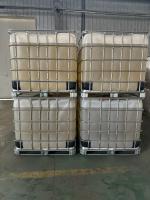
713_small.jpg "polyamine FL2449 can be replaced by Chinafloc-polyamine")