Our Products
coagulant / polyamine coagulant for wastewater treatment plant
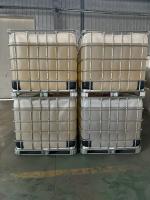



Polyamine coagulant for wastewater treatment plants
Polyamine coagulants are a class of cationic organic polymers widely used in modern wastewater treatment plants as primary coagulants or coagulant aids. They are typically synthesized through the polymerization of amines such as dimethylamine and epichlorohydrin, resulting in water-soluble polymers with high cationic charge density. Their strong positive charge enables them to effectively neutralize negatively charged colloids and suspended solids, making them highly efficient for solid-liquid separation processes.
The performance of polyamine coagulants is primarily based on three mechanisms:
Charge neutralization:
Most contaminants in wastewater—such as colloidal particles, organic matter, and fine suspended solids—carry negative surface charges. Polyamine, with its high cationic charge density, neutralizes these charges, destabilizing the particles and reducing electrostatic repulsion.
Adsorption and bridging:
In addition to charge neutralization, polyamine molecules can adsorb onto particle surfaces and create bridges between destabilized particles. This leads to the formation of larger, denser flocs that settle or float more easily.
Electrostatic patching:
Polyamine molecules can form localized positively charged patches on particle surfaces, enhancing aggregation through patch attraction.
These combined mechanisms allow polyamine to work efficiently even at relatively low dosages compared to inorganic coagulants.
Polyamine coagulants are used across a wide range of wastewater treatment processes, including municipal and industrial applications.
In primary sedimentation tanks, polyamine is often used as a coagulant to remove suspended solids (SS), turbidity, and part of the chemical oxygen demand (COD). It improves settling efficiency and reduces sludge volume.
Typical benefits:
Polyamine is frequently used as a coagulant aid in biological treatment systems and tertiary polishing units. It enhances the removal of residual suspended solids and phosphorus.
Applications include:
Polyamine can be used alone or in combination with cationic polyacrylamide (CPAM) for sludge conditioning. It improves sludge dewaterability by neutralizing charges and promoting floc formation.
Advantages:
Polyamine is especially effective in treating complex industrial effluents due to its high charge density.
Key industries include:
Polyamine offers several advantages over traditional inorganic coagulants such as aluminum sulfate (alum) and ferric chloride:
(1) High efficiency at low dosage
Due to its strong cationic charge, polyamine requires significantly lower dosages to achieve similar or better performance.
(2) Reduced sludge production
Unlike inorganic coagulants, polyamine does not introduce large amounts of metal hydroxides, resulting in less sludge generation.
(3) Wide pH adaptability
Polyamine performs effectively over a broad pH range (typically pH 4–10), reducing the need for pH adjustment.
(4) Faster floc formation
It produces larger and denser flocs, improving sedimentation and flotation efficiency.
(5) Lower residual metal content
Since it is an organic coagulant, it avoids issues related to residual aluminum or iron in treated water.
Despite its advantages, there are several factors to consider when using polyamine:
(1) Cost considerations
Polyamine is generally more expensive per unit weight than inorganic coagulants. However, the lower dosage and improved performance often offset the higher unit cost.
(2) Overdosing risk
Excessive dosing can lead to charge reversal, restabilization of particles, and deterioration of treatment performance. Proper jar testing is essential.
(3) Sensitivity to wastewater characteristics
The effectiveness of polyamine depends on the nature of the wastewater, including pH, temperature, and contaminant composition.
(4) Combination with other chemicals
In many cases, polyamine is used in combination with inorganic coagulants or flocculants (e.g., polyacrylamide) to achieve optimal results.
The dosage of polyamine varies depending on wastewater type and treatment objectives, typically ranging from:
Application steps:
| Parameter | Polyamine | Alum / Ferric salts |
|---|---|---|
| Dosage | Low | High |
| Sludge production | Low | High |
| pH sensitivity | Low | High |
| Floc formation | Fast, dense | Slower |
| Residual metals | None | Present |
This comparison highlights why polyamine is increasingly preferred in advanced wastewater treatment plants, especially where sludge reduction and process efficiency are critical.
With stricter environmental regulations and the need for sustainable treatment solutions, the use of organic coagulants like polyamine is expected to grow. Innovations include:
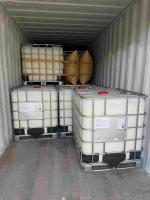
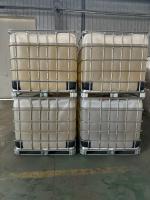
252_small.jpg "high viscosity polyamine for sludge conditioning")