


Our Products

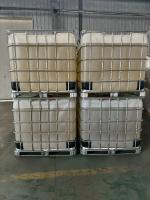
coagulant / polyamine cationic polymer|polyamine used for water treatment and mining
799_small.jpg "polyamine cationic polymer|polyamine used for water treatment and mining")
1. Introduction to Polyamine for Water Treatment and Mining
Polyamine is an important organic polymer coagulant widely used in water treatment, industrial wastewater treatment, and selected mining applications. Polyamine water treatment chemicals are generally water-soluble cationic polymers that neutralize negatively charged suspended particles, colloids, and organic impurities. This process destabilizes particles and helps them aggregate, allowing them to be removed through sedimentation, flotation, or filtration.
In mining, polyamine can help improve process-water clarification, recycle-water quality, and the removal of suspended solids from selected mineral-processing streams. However, its performance depends on the mineral composition, water chemistry, and the characteristics of the particles being treated.
Unlike polyacrylamide (PAM), which is frequently used as a flocculant to bridge particles into larger aggregates, polyamine is primarily used as a coagulant. In some treatment systems, polyamine and polyacrylamide are applied together to achieve better clarification and solid-liquid separation.
2. Polyamine for Industrial Water Treatment
One of the principal applications of polyamine is industrial water treatment. Industrial water frequently contains suspended solids, colloidal particles, organic matter, and other impurities that cannot be removed efficiently through simple settling.
Polyamine coagulants help neutralize the electrical charges on these particles, reducing the repulsive forces that keep them suspended. Once destabilized, the particles can aggregate and become easier to separate.
Common applications include:
-
Industrial wastewater clarification.
-
Suspended solids removal.
-
Process-water treatment and recycling.
-
Pretreatment before filtration.
-
Clarification before biological or advanced treatment.
-
Reduction of turbidity and certain organic contaminants.
Polyamine can also be combined with inorganic coagulants such as polyaluminum chloride (PAC) or aluminum sulfate. Depending on the water characteristics, this combination may improve particle destabilization, reduce inorganic coagulant demand, or enhance floc formation.
The optimal treatment program should be established through jar testing rather than assuming that one polyamine grade is suitable for every industrial wastewater.
3. Polyamine for Municipal Wastewater Treatment
Municipal wastewater contains suspended solids, organic particles, colloidal matter, and other contaminants from residential and commercial activities.
Polyamine can be used as a primary coagulant in selected wastewater treatment processes to improve clarification and suspended solids removal. It may be applied before sedimentation, dissolved air flotation, or filtration, depending on the treatment plant configuration.
Potential benefits include improved turbidity reduction, faster particle aggregation, and better performance in systems experiencing fluctuating influent quality.
Polyamine can also support tertiary wastewater treatment when additional particle removal is required after conventional biological treatment. However, it does not replace biological treatment or disinfection, and its ability to remove dissolved pollutants varies considerably.
For sludge conditioning, the choice between polyamine, cationic polyacrylamide, and other polymers depends on sludge characteristics and dewatering equipment. Polyamine may be useful in certain applications, but comparative performance testing is necessary.
4. Polyamine for Mining and Mineral Processing
Mining operations consume significant quantities of water for ore washing, grinding, flotation, classification, and other mineral-processing activities. These processes generate water containing fine mineral particles, clay, and suspended solids.
Polyamine can be evaluated as a coagulant for selected mining wastewater streams, especially when negatively charged colloidal particles are difficult to remove by gravity settling alone.
Potential applications include:
Mineral-processing wastewater: Polyamine destabilizes fine suspended particles, helping improve clarification before water is returned to the process.
Ore-washing water treatment: In ore-washing circuits, polyamine may help aggregate fine clay and mineral particles, improving the separation of solids from reusable water.
Tailings-water clarification: Polyamine may assist in treating certain tailings supernatants to improve water recovery and reduce suspended solids in recycled water. Its suitability depends on mineralogy and the presence of residual flotation chemicals.
Mine drainage treatment: In selected mine-water streams, polyamine may help remove suspended particles. However, dissolved metals, acidity, and other dissolved contaminants often require additional chemical treatment.
Process-water recycling: By reducing colloidal particles in suitable water streams, polyamine may help improve recycled-water quality and reduce the accumulation of suspended solids in process circuits.
It is important to distinguish coagulation from thickening. Polyamine may destabilize particles, while a suitable high-molecular-weight polyacrylamide flocculant may be needed to build larger flocs and achieve efficient settling in a thickener.
5. Polyamine for Coal Washing and Sand Washing
Coal washing and sand washing produce wastewater containing fine particles that can remain suspended for extended periods.
In coal preparation plants, polyamine may be tested as a primary coagulant to destabilize fine suspended matter. A compatible flocculant can then be added to promote larger aggregates, helping improve clarification and water recycling.
In sand washing plants, the wastewater commonly contains fine sand, silt, and clay. Polyamine may help destabilize colloidal clay particles, while anionic polyacrylamide may improve floc growth and settling.
A combined treatment program can offer advantages when the two products are compatible. Nevertheless, not every sand or coal wastewater requires polyamine. Some streams respond effectively to anionic polyacrylamide alone, so jar testing is essential to avoid unnecessary chemical consumption.
6. Polyamine vs. Polyacrylamide in Water Treatment and Mining
Polyamine and polyacrylamide serve different but sometimes complementary functions.
|
Characteristic |
Polyamine |
Polyacrylamide (PAM) |
|---|---|---|
|
Main function |
Coagulation |
Flocculation |
|
Typical charge |
Cationic |
Anionic, cationic, or nonionic |
|
Primary mechanism |
Charge neutralization and particle destabilization |
Particle bridging and floc growth |
|
Water treatment |
Colloid removal and clarification |
Settling, clarification, and sludge dewatering |
|
Mining applications |
Selected process-water and wastewater streams |
Tailings thickening, mineral settling, and process-water clarification |
|
Combined use |
Can serve as the primary coagulant |
Can serve as a secondary flocculant |
In many applications, polyamine is added first to destabilize particles, followed by polyacrylamide to promote floc formation. The sequence, dosage, and mixing conditions must be optimized for each system.
7. Polyamine Dosage and Operating Conditions
The appropriate polyamine dosage depends on suspended solids concentration, particle charge, pH, temperature, salinity, and the type of contaminants present.
There is no universal dosage for all water treatment or mining applications. A practical selection procedure includes the following steps:
-
Collect a representative sample of the actual wastewater or process water.
-
Conduct jar tests using several polyamine dosages.
-
Compare turbidity, suspended solids, settling speed, and final water clarity.
-
Test combinations with PAC, aluminum sulfate, or polyacrylamide when appropriate.
-
Confirm performance under actual plant operating conditions.
The supplier should provide the product's active solids content, viscosity, recommended preparation method, storage requirements, and application guidance. Product dosage should be calculated consistently according to whether the stated concentration refers to commercial product or active polymer.
8. Conclusion
Polyamine is a versatile coagulant for water treatment and selected mining applications. Its principal role is to neutralize particle charges and improve the removal of suspended solids and colloidal impurities.
In industrial wastewater treatment, municipal clarification, mining process-water recycling, coal washing, and sand washing, polyamine can help improve water clarity and support efficient solid-liquid separation. It may also be combined with polyacrylamide to improve floc formation and settling.
For mining operations, the most suitable treatment program depends on mineralogy, water chemistry, and process requirements. Selecting the correct polyamine grade, optimizing dosage, and conducting jar tests are essential steps toward achieving reliable treatment performance, improving water reuse, and reducing operating costs.
634_small.jpg "Top three of polyamine manufacturer in China|polyamine suppliers")
277_small.jpg "polyamine for sugar industry juice clarification process")