


Our Products

coagulant / polyamine FLOQUAT FL2565 can be replaced by Chinafloc fl2565

1. Introduction
FLOQUAT FL 2565 is a commercial polyamine-based water treatment chemical associated with the FLOQUAT product range. Polyamine coagulants are widely used in industrial wastewater treatment, municipal wastewater treatment, paper manufacturing, textile wastewater treatment, and sludge processing.
The main function of a polyamine coagulant is to neutralize negatively charged suspended particles, colloidal substances, and organic contaminants in wastewater. By reducing electrostatic repulsion between particles, polyamine helps small particles combine into larger aggregates that can be separated through sedimentation, flotation, or filtration.
In industrial water treatment, polyamine products are particularly useful for improving clarification efficiency, reducing turbidity, removing suspended solids, and supporting downstream flocculation processes.
It is important to distinguish the general properties of polyamine coagulants from the confirmed specifications of FLOQUAT FL 2565. Its exact molecular structure, active content, charge density, viscosity, and recommended dosage should be verified against the manufacturer's technical data sheet.
2. Main Applications of FLOQUAT FL 2565
2.1 Industrial Wastewater Treatment
One of the most important applications of FLOQUAT FL 2565 polyamine is industrial wastewater treatment.
Industrial wastewater often contains negatively charged suspended particles, colloidal impurities, emulsified substances, and dissolved organic materials. These contaminants can be difficult to remove through conventional sedimentation because their small particle sizes and surface charges prevent them from naturally aggregating.
FLOQUAT FL 2565 works as a cationic organic coagulant. Its high positive charge density helps neutralize negatively charged particles, destabilizing colloids and promoting aggregation.
Its main benefits in industrial wastewater treatment include:
-
Reducing wastewater turbidity.
-
Improving suspended solids removal.
-
Promoting rapid coagulation.
-
Improving sedimentation and clarification.
-
Supporting downstream filtration.
-
Reducing the load on subsequent treatment processes.
FLOQUAT FL 2565 can be evaluated in wastewater treatment systems where conventional inorganic coagulants, such as PAC and aluminum sulfate, do not provide satisfactory clarification performance.
2.2 Municipal Wastewater Treatment
Municipal wastewater contains suspended solids, organic matter, colloidal particles, and other impurities from residential and commercial activities.
FLOQUAT FL 2565 polyamine coagulant can be used in municipal wastewater treatment to improve primary clarification and other coagulation-based treatment processes.
When added to wastewater under suitable mixing conditions, the cationic polymer neutralizes negatively charged particles and encourages their aggregation.
The resulting aggregates can be removed through sedimentation or dissolved air flotation (DAF).
Potential benefits include:
-
Improving primary wastewater clarification.
-
Reducing suspended solids.
-
Improving turbidity removal.
-
Supporting organic matter removal when associated with suspended or colloidal particles.
-
Improving the performance of downstream biological treatment.
The actual reduction in COD and other organic pollutants depends on wastewater characteristics. Polyamine coagulation is generally more effective for particulate and colloidal organic matter than for dissolved, non-coagulable organic compounds.
2.3 Drinking Water Treatment
Another important application of polyamine coagulants is drinking water clarification.
Raw water from rivers, lakes, and reservoirs may contain clay, silt, suspended particles, colloidal organic substances, and natural organic matter.
FLOQUAT FL 2565 can be considered for coagulation applications where its product grade and applicable regulatory approval meet the requirements of the drinking water treatment facility.
Its high cationic charge density helps destabilize negatively charged colloids, allowing them to form larger aggregates that can be removed through sedimentation and filtration.
The potential treatment benefits include:
-
Reducing raw water turbidity.
-
Improving suspended particle removal.
-
Supporting clarification efficiency.
-
Improving filtration performance.
-
Helping remove some colloidal and particulate organic matter.
For drinking water applications, regulatory compliance, residual monomer requirements, and maximum permitted dosage must always be checked. NSF certification of a particular product grade should not automatically be assumed to cover every application or jurisdiction.
2.4 Paper and Pulp Industry
The paper and pulp industry generates wastewater containing fibers, fillers, fine particles, and organic substances.
These materials can increase wastewater turbidity and suspended solids concentrations.
FLOQUAT FL 2565 may be evaluated as a cationic coagulant for wastewater clarification in paper manufacturing facilities.
Its positive charge helps neutralize negatively charged fibers and fine particles, encouraging aggregation and separation.
Potential applications include:
-
Paper mill wastewater treatment.
-
Whitewater clarification.
-
Removal of suspended fibers and fillers.
-
Recovery of fine particulate materials.
-
Improvement of DAF performance.
In paper manufacturing, polyamine coagulants can also be considered in selected process-water treatment applications. However, their suitability for retention and drainage systems depends on the specific papermaking formulation and operating conditions.
2.5 Textile Dyeing and Printing Wastewater
Textile wastewater is another potential application area for FLOQUAT FL 2565.
Dyeing and printing wastewater may contain dyes, sizing agents, surfactants, suspended fibers, and other organic impurities. Some dyes and colloidal substances carry negative electrical charges, making cationic coagulants useful for destabilization.
FLOQUAT FL 2565 can be evaluated to improve the coagulation and separation of suitable negatively charged contaminants.
Its potential functions include:
-
Destabilizing colloidal dye particles.
-
Improving suspended solids removal.
-
Reducing wastewater turbidity.
-
Supporting color removal when dyes are coagulable.
-
Improving subsequent flocculation and flotation.
However, not all dyes respond equally to polyamine coagulation. Soluble reactive dyes, for example, may require additional treatment technologies or specially selected coagulants.
Jar testing is therefore essential before selecting FLOQUAT FL 2565 for textile wastewater treatment.
2.6 Mining and Mineral Processing Wastewater
Mining and mineral processing operations generate wastewater containing fine mineral particles, clay, suspended solids, and colloidal impurities.
These particles can remain suspended for extended periods, increasing water recycling costs and reducing the efficiency of water recovery systems.
FLOQUAT FL 2565 can be evaluated as a primary coagulant in selected mining wastewater clarification processes.
Its high positive charge density helps destabilize negatively charged mineral particles and promotes the formation of larger aggregates.
Potential applications include:
-
Mineral processing wastewater clarification.
-
Mine water treatment.
-
Suspended clay removal.
-
Process-water recycling.
-
Tailings water clarification.
-
Improvement of solid-liquid separation.
For high-solids mineral suspensions, FLOQUAT FL 2565 may also be combined with anionic polyacrylamide (APAM). The polyamine first destabilizes fine particles, while an appropriately selected anionic PAM can promote the formation of larger, stronger flocs.
The compatibility and optimum dosage of both chemicals must be established through laboratory testing.
2.7 Sugar Manufacturing Wastewater
Sugar factories produce wastewater containing suspended organic matter, fine particles, fibers, and other impurities generated during sugar processing.
FLOQUAT FL 2565 can be investigated as a cationic coagulant for wastewater clarification in sugar manufacturing plants.
Its potential functions include:
-
Removing suspended impurities.
-
Improving wastewater turbidity.
-
Promoting the aggregation of colloidal substances.
-
Supporting sedimentation and flotation.
-
Improving water recycling efficiency.
It may be particularly useful where wastewater contains negatively charged colloidal particles that are difficult to remove through conventional settling.
2.8 Sludge Dewatering
Sludge generated from industrial and municipal wastewater treatment contains a high proportion of water and fine suspended solids.
Polyamine coagulants can be used as conditioning agents in selected sludge treatment systems.
FLOQUAT FL 2565 may be evaluated to neutralize negatively charged sludge particles and improve their aggregation before mechanical separation.
Potential applications include:
-
Sludge conditioning.
-
Improving sludge thickening.
-
Supporting centrifuge dewatering.
-
Improving belt filter press performance.
-
Reducing the difficulty of solid-liquid separation.
However, polyamine is not necessarily a replacement for cationic polyacrylamide (CPAM). In many sludge dewatering systems, CPAM provides the polymer bridging required to produce larger and stronger flocs. A polyamine and CPAM combination may be worth testing where charge neutralization and bridging are both needed.
3. Technical Characteristics of FLOQUAT FL 2565
According to the available FLOQUAT FL 2565 technical data, the product has the following approximate characteristics:
|
Parameter |
Typical value |
|---|---|
|
Chemical type |
Cationic polyamine |
|
Physical form |
Liquid |
|
Appearance |
Light yellow |
|
Ionic character |
Cationic |
|
Charge density |
Very high |
|
Specific gravity |
1.14–1.20 |
|
Non-volatile solids |
64–67% |
|
pH |
4.0–6.0 |
|
Brookfield viscosity |
1,000–3,000 cP |
|
Freezing point |
Approximately -3°C |
|
Recommended storage temperature |
0–30°C |
|
Shelf life |
Approximately 24 months |
Source: FLOQUAT FL 2565 technical data published by SNF Floerger Mexico. Values are indicative and should be confirmed against the current product specification.
One important characteristic of FLOQUAT FL 2565 is its very high cationic charge density. This makes it suitable for applications requiring effective neutralization of negatively charged colloidal particles.
Its relatively high solids content also makes it a concentrated liquid coagulant for industrial chemical dosing systems.
4. How to Use FLOQUAT FL 2565 in Water Treatment
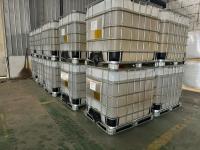
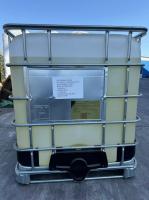
FLOQUAT FL 2565 is supplied in liquid form, making it relatively convenient to handle and dose using chemical metering pumps.
The general treatment procedure is as follows:
Step 1: Wastewater testing
Analyze the wastewater's pH, turbidity, suspended solids, COD, and other relevant parameters.
Step 2: Chemical preparation
Prepare a suitable diluted solution if required by the dosing equipment and application. Ensure adequate mixing and avoid incompatible chemicals.
Step 3: Coagulant addition
Add FLOQUAT FL 2565 to the wastewater under rapid mixing conditions to achieve effective dispersion and particle destabilization.
Step 4: Flocculation
If necessary, introduce a suitable anionic polyacrylamide after the initial coagulation stage. Apply gentle mixing to encourage larger floc formation.
Step 5: Solid-liquid separation
Remove the formed aggregates through sedimentation, dissolved air flotation, or filtration.
5. FLOQUAT FL 2565 vs. Polyacrylamide
FLOQUAT FL 2565 and polyacrylamide are both used in water treatment, but their primary functions are different.
|
Comparison |
FLOQUAT FL 2565 |
Anionic PAM |
Cationic PAM |
|---|---|---|---|
|
Chemical type |
Polyamine |
Polyacrylamide |
Polyacrylamide |
|
Ionic character |
Cationic |
Anionic |
Cationic |
|
Main function |
Charge neutralization |
Particle bridging |
Charge neutralization and bridging |
|
Primary application |
Coagulation |
Flocculation |
Sludge conditioning and flocculation |
|
Physical form |
Liquid |
Powder or emulsion |
Powder or emulsion |
In many wastewater treatment systems, polyamine is used as a primary coagulant, while polyacrylamide is applied as a secondary flocculant.
Using the two chemicals together may improve clarification and solid-liquid separation, although the optimum combination depends on the wastewater composition.
6. Dosage and Application Considerations
The optimum dosage of FLOQUAT FL 2565 depends on suspended solids concentration, wastewater pH, colloidal charge, organic content, and treatment equipment.
There is no universal dosage suitable for every industrial wastewater.
Jar testing should be conducted to determine the appropriate dosage and chemical combination.
For drinking water-related applications, the NSF listing identifies FLOQUAT FL 2565 PWG as a polyamine coagulant and flocculant with a maximum use level of 10 mg/L in the listed certification context. This is a regulatory maximum for that listing, not a recommended operating dosage for every application.
7. Conclusion
FLOQUAT FL 2565 is a high-charge-density cationic polyamine coagulant manufactured by SNF. Its primary function is to neutralize negatively charged particles and improve coagulation and solid-liquid separation.
Its main potential application markets include industrial wastewater treatment, municipal wastewater clarification, drinking water treatment, paper and pulp wastewater, textile dyeing wastewater, mining wastewater, sugar manufacturing, and sludge conditioning.
For industrial water treatment chemical suppliers and wastewater treatment companies, FLOQUAT FL 2565 is an interesting polyamine product for applications requiring high-charge-density organic coagulation.
107_small.jpg "liquid polyamine for industrial water treatment")