Our Products
coagulant / liquid polyamine for industrial water treatment
107_small.jpg "liquid polyamine for industrial water treatment")


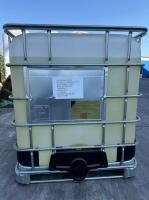
Liquid polyamine is a widely used cationic organic coagulant in industrial water treatment systems. It is valued for its high charge density, excellent solubility, and strong ability to destabilize colloidal particles. Compared with traditional inorganic coagulants, liquid polyamine provides superior performance in many industrial applications, including wastewater treatment, process water clarification, and reuse systems.
Liquid polyamine is typically synthesized through the polymerization of amine-based compounds such as dimethylamine and epichlorohydrin. The resulting product is a water-soluble polymer with high cationic charge density and relatively low to medium molecular weight.
Key characteristics include:
Because it is supplied as a liquid, polyamine eliminates the need for complex preparation systems required for powder chemicals, making it especially suitable for industrial plants with continuous operations.
Liquid polyamine functions primarily through the following mechanisms:
Charge neutralization:
Most industrial wastewater contains negatively charged colloids, emulsified oils, dyes, and suspended solids. Polyamine neutralizes these charges, allowing particles to come together and form aggregates.
Adsorption and bridging:
Although polyamine has lower molecular weight than polyacrylamide, it can still adsorb onto particle surfaces and facilitate aggregation through limited bridging effects.
Electrostatic patching:
Polyamine creates localized positive charge areas on particle surfaces, enhancing particle-particle attraction and improving coagulation efficiency.
These mechanisms result in rapid formation of flocs that can be easily removed by sedimentation, flotation, or filtration.
Liquid polyamine is widely used across various industries due to its versatility and effectiveness.
Polyamine is commonly applied as a primary coagulant in treating industrial effluents. It is particularly effective for:
In DAF units, polyamine is used to destabilize emulsified oils and fine particles, allowing them to attach to air bubbles and float to the surface for removal.
Benefits include:
In industries such as pulp and paper, mining, and steel manufacturing, polyamine is used to clarify process water for reuse. It helps remove suspended solids and impurities that could interfere with production processes.
Polyamine is often used as a pre-treatment agent in sludge dewatering systems. It improves sludge structure and enhances the performance of flocculants such as cationic polyacrylamide.
Textile industry:
Polyamine is highly effective in removing dyes and pigments from wastewater. Its strong cationic nature allows it to bind with negatively charged dye molecules, resulting in efficient color removal.
Pulp and paper industry:
Used for pitch control, stickies removal, and fiber recovery. It improves water clarity and reduces chemical oxygen demand (COD).
Oil and gas industry:
Applied in the treatment of produced water and refinery wastewater to remove oil, grease, and suspended solids.
Food and beverage industry:
Helps remove organic matter, fats, oils, and grease, improving overall wastewater quality.
Mining industry:
Used for clarification of tailings water and recovery of valuable minerals.
Liquid polyamine offers several advantages over conventional coagulants:
(1) Low dosage requirement
Due to its high charge density, effective treatment can be achieved with relatively small amounts.
(2) Reduced sludge generation
Unlike inorganic coagulants, polyamine does not form large volumes of metal hydroxide sludge.
(3) Easy handling and dosing
The liquid form eliminates the need for dissolution equipment and reduces operational complexity.
(4) Broad applicability
Effective across a wide range of industrial wastewater types.
(5) Improved treatment efficiency
Faster floc formation and better separation performance.
The optimal dosage of liquid polyamine depends on water characteristics and treatment objectives.
Typical dosage ranges:
Application steps:
Liquid polyamine is often used in combination with:
Cationic polyacrylamide (CPAM):
Polyamine provides charge neutralization, while CPAM enhances floc growth and strength.
Inorganic coagulants (e.g., PAC, ferric chloride):
In some cases, a hybrid approach improves treatment efficiency and reduces costs.
This combination strategy allows for better performance and flexibility in treating complex wastewater.
Despite its advantages, certain factors should be considered:
(1) Overdosing risk
Excess polyamine can cause charge reversal, leading to poor coagulation performance.
(2) Cost
Polyamine is generally more expensive than inorganic coagulants, although lower dosage often offsets this.
(3) Wastewater variability
Changes in wastewater composition may require dosage adjustments.
(4) Storage conditions
Should be stored in a cool, dry environment to maintain stability.
With increasing environmental regulations and the push for sustainable water management, liquid polyamine is gaining importance in industrial water treatment. Future developments include:
803_small.jpg "polyamine coagulant for drinking water purification")
998_small.jpg "China polyamine manufacturer|polyamine(20-50%) suppliers")