

Our Products

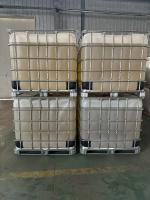
coagulant / polyDADMAC with strong cationic charge neutralization ability
109_small.jpg "polyDADMAC with strong cationic charge neutralization ability")
PolyDADMAC (polydiallyldimethylammonium chloride) is a highly cationic water-soluble polymer widely used in water and wastewater treatment due to its exceptionally strong charge neutralization ability. Its performance is derived from a molecular structure composed of quaternary ammonium groups, which carry permanent positive charges independent of pH conditions. This structural feature allows PolyDADMAC to function effectively across a broad range of water chemistries, making it one of the most reliable coagulant polymers for destabilizing negatively charged colloidal systems.
In aqueous environments, most suspended solids, colloidal particles, and dissolved organic macromolecules exhibit a net negative surface charge. This negative charge originates from ionization of surface functional groups, adsorption of anionic species, and mineral surface chemistry. These charges create electrostatic repulsion between particles, maintaining colloidal stability and preventing aggregation. The fundamental role of PolyDADMAC is to eliminate this stability by neutralizing surface charge through strong electrostatic interaction.
The charge neutralization mechanism of PolyDADMAC is highly efficient because each monomer unit contains a permanently charged quaternary ammonium group. Unlike weakly cationic polymers that depend on protonation, PolyDADMAC maintains full ionic activity under all pH conditions commonly encountered in water treatment systems. When introduced into a colloidal suspension, the polymer rapidly adsorbs onto negatively charged particle surfaces. This adsorption reduces zeta potential and compresses the electrical double layer, eliminating repulsive forces that stabilize the suspension.
Once electrostatic repulsion is neutralized, particles begin to collide and aggregate under the influence of van der Waals forces. This leads to the formation of microflocs, which can further grow into larger aggregates depending on hydraulic conditions and the presence of secondary flocculants. The speed of this process is one of the key advantages of PolyDADMAC, as it enables rapid clarification even under short retention times and high-flow conditions.
The strong cationic charge neutralization ability of PolyDADMAC makes it particularly effective in treating water with high colloidal stability. Surface water sources such as rivers, lakes, and reservoirs often contain clay particles, humic substances, algae, and fine organic matter. These contaminants are highly stable due to strong negative surface charges and require efficient coagulation to be removed. PolyDADMAC effectively destabilizes these systems, resulting in significant turbidity reduction and improved water clarity.
In drinking water treatment, PolyDADMAC is widely used as a primary coagulant or coagulant aid. Its ability to operate over a wide pH range ensures consistent performance without the need for extensive pH adjustment. This is particularly important in potable water systems, where chemical stability and safety are critical. Low dosage requirements further enhance its suitability, minimizing residual polymer content in treated water while maintaining high clarification efficiency.
In industrial wastewater treatment, PolyDADMAC is applied across multiple sectors including textile, paper, mining, oil and gas, and food processing industries. Each of these industries generates wastewater containing negatively charged contaminants that are difficult to remove through physical or biological processes alone. PolyDADMAC provides rapid destabilization of these contaminants, improving downstream separation processes such as sedimentation, flotation, and filtration.
In textile wastewater, PolyDADMAC is highly effective in removing anionic dyes such as reactive and direct dyes. These dyes contain sulfonate groups that confer strong negative charge and high solubility in water. PolyDADMAC neutralizes these charges, causing dye molecules to aggregate and precipitate. This results in significant color removal and improved effluent quality.
In paper mill systems, PolyDADMAC is used to control anionic trash, improve retention of fines and fillers, and stabilize wet-end chemistry. Dissolved and colloidal substances such as lignin derivatives and fatty acids interfere with papermaking efficiency. PolyDADMAC neutralizes these substances, reducing their negative impact and improving retention and drainage performance. This leads to better sheet formation and improved machine efficiency.
In mining wastewater treatment, fine mineral particles such as silicates, clays, and metal oxides exhibit strong negative charge and high colloidal stability. PolyDADMAC rapidly neutralizes these particles, promoting aggregation and enhancing sedimentation in thickeners and clarifiers. This improves water recycling efficiency and reduces freshwater consumption in mining operations.
In oilfield produced water treatment, PolyDADMAC contributes to destabilizing emulsified oil droplets and suspended solids. These droplets are stabilized by natural surfactants and fine particulates that create strong electrostatic and steric barriers. PolyDADMAC disrupts these barriers through charge neutralization, enabling coalescence and separation in flotation and gravity systems.
One of the key advantages of PolyDADMAC is its effectiveness at low dosages. Depending on application and water quality, typical dosing ranges from 0.1 mg/L in drinking water systems to higher concentrations in industrial wastewater treatment. Its high efficiency reduces chemical consumption and minimizes sludge generation compared with inorganic coagulants such as aluminum or iron salts.
PolyDADMAC is also highly stable across a wide pH range, typically from pH 4 to 10. Because its cationic charge is permanent, it does not rely on pH-dependent protonation mechanisms. This makes it suitable for systems with fluctuating or uncontrolled pH conditions, reducing the need for chemical pH adjustment and simplifying process control.
In addition to charge neutralization, PolyDADMAC improves downstream flocculation efficiency when used in combination with high-molecular-weight polymers such as polyacrylamide. In such systems, PolyDADMAC acts as a primary coagulant that destabilizes particles, while flocculants promote bridging and floc growth. This synergistic effect enhances settling velocity, improves filtration performance, and increases overall treatment efficiency.
From an operational perspective, PolyDADMAC is typically supplied as a liquid polymer with controlled molecular weight and charge density. It is easy to handle, pump, and dose using standard chemical systems. Its low viscosity formulations allow for accurate metering and uniform distribution in treatment systems, ensuring consistent performance.
Environmental considerations also support its widespread use. Compared with inorganic coagulants, PolyDADMAC produces lower sludge volumes and avoids the introduction of metal ions into treated water. This reduces environmental impact and simplifies sludge handling and disposal. However, in potable water applications, residual polymer levels must be carefully controlled to meet regulatory standards.
In advanced treatment systems, PolyDADMAC is often integrated with processes such as dissolved air flotation, membrane filtration, and biological treatment. Pre-treatment with PolyDADMAC reduces fouling potential and improves system stability. In membrane systems, for example, it minimizes colloidal deposition and extends membrane life.
In conclusion, PolyDADMAC with strong cationic charge neutralization ability is a highly effective and versatile polymer for water and wastewater treatment. Its permanent positive charge, rapid reaction kinetics, and broad pH adaptability enable efficient destabilization of colloidal systems across diverse industrial applications. Through optimized use and integration with complementary treatment technologies, it significantly enhances clarification efficiency, process stability, and environmental performance in modern water treatment systems.
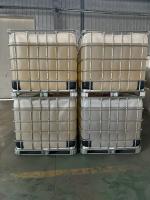
163_small.jpg "the application of polydadmac application in drinking water purification")