

Our Products

coagulant / polyDADMAC coagulant for industrial wastewater treatment
PolyDADMAC (polydiallyldimethylammonium chloride) is a high-performance cationic coagulant widely applied in industrial wastewater treatment due to its strong charge neutralization capacity, rapid reaction kinetics, and broad compatibility with complex effluent matrices. Industrial wastewater streams typically contain high levels of suspended solids, colloidal particles, emulsified oils, dissolved organic matter, dyes, surfactants, and various inorganic ions. These contaminants are often stable in aqueous suspension because of their negative surface charge and colloidal stabilization mechanisms. PolyDADMAC is specifically designed to destabilize such systems efficiently and facilitate solid–liquid separation processes.
The molecular structure of PolyDADMAC consists of repeating units containing quaternary ammonium functional groups. These groups carry permanent positive charges that are independent of pH conditions. This structural feature is critical in industrial wastewater treatment, where pH can vary significantly depending on production processes. Unlike inorganic coagulants such as aluminum or iron salts, which rely on hydrolysis and are highly pH-dependent, PolyDADMAC maintains consistent performance across a wide pH range, typically from 4 to 10.
The primary mechanism of PolyDADMAC in industrial wastewater treatment is charge neutralization. Most industrial effluents contain negatively charged colloidal particles such as clay, silica, organic macromolecules, and emulsified oil droplets. These particles are stabilized by electrostatic repulsion, which prevents aggregation and sedimentation. When PolyDADMAC is introduced, its cationic polymer chains rapidly adsorb onto particle surfaces through electrostatic attraction. This adsorption neutralizes surface charge and reduces zeta potential, leading to destabilization of the colloidal system.
Once electrostatic repulsion is eliminated, particles begin to aggregate due to van der Waals forces and hydrodynamic collisions. This results in the formation of microflocs, which can further grow into larger aggregates depending on mixing conditions and the presence of secondary flocculants. This rapid destabilization process is particularly advantageous in industrial systems where hydraulic retention time is limited and high treatment efficiency is required.
In industrial wastewater treatment, PolyDADMAC is widely used across multiple sectors, including textile manufacturing, paper production, mining, oil and gas, petrochemical processing, food and beverage production, and metal finishing industries. Each of these sectors generates wastewater with distinct characteristics, but the common challenge is the presence of stable colloidal and suspended contaminants.
In textile wastewater treatment, PolyDADMAC is highly effective in removing dyes, surfactants, and sizing agents. Reactive and direct dyes are particularly difficult to remove due to their strong anionic nature and high solubility. PolyDADMAC neutralizes dye molecules, causing them to aggregate and precipitate, resulting in significant color reduction. This improves effluent quality and facilitates compliance with discharge regulations.
In paper mill wastewater systems, PolyDADMAC plays a critical role in controlling anionic trash, improving retention of fines and fillers, and enhancing wet-end chemistry stability. Dissolved and colloidal substances such as lignin derivatives, hemicellulose fragments, and resin acids interfere with papermaking efficiency. PolyDADMAC neutralizes these substances, reducing their negative impact and improving process performance.
In mining and mineral processing wastewater, fine particles such as silicates, aluminosilicates, and metal oxides are difficult to remove due to their colloidal stability. PolyDADMAC rapidly destabilizes these particles, promoting aggregation and improving sedimentation in thickeners and clarifiers. This enhances water recycling efficiency and reduces freshwater consumption in mining operations.
In oilfield produced water treatment, PolyDADMAC is used to destabilize emulsified oil droplets and suspended solids. These emulsions are stabilized by natural surfactants and fine particulate matter. PolyDADMAC disrupts these stabilizing forces through charge neutralization, enabling coalescence and separation in flotation and gravity-based systems.
One of the key advantages of PolyDADMAC is its effectiveness at low dosages. Depending on wastewater characteristics, typical dosing ranges from 0.5 to 50 mg/L in industrial applications. This high efficiency reduces chemical consumption and minimizes sludge production compared with conventional inorganic coagulants. The resulting sludge is typically more compact and easier to dewater.
PolyDADMAC is also effective over a wide pH range, making it suitable for industrial environments where pH conditions fluctuate due to process variability. Its performance is not significantly affected by temperature changes, ensuring stable operation in both cold and warm wastewater streams.
In addition to charge neutralization, PolyDADMAC enhances the performance of downstream flocculation processes when used in combination with high-molecular-weight polymers such as polyacrylamide. In such systems, PolyDADMAC acts as a primary coagulant that destabilizes particles, while flocculants promote bridging and floc growth. This synergistic interaction improves settling velocity, enhances filtration efficiency, and increases overall treatment effectiveness.
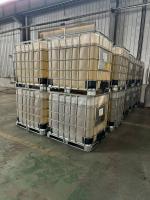
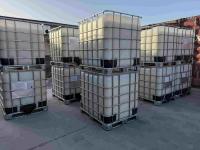
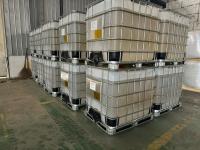
From an operational perspective, PolyDADMAC is supplied as a liquid polymer with controlled molecular weight and charge density. It is easy to handle, pump, and dose using standard chemical systems. Its low viscosity ensures uniform distribution in wastewater streams, which is essential for consistent treatment performance. Proper mixing is required to ensure rapid dispersion and effective contact with contaminants.
Environmental considerations are also important in industrial wastewater treatment. PolyDADMAC reduces the need for inorganic coagulants, thereby minimizing the introduction of metal ions into treated water. It also reduces sludge volume, lowering disposal costs and environmental impact. However, in applications involving discharge to sensitive environments or reuse systems, residual polymer levels must be carefully monitored to ensure compliance with regulatory standards.
In advanced treatment systems, PolyDADMAC is often integrated with technologies such as dissolved air flotation (DAF), membrane filtration, and biological treatment processes. Pre-treatment with PolyDADMAC reduces fouling potential, improves separation efficiency, and enhances overall system stability. In membrane systems, it helps prevent colloidal deposition and extends operational lifespan.
In conclusion, PolyDADMAC is a highly effective and versatile coagulant for industrial wastewater treatment. Its strong and permanent cationic charge enables rapid destabilization of colloidal systems across a wide range of industrial effluents. Through efficient charge neutralization, low dosage requirements, and compatibility with diverse treatment processes, PolyDADMAC significantly improves clarification performance, operational efficiency, and environmental compliance in modern industrial wastewater management systems.