

Our Products

coagulant / polyDADMAC manufacturer with OEM private label service
355_small.jpg "polyDADMAC manufacturer with OEM private label service")
PolyDADMAC manufacturers offering OEM (Original Equipment Manufacturer) and private label services play a critical role in the global water treatment chemicals supply chain. These manufacturers not only produce polydiallyldimethylammonium chloride (PolyDADMAC) in various grades and specifications, but also provide customized branding, packaging, formulation adjustment, and technical support tailored to distributors, chemical traders, and end-users in municipal and industrial water treatment sectors.
PolyDADMAC is a cationic polyelectrolyte widely used as a coagulant in drinking water purification, wastewater treatment, pulp and paper processing, mining effluent clarification, and oilfield water treatment. Because of its broad application range and strong market demand, OEM and private label manufacturing has become a key business model in this industry. It allows downstream companies to focus on branding, distribution, and market development while relying on specialized chemical producers for production and technical formulation.
A professional PolyDADMAC manufacturer typically operates advanced polymerization facilities capable of controlling molecular weight, charge density, viscosity, and residual monomer content. These parameters directly influence product performance in water treatment applications. For OEM/private label customers, manufacturers can adjust these specifications according to target markets, such as drinking water grade, industrial grade, or high charge density rapid-coagulation grade.
High-quality manufacturers usually offer multiple PolyDADMAC product forms, including low, medium, and high molecular weight grades, as well as liquid concentrations ranging from 20% to 60% active content. Some also provide ultra-low residual monomer versions designed for potable water treatment applications that must comply with international standards such as NSF/ANSI 60, European Drinking Water Directive requirements, and other national regulatory frameworks.
OEM/private label services typically include several key components. First is formulation customization, where the manufacturer adjusts polymer properties to match specific application needs. For example, a distributor targeting paper mills may require a high charge density, low-viscosity product optimized for anionic trash control and retention improvement. In contrast, a municipal water treatment supplier may require a low-residual, NSF-certified grade suitable for drinking water clarification.
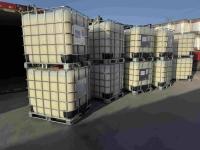
Second is branding and packaging customization. Manufacturers provide products under customer-specific brand names, logos, and labeling systems. Packaging options may include 200 kg drums, 1000 kg IBC tanks, flexitanks, or bulk tanker shipments. Labeling can be multilingual and adapted to regulatory requirements of different countries, including hazard classification, safety data sheets (SDS), and transport documentation.
Third is technical support and application guidance. Leading manufacturers often provide jar testing data, dosage recommendations, and process optimization advice for different industries. This is particularly important for PolyDADMAC, as its performance depends on water quality parameters such as turbidity, pH, suspended solids concentration, and ionic strength. OEM partners benefit from this technical expertise to improve customer satisfaction and application success rates.
Fourth is quality control and regulatory compliance. Reliable manufacturers implement strict quality assurance systems, including ISO certifications, GMP-like production control, and batch-to-batch consistency testing. Key quality indicators include active content, viscosity, pH, residual monomer (DADMAC), and impurity levels. For drinking water applications, compliance with heavy metal limits and toxicological safety standards is essential.
In terms of manufacturing technology, PolyDADMAC is typically produced via free radical polymerization of diallyldimethylammonium chloride (DADMAC) monomer in aqueous solution. Advanced manufacturers use controlled polymerization systems to ensure consistent molecular weight distribution and high cationic charge efficiency. Reaction conditions such as temperature, initiator dosage, and chain transfer agents are carefully managed to achieve desired performance characteristics.
Global PolyDADMAC OEM manufacturers are often located in major chemical production hubs such as China, the United States, Europe, and parts of Southeast Asia. China, in particular, has become a major production base due to its integrated chemical supply chain, cost advantages, and large-scale production capacity. Many Chinese manufacturers specialize in export-oriented OEM services, supplying private label products to distributors in Europe, South America, Africa, and the Middle East.
For international distributors, OEM/private label cooperation offers several strategic advantages. It reduces capital investment in production facilities, shortens time-to-market, and enables flexible product positioning. Companies can focus on sales channels, customer relationships, and regional market development while relying on manufacturers for technical production expertise.
Another important aspect is market differentiation. Through OEM services, companies can develop customized PolyDADMAC formulations tailored to specific industries such as papermaking, textile wastewater, mining, or municipal water treatment. This allows distributors to differentiate their product portfolio and avoid direct price competition in commodity chemical markets.
Packaging and logistics support are also critical components of OEM services. Manufacturers often provide export documentation, hazardous goods compliance (if applicable), and optimized shipping solutions such as bulk tanker transport or containerized liquid packaging. This ensures safe and efficient delivery to global markets.
In addition, many manufacturers offer trial sample services and pilot-scale testing support. Before large-scale production, customers can evaluate product performance in real wastewater conditions. This helps optimize dosage, confirm compatibility with other treatment chemicals such as polyacrylamide or PAC (polyaluminum chloride), and ensure expected treatment efficiency.
Sustainability and environmental compliance are increasingly important in OEM manufacturing. Modern PolyDADMAC producers focus on reducing energy consumption, minimizing waste discharge, and improving process efficiency. Low residual monomer production techniques are especially important for drinking water applications, ensuring minimal environmental and health impact.
In terms of market applications, OEM PolyDADMAC products are widely used in:
• Municipal drinking water treatment (coagulation and clarification)
• Industrial wastewater treatment (textile, paper, mining, petrochemical)
• Pulp and paper industry (retention, drainage, and white water recycling)
• Oilfield produced water treatment
• Sludge conditioning and dewatering processes
• Membrane pre-treatment systems
Each application may require a different formulation strategy, which OEM manufacturers can provide through customized production.
In conclusion, PolyDADMAC manufacturers offering OEM and private label services provide a comprehensive solution that integrates chemical production, formulation customization, branding, packaging, and technical support. This business model enables global distributors and water treatment companies to access high-quality cationic coagulant products without investing in manufacturing infrastructure. With increasing global demand for efficient water treatment solutions, OEM PolyDADMAC production continues to play a strategic role in supporting industrial water management, municipal water supply systems, and environmental protection initiatives.
733_small.jpg "polyDADMAC flocculant for industrial effluent clarification")
163_small.jpg "the application of polydadmac application in drinking water purification")