Our Products
coagulant / the application of polydadmac for sugar industry juice clarification
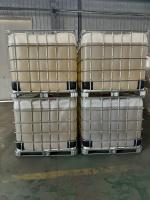


Polydadmac (poly diallyldimethylammonium chloride) is a highly effective cationic polymer widely used in the sugar industry for juice clarification. In sugar production, clarification is a critical step where raw juice extracted from sugarcane or sugar beet is purified by removing suspended solids, colloids, colorants, waxes, proteins, and other non-sugar impurities. Efficient clarification improves sucrose recovery, enhances evaporation efficiency, reduces scaling, and improves final sugar quality. Polydadmac plays an important role as a primary coagulant or coagulant aid in modern sugar juice purification systems.
Raw sugarcane or sugar beet juice is a complex colloidal system containing:
These impurities are highly stable in suspension due to negative surface charges and colloidal stability, making them difficult to remove without chemical treatment.
Polydadmac is a water-soluble quaternary ammonium polymer synthesized from diallyldimethylammonium chloride (DADMAC) monomers. It is widely used in sugar clarification due to its strong cationic properties.
Key properties include:
These properties make Polydadmac highly effective in destabilizing sugar juice impurities and improving clarification efficiency.
Polydadmac improves sugar juice clarification through several key mechanisms:
(1) Charge neutralization
Most impurities in sugar juice (proteins, pectins, colloids) carry negative charges. Polydadmac neutralizes these charges, reducing repulsion and allowing aggregation.
(2) Adsorption and destabilization
The polymer adsorbs onto suspended particles and colloids, destabilizing the colloidal system and breaking its stability.
(3) Patch flocculation mechanism
Positively charged patches on Polydadmac attract negatively charged particles, forming microflocs that trap impurities.
(4) Enmeshment in flocs
Fine impurities become trapped in larger floc structures, allowing efficient removal during sedimentation.
(5) Reduction of surface-active impurities
Helps remove waxes and hydrophobic compounds that interfere with crystallization.
Raw juice is obtained from sugarcane milling or diffusion. At this stage, it contains high levels of suspended solids and colloids.
Polydadmac is added to raw juice before or during liming and heating stages. It helps:
Juice is heated (typically 70–105°C) and treated with lime (Ca(OH)₂). Polydadmac enhances the formation of flocs during this process.
Flocs formed by Polydadmac and lime treatment settle in clarifiers, separating clear juice from mud.
Remaining solids are filtered to recover additional sugar and improve efficiency.
Used in raw juice treatment to remove bagasse fines and organic colloids.
Helps remove proteins, pectins, and non-sugar organic impurities in beet juice.
Improves removal of color-forming compounds and reduces final sugar color index.
(1) Improved juice clarity
Effectively reduces turbidity and suspended solids.
(2) Higher sucrose recovery
Reduces sugar losses in mud and improves extraction efficiency.
(3) Faster settling rate
Enhances clarification speed and reduces residence time.
(4) Reduced mud volume
Produces denser and more compact sludge.
(5) Improved filtration performance
Enhances mud filtration and reduces filter blockage.
(6) Lower scaling in evaporators
Removes impurities that cause scale formation.
Typical dosage ranges:
Key influencing factors include:
Optimization through factory trials is essential.
Polydadmac is often used in combination with other clarification agents:
(1) Lime (Ca(OH)₂):
Essential for pH adjustment and precipitation of impurities.
(2) Anionic polyacrylamide (APAM):
Improves floc size and sedimentation speed.
(3) Sulfitation or phosphatation agents:
Enhance color removal and juice purification.
(4) Inorganic coagulants:
Sometimes used to reduce chemical cost and improve floc structure.
This combined system improves clarification efficiency significantly.
(1) Overdosing risk
Excess Polydadmac may cause re-dispersion of particles and reduce settling efficiency.
(2) Sensitivity to process conditions
Performance depends on pH, temperature, and lime dosage.
(3) Cost considerations
More expensive than traditional inorganic clarifiers but more efficient at low dosage.
(4) Need for process optimization
Different sugar factories require tailored dosing programs.
To achieve optimal performance:
The use of Polydadmac in sugar industry clarification is expected to increase due to:
Future developments will focus on higher performance at lower dosage and better compatibility with green processing technologies.
283_small.jpg "polyDADMAC for pulp and paper industry wastewater recycling")