

Our Products

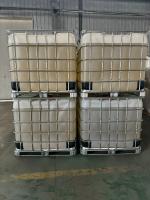
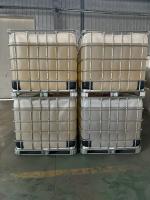
coagulant / low solid content of polydadmac FL4820 can be replaced by Chinafloc-DADMAC
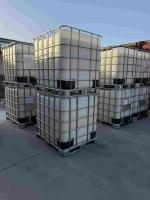
PolyDADMAC with lower solid content is a liquid cationic polymer based on polydiallyldimethylammonium chloride (PolyDADMAC). Compared with high-solid PolyDADMAC products, a lower-solid formulation contains more water and therefore has a lower active-polymer concentration. This does not necessarily mean lower treatment performance: the appropriate product depends on the required charge density, molecular weight, viscosity, dosing system, and wastewater characteristics.
Lower-solid PolyDADMAC is particularly useful where easy pumping, rapid dilution, low viscosity, accurate metering, and convenient handling are important. It is widely used as a coagulant, charge-neutralization agent, flocculation aid, turbidity remover, and sludge-conditioning chemical.
1. Municipal Wastewater Treatment
One of the major applications of low-solid PolyDADMAC is municipal wastewater treatment.
Municipal sewage contains suspended solids, colloidal particles, organic matter, microorganisms, oils and other negatively charged contaminants. PolyDADMAC provides strong cationic charge neutralization, destabilizing these particles so they can form larger aggregates.
It can be applied in:
- Primary clarification
- Secondary clarification
- Tertiary treatment
- Suspended-solids removal
- Turbidity reduction
- Sludge thickening
- Dissolved-air flotation (DAF)
A lower-solid PolyDADMAC can be particularly convenient for smaller treatment plants because it can often be pumped and metered directly or after simple dilution.
2. Industrial Wastewater Clarification
Low-solid PolyDADMAC is widely applicable to industrial wastewater containing colloids and suspended solids.
Potential industries include:
- Textile and dyeing
- Paper and pulp
- Food processing
- Chemical manufacturing
- Metal processing
- Petrochemical
- Mining
- Pharmaceutical manufacturing
PolyDADMAC neutralizes negatively charged particles and promotes aggregation.
A typical process may be:
Industrial wastewater → PolyDADMAC → mixing → flocculation → clarification
In more difficult wastewater, PolyDADMAC can be combined with PAC, aluminum sulfate, ferric chloride or polyacrylamide.
3. Textile Wastewater and Color Removal
A particularly important application of low-solid PolyDADMAC is textile wastewater treatment.
Textile wastewater can contain:
- Reactive dyes
- Direct dyes
- Acid dyes
- Pigments
- Surfactants
- Suspended fibers
- Organic colloids
Many dye molecules and colloidal materials carry negative charges. PolyDADMAC's strong cationic charge can destabilize these substances and facilitate their removal.
Therefore, PolyDADMAC can be used for:
- Textile wastewater decolorization
- Dye wastewater treatment
- Printing wastewater
- Color reduction
- COD-associated color removal
- Pretreatment before biological treatment
Low-solid formulations can be advantageous when precise dosing and rapid dilution are required.
4. Drinking-Water Clarification
Certain PolyDADMAC products are used as coagulants or coagulation aids for potable-water treatment, provided the specific product is approved for the intended regulatory market.
Applications can include:
- Surface-water clarification
- River-water treatment
- Lake-water treatment
- Turbidity reduction
- Color removal
- Suspended-solids removal
- Pretreatment before filtration
A lower-solid PolyDADMAC may be easier to handle in automated water-treatment systems because its lower viscosity can facilitate metering and dilution.
However, industrial-grade PolyDADMAC should never automatically be used for drinking water. The specific grade must have the appropriate drinking-water certification.
5. Swimming Pool Water Clarification
Another application is cloudy swimming-pool water treatment.
Very fine suspended particles can pass through a pool filter and cause cloudy water. A suitable PolyDADMAC-based clarifier can neutralize these particles and aggregate them into larger particles that are easier for the filtration system to capture.
Applications include:
- Pool turbidity removal
- Fine-particle removal
- Water clarification
- Filter-efficiency improvement
A lower-solid PolyDADMAC can be convenient for accurate low-dose applications.
However, pool dosage must be carefully controlled. Excessive cationic polymer can interfere with filtration or create additional water-quality problems.
6. Paper and Pulp Industry
PolyDADMAC is also used in the pulp and paper industry.
Potential applications include:
- White-water clarification
- Fiber recovery
- Filler retention
- Pitch control
- Colloid control
- Wastewater treatment
- Sludge conditioning
PolyDADMAC can neutralize negatively charged dissolved and colloidal substances and promote their removal.
A low-solid product can be advantageous in paper mills where polymer injection systems require relatively low-viscosity liquid products.
The exact PolyDADMAC grade should nevertheless be selected according to whether the objective is process retention, pitch control, wastewater clarification, or sludge treatment.
7. Oil and Petroleum Wastewater
Low-solid PolyDADMAC can also be considered for oil-containing wastewater.
Petroleum wastewater can contain emulsified oil, suspended solids and colloidal material. A cationic polymer can help destabilize some of these particles and improve downstream separation.
Potential applications include:
- Refinery wastewater
- Produced water
- Oily wastewater
- Oil-water separation
- DAF pretreatment
- Suspended-solids removal
PolyDADMAC may be used together with a demulsifier, PAC, ferric salt or polyacrylamide, depending on the composition of the wastewater.
8. Sludge Conditioning
Another application of PolyDADMAC is sludge conditioning.
The positive charge of PolyDADMAC neutralizes negatively charged sludge particles, causing them to aggregate. This can improve water release and solids capture.
Potential equipment includes:
- Belt filter press
- Centrifuge
- Filter press
- Screw press
- Gravity thickener
PolyDADMAC can be particularly useful as a preconditioning coagulant, followed by a suitable cationic or anionic PAM where stronger floc formation is required.
For example:
PolyDADMAC → charge neutralization → CPAM → larger flocs → mechanical dewatering
The correct sequence must be determined experimentally.
9. DAF Treatment
Dissolved-air flotation is another important application.
DAF systems are frequently used for wastewater containing suspended solids, oils, fats and colloidal material.
PolyDADMAC can destabilize the particles before they enter the flotation zone. The resulting flocs can attach to air bubbles and float to the surface.
Potential benefits include:
- Improved solids capture
- Better flotation
- Reduced turbidity
- Improved oil removal
- Better sludge production
- More stable DAF operation
Lower-solid PolyDADMAC can be useful where precise liquid dosing is required.
10. Why Use Lower-Solid PolyDADMAC?
The main advantage of lower-solid PolyDADMAC is often handling rather than chemistry.
Compared with a high-solid product, it generally provides:
- Lower viscosity
- Easier pumping
- Easier metering
- Faster dilution
- Easier mixing
- Better suitability for small dosing pumps
- Reduced risk of handling highly viscous polymer
- Convenient automated dosing
For example, if a high-solid PolyDADMAC is too viscous for an existing dosing system, a lower-solid grade can be easier to feed consistently.
However, because it contains more water, more product may be required to deliver the same amount of active polymer.
11. Dosage Calculation
This is particularly important when comparing different solid contents.
Suppose Product A contains 40% active solids, while Product B contains 20% active solids.
To deliver the same quantity of active polymer, approximately twice as much Product B would be required.
For example, to deliver 10 kg of active polymer:
- 40% product: 10 ÷ 0.40 = 25 kg product
- 20% product: 10 ÷ 0.20 = 50 kg product
Therefore, PolyDADMAC products should be compared on an active-polymer basis, not simply by liquid-product dosage.
12. Lower Solid Content Does Not Mean Lower Charge Density
An important technical point is that solid content and cationic charge density are different specifications.
Solid content indicates how much polymer solids are present in the product.
Charge density indicates the quantity of positive charge associated with the polymer.
Therefore, a low-solid PolyDADMAC can still have very high cationic charge density and excellent coagulation performance.
When selecting PolyDADMAC, it is important to consider:
- Solid content
- Charge density
- Molecular weight
- Viscosity
- pH
- Active polymer concentration
- Product stability
- Application requirements
Conclusion
Lower-solid PolyDADMAC is primarily used as a liquid cationic coagulant and flocculation aid where easy handling, pumping, dilution and accurate dosing are important.
Its major applications include municipal wastewater treatment, industrial wastewater clarification, textile and dye wastewater decolorization, drinking-water clarification, swimming-pool turbidity removal, paper and pulp processing, oil and petroleum wastewater, DAF treatment, sludge conditioning and process-water recycling.
The key advantage of a lower-solid formulation is lower viscosity and easier handling, rather than inherently better coagulation performance. It can be particularly suitable for automated chemical-dosing systems and applications requiring relatively low-viscosity liquid polymer.
When comparing a low-solid PolyDADMAC with a high-solid product, always compare the active-polymer dosage, charge density, molecular weight and treatment performance. A product containing 20% solids cannot be compared directly with a 40% product simply on a kg/L dosage basis.
For practical wastewater treatment, the optimum PolyDADMAC grade and dosage should be determined by jar testing, especially when the polymer will be combined with PAC, ferric chloride, aluminum sulfate or polyacrylamide.
246_small.jpg "Magnafloc 1425(LT425) polydadmac can be replaced by Chinafloc FL4440")