


Our Products

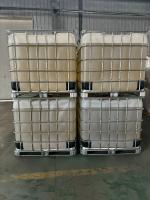
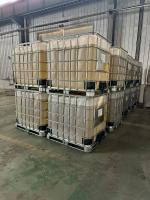
coagulant / high viscosity of polyamine used for mining and water treatment
995_small.jpg "high viscosity of polyamine used for mining and water treatment")
High-viscosity polyamine is a specialized class of cationic polymer coagulants characterized by elevated intrinsic viscosity, moderate-to-high molecular weight, and high charge density. These physicochemical properties significantly influence its performance in solid–liquid separation, particularly in complex mineral suspensions and industrial water treatment systems. Compared with low-viscosity polyamines, high-viscosity grades exhibit enhanced adsorption capacity, improved bridging capability, and superior floc structural integrity, making them highly effective in demanding environments such as mining tailings management and high-load wastewater treatment.
1. Structural Characteristics and Rheological Behavior
High-viscosity polyamine is typically synthesized through condensation polymerization of amine-based monomers, resulting in a branched or slightly crosslinked structure. The increased molecular chain length and intermolecular interactions contribute to higher solution viscosity, often measured in the range of 500–5000 mPa·s depending on concentration and formulation. This elevated viscosity correlates with improved adsorption onto negatively charged particle surfaces and enhanced inter-particle bridging.
From a rheological perspective, high-viscosity polyamine solutions may exhibit non-Newtonian behavior, particularly shear-thinning characteristics. This property is advantageous in dosing systems, where the polymer can be pumped efficiently under shear while maintaining high flocculation performance once dispersed in the treatment medium.
2. Mechanism of Action in Mining Applications
In mining and mineral processing, high-viscosity polyamine is widely used in tailings thickening, clarification, and water recycling systems. Mineral slurries often contain ultrafine particles such as clays, silts, and metal hydroxides, which are stabilized by electrostatic repulsion and hydration forces. The high cationic charge density of polyamine enables rapid charge neutralization, while the extended polymer chains facilitate bridging between particles.
This dual mechanism—charge neutralization and polymer bridging—results in the formation of large, dense flocs with high settling velocities. The improved floc structure enhances sedimentation rates in thickeners and clarifiers, leading to increased underflow density and improved overflow clarity. In addition, the robust flocs formed by high-viscosity polyamine are more resistant to shear degradation, which is critical in high-turbulence environments such as feed wells and mixing zones.
High-viscosity polyamine is particularly effective in the treatment of red mud from alumina refineries, where the slurry contains fine iron oxides and residual caustic soda. The polymer reduces turbidity and facilitates rapid phase separation, contributing to improved water recovery and reduced environmental impact. Similarly, in coal preparation plants, polyamine enhances the settling of fine coal particles and improves the clarity of recycled water used in washing circuits.
3. Application in Metal Ore Beneficiation
In the beneficiation of metal ores such as iron, copper, gold, and phosphate, high-viscosity polyamine is used to improve the efficiency of solid–liquid separation following flotation or leaching processes. Tailings generated from these operations often contain fine particles with high surface area and complex surface chemistry. The use of high-viscosity polyamine promotes aggregation of these particles into larger flocs, facilitating faster settling and improved filtration.
In gold processing, for example, cyanide leach residues require effective clarification to recover process water and minimize reagent loss. High-viscosity polyamine enhances the removal of suspended solids and residual organic compounds, improving downstream recovery processes. In phosphate beneficiation, the polymer aids in the separation of clay impurities from valuable mineral fractions, contributing to higher product purity and yield.
4. Role in Industrial Water Treatment
High-viscosity polyamine is extensively applied in industrial wastewater treatment systems, particularly where high concentrations of suspended solids, colloidal matter, and organic pollutants are present. Its strong cationic nature enables effective destabilization of negatively charged contaminants, including emulsified oils, dyes, and humic substances.
In high-COD wastewater, such as that generated by textile dyeing, chemical manufacturing, and food processing industries, high-viscosity polyamine acts as a primary coagulant to remove color and organic load. The formation of large, compact flocs improves sedimentation and reduces the burden on downstream biological treatment units. When used in combination with anionic polyacrylamide, the system achieves synergistic effects, with polyamine providing rapid charge neutralization and PAM enhancing floc growth and strength.
In oil–water separation processes, high-viscosity polyamine promotes the coalescence of dispersed oil droplets by neutralizing surface charges and reducing interfacial stability. This leads to more efficient separation in dissolved air flotation (DAF) systems and gravity separators. The improved removal of oil and grease contributes to compliance with discharge regulations and protects downstream equipment from fouling.
5. Sludge Conditioning and Dewatering
Another critical application of high-viscosity polyamine is in sludge conditioning prior to dewatering. Industrial and municipal sludges often exhibit poor dewaterability due to high colloidal stability and bound water content. High-viscosity polyamine enhances floc formation and reduces electrostatic repulsion between sludge particles, resulting in improved cake structure.
The conditioned sludge exhibits higher permeability and reduced compressibility, leading to increased solids content in the dewatered cake. This translates into lower disposal costs and improved operational efficiency. In many cases, high-viscosity polyamine is used as a pre-coagulant in conjunction with high-molecular-weight flocculants to achieve optimal dewatering performance.
6. Advantages Over Conventional Coagulants
Compared with inorganic coagulants such as aluminum sulfate and ferric chloride, high-viscosity polyamine offers several technical advantages. These include lower dosage requirements, reduced sludge volume, and broader operational pH range. The absence of metal ions also minimizes the risk of secondary contamination and reduces the need for pH adjustment.
Furthermore, the higher molecular weight and viscosity contribute to improved floc strength and resistance to shear, which is particularly beneficial in high-flow or high-turbulence systems. The enhanced performance in complex matrices makes high-viscosity polyamine a preferred choice in advanced treatment applications.
7. Operational Considerations
The effective use of high-viscosity polyamine requires careful optimization of dosage, mixing conditions, and point of application. Overdosing can lead to restabilization of particles or excessive viscosity in the treated water, while underdosing may result in incomplete coagulation. Proper dilution and dispersion are essential to ensure uniform distribution and maximize contact with target particles.
Compatibility with other treatment chemicals, such as flocculants, pH adjusters, and oxidizing agents, should also be evaluated to avoid adverse interactions. Storage and handling considerations include protection from extreme temperatures and prevention of microbial degradation, which can affect product stability.
245_small.jpg "The equivalent of FLOQUAT FL3050 polyamine branched")