


Our Products

coagulant / liquid polyDADMAC with stable viscosity and performance
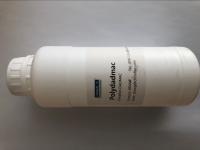
Liquid polyDADMAC (polydiallyldimethylammonium chloride) with stable viscosity and consistent performance is a critical requirement in modern water and wastewater treatment applications. As a cationic polyelectrolyte widely used for coagulation and charge neutralization, its operational reliability depends heavily on physical stability (viscosity retention), chemical stability (charge density preservation), and storage stability (resistance to degradation over time). In industrial practice, viscosity stability is not only a quality indicator but also directly linked to dosing accuracy, mixing efficiency, and overall treatment performance.
From a chemical perspective, polyDADMAC is a water-soluble polymer composed of repeating diallyldimethylammonium chloride units. Its quaternary ammonium groups provide permanent positive charges along the polymer backbone. These charges are responsible for its strong interaction with negatively charged colloids, suspended solids, and dissolved organic matter in water systems. Because the polymer is used in liquid form, maintaining stable rheological properties is essential for consistent field performance.
Viscosity stability refers to the ability of the polymer solution to maintain consistent flow behavior over time under varying storage and operational conditions. In liquid polyDADMAC products, viscosity is influenced by several factors, including polymer molecular weight distribution, concentration of active matter, ionic strength, temperature fluctuations, and storage duration. High-quality formulations are engineered to minimize these variations, ensuring that the product behaves predictably during pumping, dosing, and mixing processes.
In water treatment applications, stable viscosity is directly related to dosing precision. PolyDADMAC is typically applied in very low concentrations, often in the range of 0.1 to 50 mg/L depending on water quality and application type. Even small variations in viscosity can affect metering pump calibration and injection consistency. If viscosity increases due to polymer chain association or partial cross-linking, flow resistance in dosing lines may increase, leading to under-dosing or inconsistent chemical distribution. Conversely, viscosity reduction due to polymer degradation can lead to overdosing and reduced treatment efficiency.
One of the key factors contributing to viscosity stability is controlled polymerization technology. During manufacturing, DADMAC monomers are polymerized under carefully controlled conditions to achieve a specific molecular weight and narrow distribution profile. Advanced production processes minimize chain branching and prevent uncontrolled cross-linking, both of which can lead to viscosity instability. Stabilizers and inhibitors may also be used to prevent post-polymerization reactions during storage.
Temperature stability is another important aspect. Liquid polyDADMAC is often stored and transported under varying climatic conditions. High temperatures can reduce viscosity temporarily due to decreased intermolecular interactions, while low temperatures may increase viscosity or even cause partial gel formation in poorly formulated products. High-quality liquid polyDADMAC is engineered to maintain stable viscosity across a wide temperature range, typically from 5°C to 40°C, ensuring reliable performance in both tropical and cold environments.
Ionic stability also plays a role in viscosity behavior. Since polyDADMAC is a strongly cationic polymer, it can interact with anionic impurities or contaminants in storage tanks or piping systems. These interactions may lead to localized aggregation or viscosity changes. To prevent this, high-purity formulations are produced with low levels of residual monomers, salts, and organic impurities. Clean production processes and proper container materials further ensure long-term stability.
In industrial water treatment systems, stable-performance liquid polyDADMAC is used across a wide range of applications. In drinking water treatment, it is used as a primary coagulant to remove turbidity, color, and natural organic matter. In wastewater treatment, it is applied in primary clarification, secondary effluent polishing, and sludge conditioning. In each case, consistent viscosity ensures uniform dosing and predictable coagulation behavior.
In pulp and paper industry applications, liquid polyDADMAC is used for retention and drainage improvement, anionic trash control, and white water recycling. Stable viscosity is particularly important in high-speed paper machines, where precise chemical dosing is required to maintain sheet formation quality and process stability. Any variation in polymer flow properties can directly impact paper quality and machine efficiency.
In mining and mineral processing wastewater treatment, liquid polyDADMAC is used to destabilize fine particles such as clays, silicates, and metal oxides. Stable viscosity ensures consistent injection into high-solid-content slurry systems, where rapid mixing and uniform distribution are essential for effective clarification.
In oilfield produced water treatment, polyDADMAC is used to break emulsions and remove suspended solids. Stable viscosity ensures reliable performance in offshore and onshore dosing systems, where long-distance chemical transport lines are often used. Consistency in flow behavior is critical for maintaining separation efficiency in flotation and gravity separation units.
Another important aspect of stable liquid polyDADMAC is storage stability. High-quality products are designed to maintain viscosity and performance over extended shelf life, typically 12–24 months under recommended storage conditions. This requires careful control of microbial growth, oxidation reactions, and polymer chain stability. Preservatives or biocides may be added in trace amounts to prevent microbial degradation, especially in warm and humid environments.
Packaging also plays a role in maintaining stability. Liquid polyDADMAC is commonly supplied in HDPE drums, IBC tanks, or bulk storage systems. These containers must be chemically resistant, airtight, and protected from UV exposure to prevent degradation. Proper sealing prevents contamination and evaporation, both of which can alter viscosity over time.
From an operational standpoint, stable viscosity ensures smooth pumping and mixing performance. In automated dosing systems, consistent viscosity allows accurate calibration of metering pumps and flow controllers. This reduces operational variability and improves process reliability. In large-scale treatment plants, this stability translates into reduced chemical consumption, improved clarification efficiency, and lower operational costs.
In addition to viscosity stability, performance stability is equally important. This refers to the ability of polyDADMAC to maintain consistent charge density and coagulation efficiency over time. Even if viscosity remains stable, degradation of polymer chains or contamination can reduce cationic activity. High-quality formulations are designed to preserve both physical and chemical stability, ensuring long-term effectiveness in water treatment applications.
Environmental conditions during transportation and storage must also be considered. Exposure to extreme temperatures, direct sunlight, or contamination can negatively affect product stability. Therefore, manufacturers typically provide detailed handling guidelines, including recommended storage temperatures, mixing instructions before use, and shelf-life limitations after opening.
In conclusion, liquid polyDADMAC with stable viscosity and performance is an essential requirement for reliable water and wastewater treatment operations. Stable rheological properties ensure accurate dosing, efficient mixing, and consistent coagulation performance across a wide range of industrial applications. Through controlled polymerization, high-purity formulation, and proper storage design, modern polyDADMAC products deliver long-term stability that supports efficient, predictable, and cost-effective water treatment processes in municipal and industrial systems.
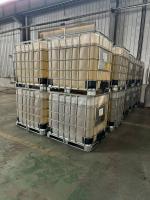
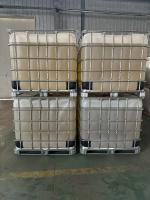
358_small.jpg "PolyDADMAC for river water clarification|polydadmac with NSF")