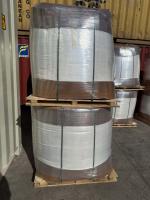
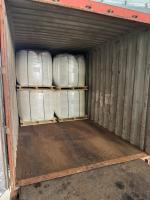
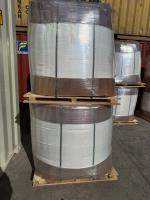
Hydroxamated polyacrylamide (HAPAM) is an advanced functional flocculant widely used in phosphate beneficiation, especially in processes involving fine phosphate particles, clay-rich gangue minerals, and complex sedimentary phosphate ores. By introducing hydroxamic acid functional groups (–CONHOH) into the polyacrylamide backbone, HAPAM combines strong metal-ion chelation, selective adsorption, and high-molecular-weight bridging flocculation, making it highly effective for improving solid–liquid separation and upgrading phosphate ore quality.
Below is a detailed and structured explanation (~900 words) of hydroxamated polyacrylamide for phosphate beneficiation.
1. Background: Challenges in Phosphate Beneficiation
Phosphate ores are essential raw materials for fertilizer production. However, most natural phosphate deposits are low-grade and contain significant impurities such as:
-
Silica (quartz, chert)
-
Clay minerals (kaolinite, montmorillonite)
-
Carbonates (calcite, dolomite)
-
Iron and aluminum oxides
-
Fine phosphate particles (<20 μm)
Common beneficiation methods include:
-
Scrubbing and desliming
-
Flotation (direct or reverse)
-
Gravity separation
-
Classification and thickening
Key processing challenges include:
-
High slime content causing poor separation
-
Fine particle loss during desliming
-
Low selectivity between phosphate and gangue minerals
-
High reagent consumption in flotation
-
Slow settling in thickeners
Hydroxamated polyacrylamide is used to overcome these limitations by improving flocculation selectivity and settling efficiency.
2. Chemical Structure and Functional Mechanism
2.1 Hydroxamic Acid Functional Groups
The key functional group in HAPAM is:
This group has:
-
Strong chelation ability with metal ions (Ca²⁺, Fe³⁺, Al³⁺)
-
High affinity for metal-rich mineral surfaces
-
Selective adsorption behavior
In phosphate systems, this is particularly important because phosphate minerals often coexist with calcium- and iron-bearing gangue.
2.2 High Molecular Weight Polyacrylamide Backbone
-
Provides long-chain structure
-
Enables particle bridging
-
Promotes formation of large flocs
2.3 Dual Flocculation Mechanism
HAPAM operates through three main mechanisms:
(1) Chelation and Surface Anchoring
Hydroxamic groups bind to metal ions on mineral surfaces, especially calcium and iron sites.
(2) Polymer Bridging
Long polymer chains connect multiple particles into aggregates.
(3) Charge Neutralization
Reduces electrostatic repulsion between particles.