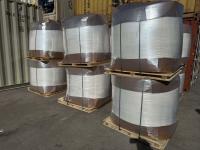
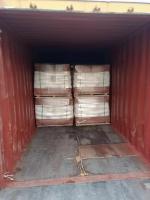
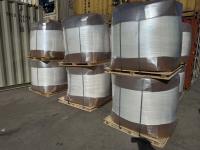
ZETAG 8127 DL is an anionic polyacrylamide (APAM) supplied in dry granular or bead form and designed primarily for solid–liquid separation processes. As a high-molecular-weight, negatively charged polymer, it functions mainly as a flocculant, promoting aggregation of fine suspended particles into larger, faster-settling flocs. Because of its performance stability and versatility, ZETAG 8127 DL is widely applied in mineral processing, alumina refining, wastewater treatment, sludge dewatering, and industrial clarification systems.
1. Mineral Processing and Mining Applications
One of the most important application areas of ZETAG 8127 DL is the mining and mineral processing industry. In ore beneficiation circuits, large volumes of water containing fine mineral particles must be clarified and recycled. ZETAG 8127 DL is used in thickeners, clarifiers, and tailings treatment units to accelerate settling of finely ground solids such as iron ore, copper, coal, phosphate, and bauxite tailings.
Due to its anionic charge, ZETAG 8127 DL interacts effectively with positively charged mineral surfaces or particles conditioned with metal ions. The polymer chains bridge multiple particles, forming strong, shear-resistant flocs that settle rapidly. This improves thickener underflow density, enhances overflow clarity, and allows higher throughput. In tailings management, its use contributes to better water recovery, reduced pond size, and improved stability of tailings dams.
2. Alumina Refining and Red Mud Treatment
ZETAG 8127 DL is especially relevant in the Bayer process for alumina production, where it is applied in red mud settling, thickening, and washing circuits. Red mud consists of extremely fine, alkaline solids that are difficult to settle naturally. Anionic polyacrylamides like ZETAG 8127 DL are commonly added in primary settlers, washers, and security filters to improve solid–liquid separation.
In these applications, ZETAG 8127 DL enhances red mud flocculation, accelerates settling rates, and improves mud washing efficiency. This leads to clearer overflow liquor, reduced soda losses, and improved overall plant productivity. Its performance stability under high pH and high temperature conditions makes it suitable for harsh Bayer process environments.
3. Industrial and Municipal Wastewater Treatment
Another major application of ZETAG 8127 DL is wastewater treatment. It is widely used as a flocculant in both industrial and municipal wastewater clarification systems. In primary and secondary clarification, the polymer aggregates suspended solids, colloids, and organic matter, improving removal efficiency.
In industrial wastewater treatment, ZETAG 8127 DL is applied in sectors such as metallurgy, power plants, chemical manufacturing, textiles, and food processing. It helps remove inorganic solids, pigments, fibers, and other fine contaminants. When used in combination with inorganic coagulants such as aluminum sulfate or ferric chloride, it significantly enhances floc size and settling speed, resulting in clearer effluent and reduced sludge volume.
4. Sludge Thickening and Dewatering
ZETAG 8127 DL is also extensively used in sludge thickening and dewatering operations. In belt filter presses, centrifuges, and screw presses, it conditions sludge by binding fine particles into larger, drainable flocs. This improves water release during mechanical dewatering and increases cake solids content.
Its high molecular weight provides excellent bridging capability, which is essential for forming strong flocs that can withstand shear forces inside dewatering equipment. As a result, plants can achieve lower polymer consumption, reduced disposal costs, and improved operational efficiency.
5. Paper and Pulp Industry
In the paper and pulp industry, ZETAG 8127 DL is applied mainly for white water clarification and fiber recovery. Fine fibers, fillers, and pigments lost during papermaking can be efficiently recovered using anionic polyacrylamide flocculation systems. The polymer improves retention of fines and fillers, reduces suspended solids in effluent, and lowers raw material losses.
It is also used in sludge treatment within pulp and paper mills, where it enhances dewatering of primary and secondary sludges prior to disposal or incineration.
6. Water Clarification and Recycling Systems
ZETAG 8127 DL plays an important role in industrial water clarification and recycling systems. In cooling water blowdown treatment, process water recycling, and surface water clarification, it promotes rapid settling of suspended solids, enabling water reuse and reducing freshwater consumption. This makes it particularly valuable in industries facing strict environmental regulations and water scarcity challenges.
7. Advantages and Performance Characteristics
The widespread application of ZETAG 8127 DL is driven by several advantages. It offers high flocculation efficiency at low dosages, good solubility when properly prepared, and stable performance across a wide range of pH and water chemistries. Its anionic nature makes it compatible with many inorganic coagulants and suitable for systems containing positively charged or metal-rich particles.
Conclusion
In summary, ZETAG 8127 DL anionic polyacrylamide is a versatile and high-performance flocculant used primarily for solid–liquid separation. Its main applications include mineral processing, alumina refining and red mud settling, wastewater treatment, sludge dewatering, pulp and paper processes, and industrial water clarification. By improving settling rates, enhancing water recovery, and reducing operational costs, ZETAG 8127 DL plays a critical role in modern industrial and environmental treatment systems.