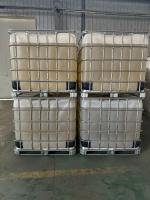
Polyamine is widely used as an effective shale inhibitor in oil and gas drilling fluids, especially in water-based mud (WBM) systems. The application of polyamine used for shale inhibitor focuses on controlling shale hydration, swelling, dispersion, and wellbore instability caused by reactive clay minerals such as smectite, illite, and mixed-layer clays. Because of its strong cationic nature and excellent clay affinity, polyamine has become a key chemical additive in modern drilling fluid design.
1. Background: Shale Problems in Drilling
Shale formations account for more than 70% of drilled formations worldwide and are highly sensitive to water. When exposed to water-based drilling fluids, shale tends to hydrate, swell, soften, and disperse, leading to problems such as wellbore collapse, tight hole, stuck pipe, high torque and drag, and poor cuttings integrity. Traditional shale inhibitors like KCl provide partial inhibition but face environmental, performance, and disposal limitations. This has driven the development and application of polyamine shale inhibitors as a high-performance alternative.
2. What Is Polyamine Shale Inhibitor
Polyamine is a water-soluble polymer containing multiple amine functional groups (-NH₂, -NH-). These amine groups are positively charged under drilling fluid conditions, enabling strong electrostatic attraction to negatively charged clay surfaces. In the application of polyamine used for shale inhibitor, the molecular structure allows polyamine to adsorb, penetrate, and seal shale microfractures while neutralizing clay surface charges.
Polyamine shale inhibitors are commonly used alone or in combination with KCl, glycols, silicates, or encapsulating polymers to form advanced inhibitive drilling fluid systems.
3. Mechanism of Polyamine as a Shale Inhibitor
3.1 Charge Neutralization
Clay particles carry negative surface charges that attract water molecules. Polyamine shale inhibitor adsorbs onto clay surfaces through electrostatic interaction, neutralizing these charges. This significantly reduces water uptake and clay swelling.
3.2 Clay Platelet Bridging and Fixation
The long molecular chains of polyamine can bridge between clay platelets, forming a stable structure. This bridging effect prevents clay dispersion and keeps shale cuttings intact. As a result, drilled cuttings remain firm and are easily transported out of the wellbore.
3.3 Osmotic and Chemical Inhibition
In the application of polyamine used for shale inhibitor, polyamine alters the chemical potential between shale pore water and drilling fluid, reducing osmotic water flow into shale. This osmotic inhibition further limits hydration and swelling.
3.4 Microfracture Sealing
Polyamine molecules can penetrate shale microfractures and pores, forming a thin film that acts as a physical barrier. This sealing effect improves wellbore stability and reduces filtrate invasion.
4. Application in Water-Based Drilling Fluids
4.1 KCl/Polyamine Systems
One of the most common applications of polyamine shale inhibitor is in KCl/polyamine drilling fluid systems. KCl provides ionic inhibition, while polyamine offers long-term chemical and physical inhibition. This combination delivers superior shale stability compared to KCl alone, often allowing reduced salt concentration and lower environmental impact.
4.2 Low-Salinity and Salt-Free Systems
Polyamine is increasingly applied in low-salinity or salt-free drilling fluids. In environmentally sensitive areas, polyamine shale inhibitor replaces or minimizes inorganic salts while maintaining excellent inhibition performance.
4.3 High-Temperature and Deep Wells
Polyamine shows good thermal stability and maintains inhibitory performance at elevated temperatures. Therefore, the application of polyamine used for shale inhibitor is suitable for deep wells, extended-reach drilling, and high-temperature formations.
5. Benefits of Polyamine Shale Inhibitor
-
Strong inhibition efficiency against shale swelling and dispersion
-
Improved wellbore stability, reducing non-productive time (NPT)
-
Better cuttings integrity, leading to cleaner holes and improved solids control
-
Compatibility with other additives, such as PAC, starch, xanthan gum, and lubricants
-
Reduced environmental footprint compared with high-salt systems
-
Lower maintenance cost, due to stable rheology and filtration control
6. Field Performance and Results
Field applications have shown that polyamine shale inhibitors significantly reduce shale recovery loss in hot rolling dispersion tests and linear swelling tests. Wells drilled with polyamine-containing fluids typically experience fewer incidents of stuck pipe, lower torque and drag, and more consistent drilling rates. The application of polyamine used for shale inhibitor has proven especially effective in reactive shale formations encountered in shale gas, tight oil, and unconventional reservoirs.
7. Compatibility and Dosage
Polyamine shale inhibitor is generally added at concentrations ranging from 0.5% to 3.0% by volume, depending on shale reactivity and system design. It is compatible with most water-based drilling fluid components and does not significantly interfere with rheology or filtration when properly formulated.
8. Conclusion
The application of polyamine used for shale inhibitor plays a critical role in modern drilling operations. Through charge neutralization, clay fixation, osmotic inhibition, and microfracture sealing, polyamine provides robust shale stabilization in water-based drilling fluids. Its versatility, environmental advantages, and proven field performance make polyamine an essential additive for drilling through reactive shale formations. As drilling moves toward deeper, longer, and more complex wells, polyamine shale inhibitors will continue to be a key technology for ensuring safe, efficient, and cost-effective drilling operations.




245_small.jpg "The equivalent of FLOQUAT FL3050 polyamine branched")
571_small.jpg "polyamine manufacturers(top three in China)|polyamine plants")