

Our Products

coagulant / high charge of PolyDADMAC for drinking water|polydadmac price
High-Charge PolyDADMAC for Drinking Water Treatment
High-charge PolyDADMAC for drinking water treatment is a highly effective cationic polymer technology used for coagulation, turbidity removal, colloid destabilization, color reduction, and clarification of raw water. PolyDADMAC means polydiallyldimethylammonium chloride, a water-soluble polymer containing permanently charged quaternary ammonium groups. Its strong positive charge allows it to rapidly interact with negatively charged particles commonly found in rivers, lakes, reservoirs, and other drinking-water sources.
High-charge PolyDADMAC is particularly valuable when the main treatment objective is rapid charge neutralization. The Australian Drinking Water Guidelines describe PolyDADMAC as a cationic polyelectrolyte with high charge density, approximately 50–100%, and recognize its use as either a primary coagulant or a coagulation aid in drinking-water treatment.
1. What Does “High Charge” Mean?
The term high-charge PolyDADMAC refers primarily to the high density of permanent positive charges along the polymer chain.
Unlike many weakly cationic polymers whose charge can be strongly influenced by pH, PolyDADMAC contains quaternary ammonium groups. Its cationic charge is therefore relatively permanent across normal water-treatment pH conditions.
This characteristic is important because most suspended and colloidal particles in natural water have negative surface charges.
For example, river and lake water may contain:
- Clay particles
- Silica particles
- Silt
- Colloids
- Natural organic matter
- Algae
- Microorganism-associated particles
- Fine suspended solids
These particles tend to repel each other because they carry similar negative charges. High-charge PolyDADMAC reduces this electrostatic repulsion and allows particles to aggregate.
2. Why High Charge Is Important
The principal advantage of high-charge PolyDADMAC for drinking water treatment is rapid charge neutralization.
When PolyDADMAC is introduced into raw water, positively charged polymer chains are attracted to negatively charged particle surfaces. Polymer adsorption reduces the particles' negative zeta potential.
As the particle charge approaches neutralization, particles can collide and remain attached to one another. Small destabilized particles then form larger aggregates.
The simplified process is:
Negative colloid → high-charge PolyDADMAC adsorption → charge neutralization → particle aggregation → floc formation → clarification
This is why PolyDADMAC can be highly effective even at relatively low treatment dosages.
3. High Charge Versus High Molecular Weight
It is important to distinguish charge density from molecular weight.
A high-charge PolyDADMAC is primarily optimized for charge neutralization. Molecular weight describes the size of the polymer chains.
For drinking-water coagulation, a high charge density is often more important than simply selecting the highest molecular-weight product.
A very high molecular weight product is not automatically the best PolyDADMAC. The optimum product depends on raw-water particle characteristics, turbidity, organic matter, pH, temperature, and the clarification process.
For highly stable colloidal water, a strongly cationic PolyDADMAC can be particularly effective because the treatment mechanism depends heavily on electrostatic interaction.
4. Typical Charge Range
PolyDADMAC is generally regarded as a high-charge cationic polymer. A commonly cited charge-density range is approximately 50–100%, although the exact specification and measurement basis can vary between manufacturers.
For drinking-water applications, it is better to specify the actual product's technical data rather than assuming that every PolyDADMAC has exactly the same charge density.
A practical specification may include:
- Cationic charge density
- Molecular weight
- Active polymer content
- Viscosity
- Appearance
- pH
- Residual DADMAC monomer
- Drinking-water certification
- Recommended dosage
5. Turbidity Removal
One of the most important applications of high-charge PolyDADMAC for drinking water treatment is turbidity reduction.
Raw surface water can contain extremely fine particles that remain suspended for long periods. These particles can pass through conventional settling systems unless they are properly destabilized.
High-charge PolyDADMAC rapidly neutralizes their surface charges and promotes aggregation.
The resulting flocs can then be removed through:
- Sedimentation
- Lamella clarification
- Dissolved air flotation
- Direct filtration
- Multimedia filtration
This can reduce the particle load entering downstream filters and improve overall treatment stability.
6. High-Charge PolyDADMAC as a Primary Coagulant
PolyDADMAC can sometimes be used as a primary coagulant in drinking-water treatment.
This approach is particularly attractive when the raw water contains significant particulate and colloidal material.
The high cationic charge provides rapid destabilization without relying primarily on metal hydroxide precipitates.
According to the Australian Drinking Water Guidelines, PolyDADMAC can be used as a primary coagulant and may reduce the quantity of floc and sludge produced compared with some inorganic-coagulant systems.
However, PolyDADMAC is not necessarily the best primary coagulant for every raw-water source. For some dilute inorganic suspensions or waters with significant color, aluminum or iron salts may perform better.
7. High-Charge PolyDADMAC as a Coagulant Aid
A very common application is using high-charge PolyDADMAC together with PAC, alum, or ferric salts.
In this configuration, PolyDADMAC can rapidly destabilize particles while the inorganic coagulant provides additional precipitation and sweep-floc mechanisms.
For example:
Raw water → PolyDADMAC → PAC/alum → flocculation → clarification → filtration
The exact sequence should be determined through jar testing.
Using a small quantity of high-charge PolyDADMAC can sometimes reduce the required inorganic-coagulant dosage and improve filter performance. The Australian Drinking Water Guidelines specifically note that PolyDADMAC used as a secondary coagulant can partially replace inorganic salts and may improve treated-water quality and filter run times.
8. Recommended Dosage
The dosage of high-charge PolyDADMAC for drinking water treatment should be determined through jar testing.
The Australian Drinking Water Guidelines give typical PolyDADMAC concentrations of approximately 0.2–6 mg/L as 100% PolyDADMAC, with approximately 0.2–1 mg/L commonly used when it is combined with an inorganic salt as a secondary coagulant.
The actual product dosage will depend on its active-polymer concentration.
For example, if a commercial product contains 40% active PolyDADMAC, the commercial-product dosage must be higher than the dosage expressed as 100% active polymer.
Operators should therefore distinguish between:
mg/L commercial product
and
mg/L active PolyDADMAC.
This distinction is essential when comparing products from different manufacturers.
9. Overdosing High-Charge PolyDADMAC
High charge is beneficial, but excessive dosing can cause problems.
If too much PolyDADMAC is added, particles may become positively charged instead of neutral. This can restabilize the suspension and reduce clarification efficiency.
Potential signs of overdosing include:
- Poorer turbidity removal
- Smaller or unstable flocs
- Charge reversal
- Increased residual polymer
- Filter performance problems
- Increased chemical consumption
The Australian Drinking Water Guidelines also warn that excessive PolyDADMAC concentrations can adversely affect coagulation and filtration by redispersing impurities.
Therefore, high-charge PolyDADMAC does not mean high dosage. In many cases, the benefit of high charge is that an effective coagulation result can be achieved at relatively low dosage.
10. High-Charge PolyDADMAC and pH
One major advantage of PolyDADMAC is its relatively low dependence on pH compared with some conventional coagulants.
Because the positive charge is associated with quaternary ammonium groups, PolyDADMAC maintains its cationic nature across a broad range of normal water-treatment conditions.
Nevertheless, raw-water pH remains important because it affects particle chemistry and the performance of other coagulants used alongside PolyDADMAC.
When PolyDADMAC is combined with PAC or alum, the overall coagulation system should therefore be optimized for the actual raw-water pH.
11. High-Charge PolyDADMAC and Organic Matter
Natural organic matter can contribute to color, turbidity, and treatment complexity in drinking-water sources.
Some organic colloids and humic substances carry negative charges and can therefore interact with cationic PolyDADMAC.
High-charge PolyDADMAC can assist in destabilizing these materials, although aluminum and iron coagulants may be more effective for certain types of dissolved or highly colored organic matter.
For this reason, the best treatment strategy may combine PolyDADMAC with an inorganic coagulant and downstream filtration or activated-carbon treatment.
12. Product Selection for Drinking Water
Not every commercial PolyDADMAC should be used for drinking-water treatment.
The selected product should be specifically suitable for potable-water applications and meet the requirements applicable in the target country or jurisdiction.
For example, current NSF/ANSI/CAN 60 listings include numerous PolyDADMAC products approved for coagulation and flocculation, with maximum-use levels that vary by individual product.
This illustrates an important point: certification and permitted dosage are product-specific. A PolyDADMAC product being technically suitable as a coagulant does not mean that every product can be dosed at the same level.
Residual DADMAC monomer is also an important consideration in potable-water treatment. The Australian Drinking Water Guidelines specify limits concerning residual monomer when PolyDADMAC is used.
13. Dilution and Dosing
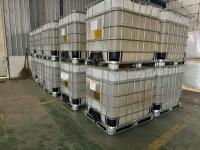
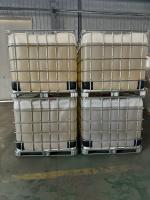
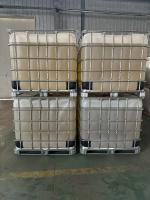
High-charge PolyDADMAC is commonly supplied as a concentrated liquid. Because concentrated PolyDADMAC can have relatively high viscosity, appropriate dilution can improve pumping, dispersion, and mixing.
The polymer should be introduced into the water stream where rapid and uniform distribution is possible.
Poor dispersion can produce localized overdosing even when the overall calculated dosage is correct.
Therefore, dosing-system design is an important part of successful high-charge PolyDADMAC for drinking water treatment.
14. Jar Testing and Optimization
The best high-charge PolyDADMAC should be selected using actual raw water.
A suitable jar-test program should compare several products or dosages and measure:
- Initial and final turbidity
- Floc formation
- Floc settling velocity
- Supernatant clarity
- Zeta potential
- pH
- Filterability
- Chemical consumption
For high-charge PolyDADMAC, monitoring zeta potential can be particularly useful because the primary mechanism is charge neutralization.
The optimum treatment point is generally near the point where particles are adequately destabilized without excessive charge reversal.
Conclusion
High-charge PolyDADMAC for drinking water treatment is particularly effective when rapid neutralization of negatively charged suspended and colloidal particles is required. Its permanent cationic charge allows it to interact strongly with clay, silt, organic colloids, algae-associated particles, and other negatively charged materials.
A high-charge PolyDADMAC is often suitable as either a primary coagulant or a coagulant aid with PAC, alum, or ferric salts. Its main benefits include rapid coagulation, effective turbidity reduction, potentially lower inorganic-coagulant consumption, reduced floc volume in some systems, and improved filtration performance.
For practical drinking-water applications, the preferred product is not simply the PolyDADMAC with the highest possible charge. The best product is the high-charge PolyDADMAC that provides the required turbidity removal at the lowest stable dosage while meeting potable-water certification and residual-monomer requirements.
Jar testing with actual raw water remains the most reliable method for determining the appropriate charge density, molecular weight, dosage, and combination with other coagulants.
733_small.jpg "polyDADMAC flocculant for industrial effluent clarification")