


Our Products

Polyacrylamide / cyfloc 1229 anionic polyacrylamide emuslion can be replaced by Chinafloc EM SERIES
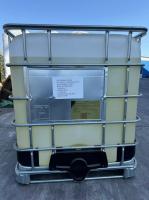
Application of CYFLOC 1229 Anionic Polyacrylamide Emulsion
1. Introduction
CYFLOC 1229 is a specialty anionic polyacrylamide (APAM) flocculant supplied in emulsion form. It is associated with the CYFLOC product range originally developed by Cytec, now part of the Syensqo specialty chemicals portfolio.
Anionic polyacrylamide emulsion is widely used in mineral processing, alumina production, industrial wastewater treatment, and solid-liquid separation.
The main function of CYFLOC 1229 is to promote the aggregation of fine suspended particles, improve settling rates, and enhance the separation of solids from liquids.
Unlike conventional dry polyacrylamide powder, an emulsion product is supplied in a liquid formulation, which can offer convenient handling and automated dosing in industrial processes.
One particularly important application associated with CYFLOC 1229 is red mud settling in the Bayer alumina production process.
2. Main Applications of CYFLOC 1229
2.1 Alumina Industry – Red Mud Settling
One of the most important applications of CYFLOC 1229 is red mud separation in alumina refineries.
During the Bayer process, bauxite is digested with concentrated sodium hydroxide at elevated temperatures and pressures. Alumina dissolves into the caustic liquor, while insoluble impurities remain as red mud.
Red mud contains iron oxides, silica, titanium compounds, and fine mineral particles. These particles are often extremely fine and difficult to separate through natural sedimentation.
CYFLOC 1229 anionic polyacrylamide emulsion can be used as a flocculant to promote the aggregation of fine red mud particles.
Its polymer chains adsorb onto particle surfaces and connect multiple particles through polymer bridging. This creates larger aggregates that settle more rapidly.
Potential benefits include:
-
Increasing red mud settling rates.
-
Improving solid-liquid separation.
-
Reducing suspended solids in overflow liquor.
-
Improving clarification efficiency.
-
Supporting higher refinery processing capacity.
-
Improving water and caustic liquor recovery.
2.2 Red Mud Washing and Counter-Current Decantation (CCD)
Another important application is the red mud washing circuit in alumina refineries.
After the initial digestion and clarification stages, red mud must be washed to recover valuable sodium hydroxide and dissolved alumina from the residue.
The counter-current decantation (CCD) process uses several washing thickeners to separate solids from liquid and recover caustic solution.
CYFLOC 1229 can be evaluated as a flocculant in suitable washing circuits to improve the settling of red mud particles.
Its potential functions include:
-
Improving mud settling performance.
-
Increasing washing-thickener throughput.
-
Improving overflow clarity.
-
Reducing suspended solids carryover.
-
Supporting caustic recovery.
-
Improving the efficiency of the red mud washing process.
Efficient flocculation is important because poor settling can increase suspended solids in the overflow and reduce the effectiveness of downstream liquor treatment.
2.3 Mineral Processing and Mining Wastewater
Anionic polyacrylamide emulsions are also widely used in mineral processing.
Mining wastewater generally contains fine mineral particles, clay, silica, and other suspended solids. These particles may remain suspended for long periods, making water clarification difficult.
CYFLOC 1229 can be evaluated for solid-liquid separation in suitable mineral processing systems.
Potential applications include:
-
Mineral concentrate thickening.
-
Tailings water clarification.
-
Mine wastewater treatment.
-
Fine particle sedimentation.
-
Process-water recycling.
-
Slurry clarification.
The polymer bridging mechanism promotes the formation of larger flocs, which can settle more rapidly than individual fine particles.
However, its performance depends on mineral composition, particle surface charge, pH, ionic strength, and polymer dosage.
2.4 Industrial Wastewater Treatment
Industrial wastewater from chemical manufacturing, mining, metallurgy, and other industries frequently contains high concentrations of suspended solids.
CYFLOC 1229 may be evaluated as a flocculant to improve the removal of these suspended particles.
When added after appropriate coagulation or under suitable direct-flocculation conditions, its long polymer chains connect fine particles and form larger aggregates.
Potential treatment benefits include:
-
Reducing wastewater turbidity.
-
Improving suspended solids removal.
-
Increasing sedimentation efficiency.
-
Improving clarification performance.
-
Supporting industrial water recycling.
For wastewater containing highly stable colloids, a primary coagulant such as PAC or polyamine may be needed before adding anionic polyacrylamide.
2.5 Bauxite Processing and Alumina Refinery Operations
CYFLOC 1229 has also been reported in research concerning bauxite processing and Bayer digestion.
In alumina production, the settling characteristics of red mud are influenced by bauxite mineralogy, digestion temperature, caustic concentration, and particle-size distribution.
A published study investigating bauxite processing reported that CYFLOC 1229 performed well in settling tests when used together with starch as a coagulant. This demonstrates its potential role in improving red mud separation under particular Bayer process conditions.
This application is important for alumina refineries because efficient red mud settling can help improve production efficiency and reduce the amount of suspended solids entering subsequent process stages.
2.6 Tailings Thickening and Water Recovery
Mining operations generate large quantities of tailings containing fine mineral particles and process water.
Anionic polyacrylamide flocculants can improve tailings thickening by promoting particle aggregation and accelerating sedimentation.
CYFLOC 1229 may be evaluated in suitable tailings treatment systems to:
-
Improve tailings settling rates.
-
Increase thickener underflow solids concentration.
-
Improve overflow water clarity.
-
Support process-water recovery.
-
Reduce suspended solids in recycled water.
The suitability of CYFLOC 1229 for different mineral tailings should be confirmed through laboratory settling tests.
3. Working Mechanism of CYFLOC 1229
The primary mechanism of anionic polyacrylamide is polymer bridging.
When CYFLOC 1229 is introduced into a suspension containing fine mineral particles, its long polymer chains can adsorb onto multiple particle surfaces.
One polymer chain can connect several particles, forming larger flocs.
The resulting flocs have larger effective particle sizes and generally settle faster under suitable process conditions.
The main performance factors include:
-
Molecular weight.
-
Anionic charge density.
-
Polymer dosage.
-
Suspension pH.
-
Particle-size distribution.
-
Mixing intensity.
-
Temperature and ionic strength.
4. Advantages of Anionic Polyacrylamide Emulsion
Compared with conventional powder-based anionic polyacrylamide, emulsion flocculants offer several potential operational advantages.
Convenient handling: Liquid formulations can be introduced into automated chemical dosing systems.
Rapid preparation: Properly formulated emulsions can be activated and diluted without the same powder-wetting and lumping problems associated with dry PAM.
Efficient flocculation: High-molecular-weight polymer chains can promote particle bridging and improve solid-liquid separation.
Industrial suitability: Emulsion products can be used in continuous industrial processes where consistent chemical preparation and dosing are important.
Actual advantages depend on the formulation and preparation procedure specified by the manufacturer.
5. Dosage and Application Recommendations
The optimum dosage of CYFLOC 1229 depends on the characteristics of the suspension, including solids concentration, particle size, pH, and mineral composition.
For industrial applications, jar testing and settling-column testing are recommended before commercial operation.
A general application procedure is:
-
Prepare the emulsion according to the manufacturer's instructions.
-
Dilute it to a suitable working concentration.
-
Add the diluted polymer to the slurry under appropriate mixing conditions.
-
Allow sufficient flocculation time.
-
Evaluate settling velocity, overflow clarity, and underflow solids concentration.
-
Adjust the dosage according to treatment performance.
Overdosing should be avoided because excessive polymer can cause poor flocculation, increased chemical consumption, and reduced process efficiency.
6. CYFLOC 1229 vs. Anionic PAM Powder
|
Comparison |
CYFLOC 1229 |
Anionic PAM powder |
|---|---|---|
|
Physical form |
Liquid formulation |
Dry powder |
|
Chemical function |
Flocculation |
Flocculation |
|
Main mechanism |
Polymer bridging |
Polymer bridging |
|
Preparation |
Manufacturer-specified emulsion activation and dilution |
Dissolution in water |
|
Application |
Industrial solid-liquid separation |
Industrial solid-liquid separation |
|
Main markets |
Alumina and mineral processing |
Mining and wastewater treatment |
Note that the exact formulation of CYFLOC 1229 should be checked against its current manufacturer's technical data sheet. Public trade descriptions identify it as an alkaline polyacrylamide solution in a paraffinic hydrocarbon solvent, rather than establishing that it is a conventional water-based emulsion.
7. Conclusion
CYFLOC 1229 is a specialty anionic polyacrylamide flocculant associated particularly with the alumina industry and Bayer process red mud settling.
Its main applications include:
-
Red mud settling in alumina refineries.
-
Red mud washing and CCD circuits.
-
Bauxite processing.
-
Mineral processing and concentrate thickening.
-
Mining wastewater clarification.
-
Tailings thickening and water recovery.
-
Industrial wastewater treatment.
Its primary function is to promote the aggregation of fine suspended particles, accelerate sedimentation, and improve solid-liquid separation.
For alumina refineries and mining chemical suppliers, CYFLOC 1229 is a product of interest because efficient flocculation can improve red mud settling, overflow clarity, and process-water recovery.
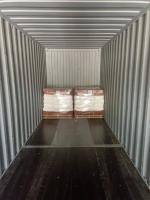
596_small.jpg "anionic polyacrylamide usedd for High-Solids Red Mud Thickeners / Residue Disposal Preparation")
