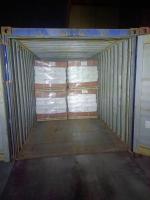
Diafloc AP410C, Diafloc AP805C, and Diafloc AP517C are anionic polyacrylamide flocculants from the DIAFLOC AP series, commonly used for solid-liquid separation, wastewater treatment, sludge dewatering, and mineral processing. These polymers are high-molecular-weight anionic flocculants designed to provide strong bridging ability, fast settling, and clear overflow in sedimentation and filtration systems.
Although each model has slightly different molecular weight and charge density, their applications are similar, with differences depending on sludge type, particle size, and water chemistry.
Below is a detailed explanation of the applications of Diafloc AP410C, AP805C, and AP517C (about 900 words).
1. Industrial wastewater treatment
One of the main applications of Diafloc AP410C, AP805C, and AP517C is in industrial wastewater clarification.
These anionic polymers are used as flocculants to remove suspended solids, colloids, and fine particles from wastewater.
Typical industries include:
-
Chemical manufacturing
-
Textile and dyeing plants
-
Steel and metallurgy
-
Electronics factories
-
Food processing plants
-
Petrochemical industry
In wastewater treatment, these flocculants are usually used together with inorganic coagulants such as:
-
PAC (polyaluminum chloride)
-
Aluminum sulfate
-
Ferric chloride
-
Polyamine / Polydadmac
Function of Diafloc AP series:
-
Forms large and strong flocs
-
Improves settling speed
-
Reduces turbidity
-
Improves effluent quality
-
Reduces sludge volume
Among the three grades:
-
AP410C → suitable for medium solids concentration
-
AP517C → suitable for fine particles and difficult settling sludge
-
AP805C → suitable for high solids and strong bridging requirement
2. Municipal sewage treatment
Diafloc AP410C, AP517C, and AP805C are widely used in municipal wastewater plants for primary and secondary clarification.
Applications include:
-
Primary sedimentation tank
-
Secondary clarifier
-
Tertiary treatment
-
Sludge thickening
-
Effluent polishing
These anionic flocculants are effective when the sludge carries positive or neutral charge, allowing the polymer chain to bridge particles and form large flocs.
Benefits:
-
Faster settling
-
Clear supernatant
-
Reduced SS and turbidity
-
Lower chemical consumption
-
Stable operation of clarifiers
In activated sludge systems, AP517C is often used because it provides strong floc formation for biological sludge.
3. Sludge thickening and dewatering
Another important application of Diafloc AP410C / AP517C / AP805C is in sludge concentration and mechanical dewatering.
Used in equipment such as:
-
Belt filter press
-
Centrifuge
-
Screw press
-
Plate and frame filter press
-
Gravity thickener
Functions:
-
Increase floc size
-
Improve filtration rate
-
Increase cake dryness
-
Reduce moisture content
-
Reduce polymer consumption
Different models are selected according to sludge type:
|
Model |
Typical use |
|
AP410C |
Medium sludge, general dewatering |
|
AP517C |
Fine sludge, biological sludge |
|
AP805C |
Heavy sludge, high solids, mining sludge |
High molecular weight of AP805C makes it suitable for difficult dewatering conditions.
4. Mining and mineral processing
Diafloc AP series flocculants are widely used in mineral beneficiation and tailings treatment.
Applications include:
-
Iron ore processing
-
Copper beneficiation
-
Gold processing
-
Coal washing
-
Phosphate beneficiation
-
Alumina processing
-
Quarry wastewater
Functions in mining:
-
Tailings settling
-
Thickener overflow clarification
-
Water recycling
-
Filtration improvement
-
Flotation water clarification
Advantages:
-
Fast sedimentation
-
Strong floc formation
-
Clear overflow
-
Reduced water loss
-
Improved recovery of solids
Typical selection:
-
AP410C → general thickener use
-
AP517C → fine ore and clay
-
AP805C → high-density tailings
Because mining slurry often contains very fine particles, high molecular weight anionic polymers like AP805C are frequently preferred.
5. Paper and pulp industry
Diafloc AP410C, AP517C, and AP805C can be used in paper mill water treatment and fiber recovery.
Applications:
-
White water clarification
-
Fiber recovery
-
Sludge thickening
-
Effluent treatment
-
Recycled water treatment
Benefits:
-
Recover valuable fibers
-
Reduce COD / SS
-
Improve settling
-
Improve filter performance
Anionic flocculants work well with cellulose fibers and mineral fillers such as:
-
Calcium carbonate
-
Clay
-
Kaolin
-
Titanium dioxide
AP517C is often used when fine fibers need to be recovered.
6. Drinking water and raw water clarification
In some cases, Diafloc AP series polymers are used as coagulant aids in water purification plants.
Used for:
-
River water
-
Reservoir water
-
Surface water
-
Industrial raw water
-
Cooling water
Function:
-
Improve coagulation
-
Remove turbidity
-
Remove clay and colloids
-
Improve filter life
The polymer is normally used together with:
AP410C is often selected for this purpose because moderate charge density gives stable floc formation.
7. Construction, sand washing, and quarry wastewater
Diafloc AP410C / AP517C / AP805C are widely used in:
-
Sand washing plants
-
Stone quarry
-
Concrete industry
-
Tunnel construction
-
Soil washing
Functions:
-
Fast settling of sand fines
-
Clarify recycle water
-
Reduce sludge volume
-
Improve thickener efficiency
AP805C is commonly used for sand washing because of strong bridging ability.
8. Oil & gas and drilling wastewater
These flocculants can also be used in:
-
Drilling mud treatment
-
Produced water treatment
-
Refinery wastewater
-
Oilfield wastewater
Functions:
-
Remove suspended solids
-
Improve separation
-
Reduce turbidity
-
Improve filtration
AP517C is suitable for fine particles and emulsified solids.
Conclusion
Diafloc AP410C, Diafloc AP517C, and Diafloc AP805C are high-performance anionic polyacrylamide flocculants widely used in wastewater treatment, sludge dewatering, mining, paper industry, water purification, and sand washing.
They provide strong flocculation, fast settling, and clear overflow, making them suitable for both municipal and industrial systems.
AP410C is generally used for medium conditions, AP517C for fine particles and biological sludge, and AP805C for high solids and difficult separation processes.



230_small.jpg "Anionic Polyacrylamide price|15-30 million of anionic polyacrylamide")