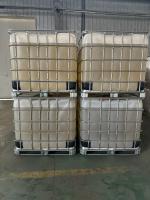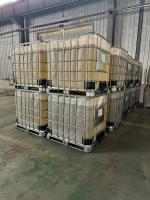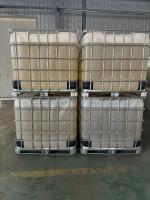


Our Products

coagulant / Top three of polyamine manufacturer used for mining wastewater and tailings treatment
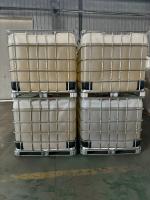
1. Introduction to Polyamine for Mining Wastewater Treatment
Polyamine is a cationic organic polymer widely used as a coagulant in water treatment, industrial wastewater treatment, and solid-liquid separation. In the mining industry, polyamine can be applied to mining wastewater clarification, mineral processing water recycling, tailings water treatment, and selected sludge treatment processes.
Mining wastewater often contains fine mineral particles, clay, suspended solids, residual flotation reagents, and dissolved substances. These contaminants can make water clarification difficult and reduce the efficiency of recycling systems. Tailings slurry may also contain very fine particles that settle slowly because of their small size and surface charge.
Polyamine for mining wastewater treatment helps destabilize negatively charged particles, allowing them to aggregate and separate from water. Depending on the mineral composition and process conditions, polyamine can be used alone or combined with inorganic coagulants such as polyaluminum chloride (PAC) and ferric chloride, or with polymeric flocculants such as polyacrylamide (PAM).
For mining companies seeking to improve water recovery, reduce suspended solids, and optimize tailings management, selecting the correct polyamine coagulant can contribute to more efficient solid-liquid separation.
2. How Does Polyamine Work in Mining Wastewater and Tailings Treatment?
The main mechanism of polyamine is charge neutralization. Many mineral particles, including clay, silica, and fine ore particles, carry negative surface charges in water. These charges cause particles to repel each other, preventing them from forming larger aggregates.
When polyamine is added to mining wastewater, its positively charged functional groups interact with negatively charged particle surfaces. This reduces electrostatic repulsion and promotes particle aggregation. The resulting aggregates can be separated through sedimentation, flotation, or filtration.
Polyamine can also assist in the removal of certain colloidal impurities and negatively charged organic materials, depending on their chemical characteristics.
However, polyamine and polyacrylamide have different functions. Polyamine is primarily a coagulant that destabilizes particles, while high-molecular-weight polyacrylamide is commonly used to promote floc formation through polymer bridging. In many tailings treatment systems, combining the two chemicals may produce better settling performance than using polyamine alone.
The effectiveness of polyamine depends on mineralogy, particle size, water chemistry, pH, salinity, dosage, and the characteristics of the selected polymer.
3. Major Applications of Polyamine in Mining
3.1 Mining Wastewater Clarification
Mining wastewater is generated during ore washing, crushing, grinding, flotation, and mineral separation. It frequently contains suspended mineral solids and fine colloidal particles.
Polyamine coagulant can help destabilize these particles and improve wastewater clarification. When the resulting aggregates settle or are separated by filtration, the treated water may become suitable for recycling into selected process operations.
Potential benefits include reduced turbidity, lower suspended solids concentrations, and improved performance of downstream treatment equipment.
For wastewater containing high concentrations of clay or ultrafine mineral particles, polyamine may be combined with an appropriate anionic polyacrylamide flocculant. The polyamine helps neutralize particle charges, while the PAM promotes larger flocs that settle more rapidly.
3.2 Tailings Thickening and Settling
Tailings are the fine-grained residues remaining after valuable minerals have been separated from ore. Efficient tailings thickening is important for water recovery, slurry transportation, and tailings management.
Polyamine can be evaluated as a primary coagulant for tailings containing negatively charged fine particles. By reducing particle repulsion, it may improve the aggregation of ultrafine solids and support subsequent flocculation.
In conventional tailings thickeners, polyamine may be applied before a suitable high-molecular-weight flocculant. This combined treatment can potentially improve settling rates, increase underflow solids concentration, and reduce the suspended solids content of overflow water.
Nevertheless, polyamine is not a universal replacement for mining flocculants. Many tailings applications depend primarily on anionic polyacrylamide or specialized mining flocculants. The optimum chemical program must be established through settling tests and, where necessary, pilot-scale trials.
3.3 Mineral Processing Water Recycling
Water consumption is a major concern in mineral processing. Recycling clarified process water can reduce freshwater demand and improve overall operational efficiency.
Polyamine for mining wastewater treatment can help remove fine suspended particles from recycled water streams. Potential applications include ore washing water, mineral separation wastewater, and water recovered from tailings thickeners.
Effective clarification can reduce the accumulation of suspended solids in recycling circuits. However, dissolved salts, flotation reagents, metals, and other dissolved contaminants may remain in the water. Polyamine coagulation alone does not remove all dissolved pollutants, so additional treatment may be required when water quality specifications are strict.
3.4 Coal Washing Wastewater
Coal preparation plants generate wastewater containing fine coal particles, clay, and mineral impurities. These particles can remain suspended for long periods and create highly turbid water.
A suitable polyamine coagulant may help destabilize fine particles and improve separation in coal washing wastewater treatment systems. It can also be combined with an appropriate flocculant to produce larger aggregates.
Treatment performance should be evaluated based on settling rate, clarified water turbidity, sludge volume, and compatibility with the coal preparation process. Excessive dosing should be avoided because it may increase chemical consumption or interfere with downstream operations.
3.5 Metal Mining Wastewater
Copper, gold, iron ore, lead-zinc, and other metal mining operations generate wastewater containing suspended minerals and, in some cases, residual process chemicals.
Polyamine can assist in the coagulation of suspended solids when the particle surface chemistry is suitable. It may be used in selected clarification stages before water recycling or further treatment.
However, dissolved heavy metals require particular attention. Polyamine coagulation may remove metals associated with suspended particles, but it does not necessarily remove dissolved metal ions. Depending on the wastewater, pH adjustment, precipitation, adsorption, or specialized treatment may be necessary to meet discharge requirements.
3.6 Sludge and Fine Mineral Solids Dewatering
Mining operations may generate sludge from wastewater treatment, mineral washing, and other process stages. Polyamine can improve particle aggregation in selected sludges and may assist downstream dewatering.
For applications involving filter presses, centrifuges, or belt filter presses, the treatment program should be evaluated using cake solids content, filtrate clarity, polymer consumption, and equipment performance.
High-molecular-weight cationic or anionic polyacrylamide may be more suitable than polyamine alone for some dewatering applications. Comparative testing is therefore important.
4. Advantages of Polyamine for Tailings Treatment
Polyamine offers several potential advantages in mining wastewater and tailings treatment.
Effective charge neutralization: Its cationic functional groups can help destabilize negatively charged mineral particles.
Improved clarification: Suitable formulations may reduce turbidity and improve suspended solids removal.
Compatibility with flocculants: Polyamine can be used with selected polyacrylamide products to improve aggregation and settling.
Flexible dosing: Liquid polyamine formulations can be metered into treatment systems using conventional chemical dosing equipment.
Water recovery support: Improved tailings-water clarification may help recover process water for reuse, subject to dissolved-contaminant and process-water requirements.
The actual benefits depend on ore characteristics, water chemistry, and operating conditions. A lower chemical price does not necessarily mean a lower total treatment cost; performance and consumption must be considered together.
5. How to Select the Right Polyamine for Mining Wastewater
When choosing polyamine for mining wastewater and tailings treatment, consider the following parameters:
-
Molecular weight: Influences polymer behavior and adsorption, although a higher molecular weight does not automatically mean better coagulation.
-
Cationic charge density: Determines how effectively the polymer interacts with negatively charged mineral particles.
-
Solid content: Affects transportation costs, dilution requirements, and active-polymer consumption.
-
Viscosity: Influences pumping, mixing, and dosing.
-
Mineral composition: Clay-rich tailings and different ore types may respond differently to the same polymer.
-
Water chemistry: pH, salinity, hardness, and residual processing chemicals can influence performance.
-
Compatibility: Determine whether polyamine should be used alone or with PAC, ferric salts, or polyacrylamide.
Suppliers should provide technical data sheets, safety data sheets, and application guidance for the intended mining process.
6. Dosage and Application Method
There is no universal dosage for polyamine in mining wastewater treatment. The required amount depends on suspended solids concentration, mineralogy, particle size, polymer concentration, and treatment objectives.
For preliminary laboratory screening, active-polymer dosages such as 1, 5, 10, 20, and 30 mg/L may be evaluated where appropriate. These are illustrative starting points, not universal operating recommendations; concentrated tailings slurries may require a different testing approach.
A practical test program should compare untreated water, polyamine alone, polyacrylamide alone, and a combined polyamine-PAM treatment where appropriate.
Evaluate settling velocity, supernatant turbidity, floc strength, underflow solids concentration, and water recovery. Optimize mixing conditions and chemical addition order before conducting plant trials.
7. Polyamine vs. Polyacrylamide for Mining Tailings
Polyamine and polyacrylamide are complementary rather than interchangeable products.
Polyamine primarily functions as a cationic coagulant for charge neutralization. Polyacrylamide is widely used as a flocculant to bridge mineral particles and form larger aggregates.
For fine, negatively charged tailings, polyamine may serve as a pretreatment chemical, followed by an anionic polyacrylamide flocculant. In other applications, PAM alone may provide sufficient performance, making the additional polyamine unnecessary.
The best option depends on mineral composition, settling behavior, water recovery targets, and total chemical cost. Jar tests and pilot trials provide the most reliable basis for selection.
8. Conclusion
Polyamine for mining wastewater and tailings treatment is a useful option for destabilizing fine mineral particles, improving clarification, and supporting process-water recycling. Its potential applications include tailings thickening, ore washing wastewater, coal washing water, metal mining wastewater, and selected sludge treatment processes.
For many mining operations, the most effective treatment strategy involves selecting the appropriate polyamine coagulant and combining it with a suitable polyacrylamide flocculant when necessary. Careful dosage optimization, mineral-specific testing, and evaluation of treated-water quality are essential to achieving reliable separation and economical operation.
By choosing a polyamine formulation suited to the actual wastewater and tailings characteristics, mining companies can improve solid-liquid separation and support more efficient water management.