Application of FLOPAM EM640 HIB (Highly Branched Cationic Polyacrylamide Emulsion)
FLOPAM EM640 HIB is a highly branched cationic polyacrylamide (CPAM) emulsion flocculant developed by SNF Group for demanding solid–liquid separation processes. The “HIB” designation indicates a highly branched molecular structure, which differentiates this product from conventional linear CPAM emulsions. This structural design provides faster floc formation, stronger and more shear-resistant flocs, and superior performance in complex sludge and wastewater systems. As a result, FLOPAM EM640 HIB is widely applied in municipal wastewater treatment, industrial sludge dewatering, clarification, thickening, and process water treatment.
1. Molecular Structure and Flocculation Mechanism
The performance of FLOPAM EM640 HIB is closely linked to its high molecular weight, strong cationic charge, and highly branched polymer architecture. Most suspended solids and sludge particles in wastewater systems carry a negative surface charge, which prevents aggregation and settling.
Once properly inverted and diluted, FLOPAM EM640 HIB rapidly adsorbs onto particle surfaces. The cationic charge neutralizes electrostatic repulsion, while the branched polymer chains create a three-dimensional bridging network between particles. Compared with linear polymers, this branched structure improves particle capture efficiency, especially for fine, compressible, and organic-rich solids. The resulting flocs are large, dense, and resistant to shear, making them well suited for high-stress mechanical dewatering equipment.
2. Municipal Wastewater Sludge Dewatering
One of the most important applications of FLOPAM EM640 HIB is in municipal wastewater sludge dewatering. Waste activated sludge (WAS), primary sludge, and mixed sludge are often difficult to dewater due to high organic content and fine particle size.
FLOPAM EM640 HIB delivers excellent results in centrifuges, belt filter presses, screw presses, and filter presses. Its rapid flocculation kinetics allow efficient operation even at short residence times, while the strong floc structure maintains integrity under mechanical shear. Typical benefits include:
-
Increased cake solids content
-
Reduced polymer consumption
-
Clearer centrate or filtrate
-
More stable and consistent dewatering performance
These advantages help wastewater treatment plants reduce sludge handling and disposal costs while improving operational reliability.
3. Industrial Sludge Dewatering Applications
FLOPAM EM640 HIB is also extensively used for industrial sludge dewatering, where sludge characteristics are often more variable and challenging than municipal sludge. Industries such as chemical manufacturing, petrochemicals, oil refining, food and beverage processing, textiles, pulp and paper, and metal finishing generate sludges with high oil content, fine solids, and complex surface chemistry.
The highly branched structure of FLOPAM EM640 HIB enables strong interaction with diverse solids, delivering robust floc formation across a wide range of conditions. In many industrial applications, the product achieves higher cake dryness and better filtrate clarity at lower dosages compared with linear CPAM emulsions, making it a cost-effective solution for difficult-to-dewater sludges.
4. Clarification and Thickening Processes
Beyond dewatering, FLOPAM EM640 HIB is widely applied in clarification and thickening systems. In gravity thickeners, lamella clarifiers, and dissolved air flotation (DAF) units, it enhances solid–liquid separation by accelerating settling or flotation and improving overflow clarity.
The branched polymer architecture improves fine particle capture, reducing solids carryover and improving thickener underflow concentration. This makes FLOPAM EM640 HIB particularly suitable for systems treating fine suspended solids, biological flocs, and colloidal organic matter.
5. Industrial Process Water and Effluent Treatment
In industrial process water and effluent treatment, FLOPAM EM640 HIB is used to remove suspended solids, reduce turbidity, and improve downstream filtration or membrane performance. Typical applications include mining water treatment, power plant wastewater, paper mill effluent, and chemical process water.
The product performs well under fluctuating flow and load conditions, providing stable clarification and protecting downstream equipment. Its fast reaction speed is especially advantageous in compact treatment systems with limited retention time.
6. Use with Coagulants and Chemical Programs
FLOPAM EM640 HIB is commonly used as a secondary flocculant, following primary coagulation with inorganic coagulants (aluminum or iron salts), PolyDADMAC, or polyamine coagulants. This combined approach enhances overall treatment efficiency by separating charge neutralization and floc growth into two optimized steps.
The excellent compatibility of FLOPAM EM640 HIB with other treatment chemicals allows flexible process design and optimization, often resulting in lower total chemical consumption and improved sludge characteristics.
7. Advantages of Emulsion Technology
As an emulsion polymer, FLOPAM EM640 HIB offers several practical advantages compared with dry powder flocculants:
-
Rapid inversion and dissolution
-
Consistent polymer activation
-
Minimal dust and improved operator safety
-
Easy handling and precise dosing
These features make FLOPAM EM640 HIB ideal for automated, continuous treatment systems requiring fast response and reliable performance.

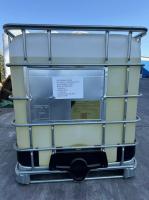





169_small.jpg "Chinafloc Cationic Polyacrylamide used for wastewater treatment")